Hypochlorous Acid Spray After Workouts: Acne Guide
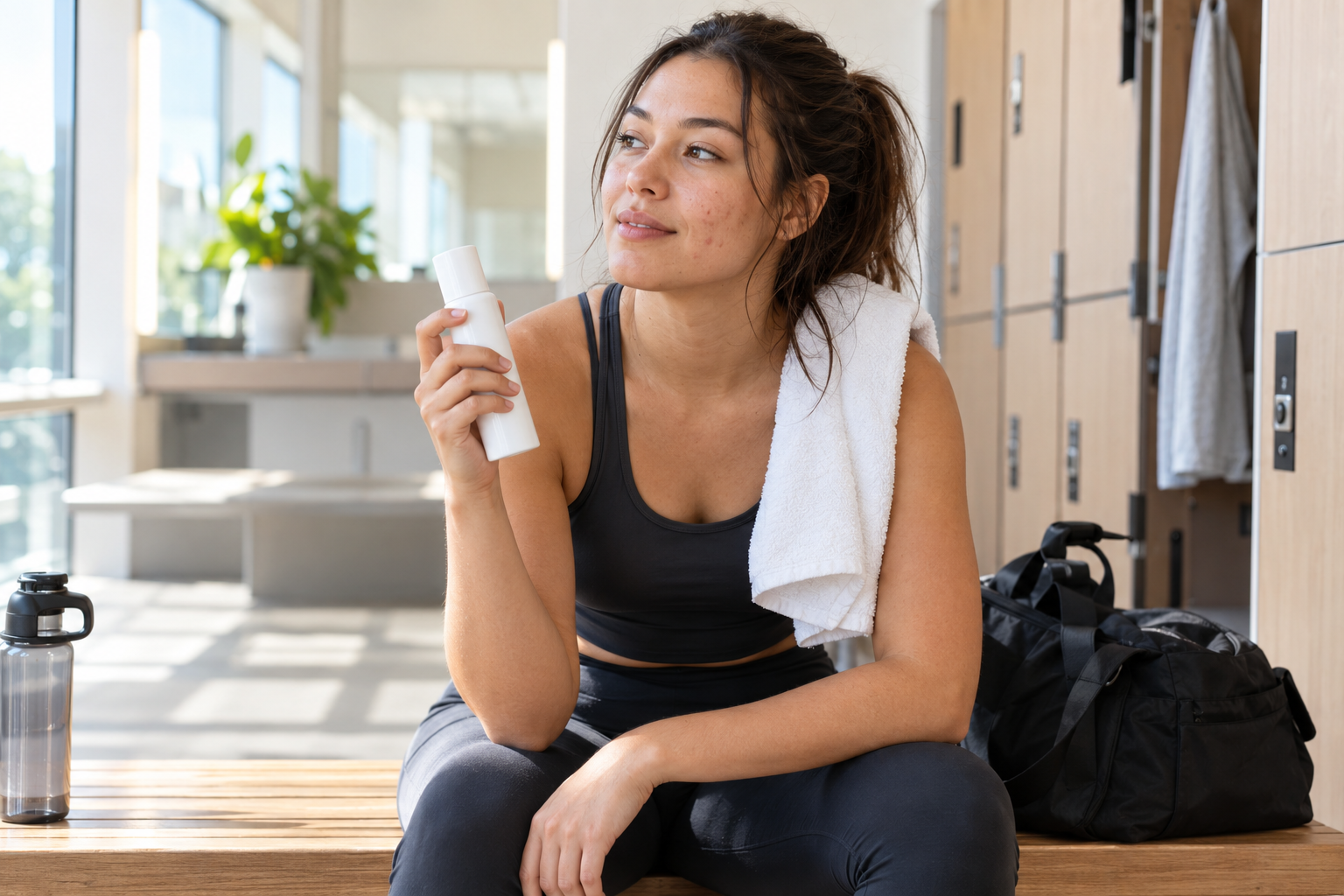
You finish a workout, catch your reflection, and wonder whether that sweaty commute home will mean another breakout. A hypochlorous acid spray looks like an easy solution: mist, air-dry, move on. But where does it actually fit in acne care?
Hypochlorous acid spray after workouts may be a useful optional step for acne-prone skin. It does not replace washing away sunscreen and sweat, and it should not replace an established acne treatment. Choose a product labeled for facial skin, follow its directions, and keep the rest of your routine simple.
This guide explains the evidence, a post-gym routine, and which products deserve consideration before you buy another bottle.
Educational information, not a diagnosis or personalized treatment plan. Product suggestions are based on published product information, not hands-on testing. As an Amazon Associate I earn from qualifying purchases.
Table of Contents
What is hypochlorous acid spray?
Hypochlorous acid, often shortened to HOCl, is a compound your immune system produces to help defend against microbes. Manufacturers also formulate it into dilute skin sprays. Despite the word “acid,” its purpose in these products differs from exfoliating ingredients such as salicylic acid.
Cleveland Clinic explains hypochlorous acid’s skincare uses, including its potential to reduce bacteria and soothe inflammation. That makes the ingredient interesting for people whose skin feels uncomfortable after exercise.
However, different bottles can contain different formulations. A facial spray, an eyelid cleanser, and a household disinfectant are not automatically interchangeable because they share an ingredient name. Use only the version intended for the area you are treating.
Think of the spray as a supporting product. Its convenience can be useful, but a convenient format does not establish that it prevents every kind of breakout.
Does hypochlorous acid help acne after exercise?
There is a reasonable biological explanation for the interest: antimicrobial activity could help with one part of acne, while a well-tolerated formula may suit some sensitive skin. The harder question is whether a particular retail spray reliably improves acne in everyday use.
That distinction matters. Laboratory activity, wound-care experience, customer reviews, and controlled acne trials answer different questions. They should not be presented as equivalent proof.
For example, a small randomized acne trial studied 0.005% sodium hypochlorite, not every hypochlorous acid mist sold online. Forty participants used the study solution over one month. The researchers reported improvement but called for larger studies. This does not prove that a cosmetic HOCl spray is equivalent to benzoyl peroxide.
The American Academy of Dermatology’s acne guidelines strongly recommend established treatments including benzoyl peroxide and topical retinoids. An optional spray should earn its place alongside an appropriate plan rather than persuade you to abandon one.
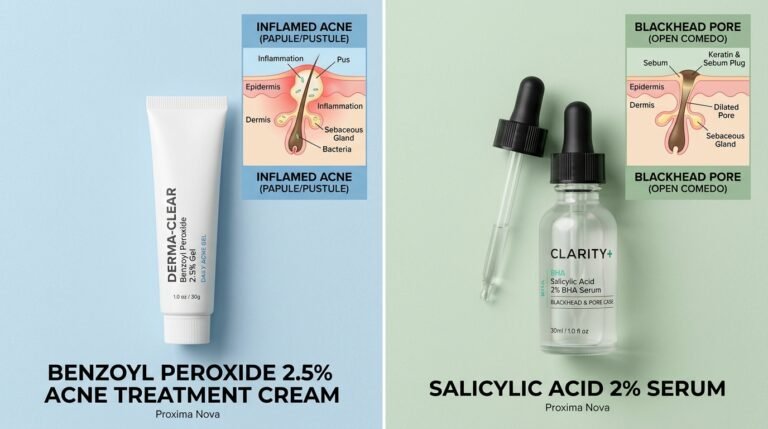
If you are choosing an active treatment, our benzoyl peroxide versus salicylic acid guide explains the differences. Choose according to your breakouts and tolerance, with professional advice when needed.
Why workouts can coincide with breakouts
Exercise is worth keeping. The goal is to make your skincare work around it.
The AAD’s workout acne advice highlights practical issues such as sweaty clothing, rubbing, and shared equipment. A spray cannot correct every source of friction or remove everything sitting on your skin.
Look for patterns. Are bumps concentrated beneath a helmet strap? Does your forehead flare when a headband stays damp? Do chest breakouts appear where tight clothing rubs? These observations help you decide what to change and give a dermatologist useful context.
Avoid assuming every bump is acne. Similar-looking eruptions can have different causes, so a routine that helps ordinary pimples may miss the actual problem. If your main concern is your shoulders or upper back, our back acne guide provides related background.
How to use hypochlorous acid spray after workouts
When you can wash straight away
Start with a gentle cleanse. Use your fingertips rather than scrubbing tools, rinse comfortably, and pat dry. The AAD’s face-washing guidance emphasizes gentle handling instead of friction.
If you want to use your facial HOCl spray, apply it according to its label. For a leave-on formula that instructs air-drying, allow it to dry before continuing. Do not invent a universal number of sprays or treatment time: packaging directions differ.
Continue with your usual moisturizer and daytime sun protection as appropriate. Your prescribed or over-the-counter acne medicine should stay on its established schedule. Finishing a workout is not a reason to add another dose.
For example, someone who exercises at lunchtime may only need a cleanse, moisturizer if needed, and sunscreen afterward. Their evening treatment can remain an evening treatment. This avoids turning one extra wash into a new regimen.
When a shower has to wait
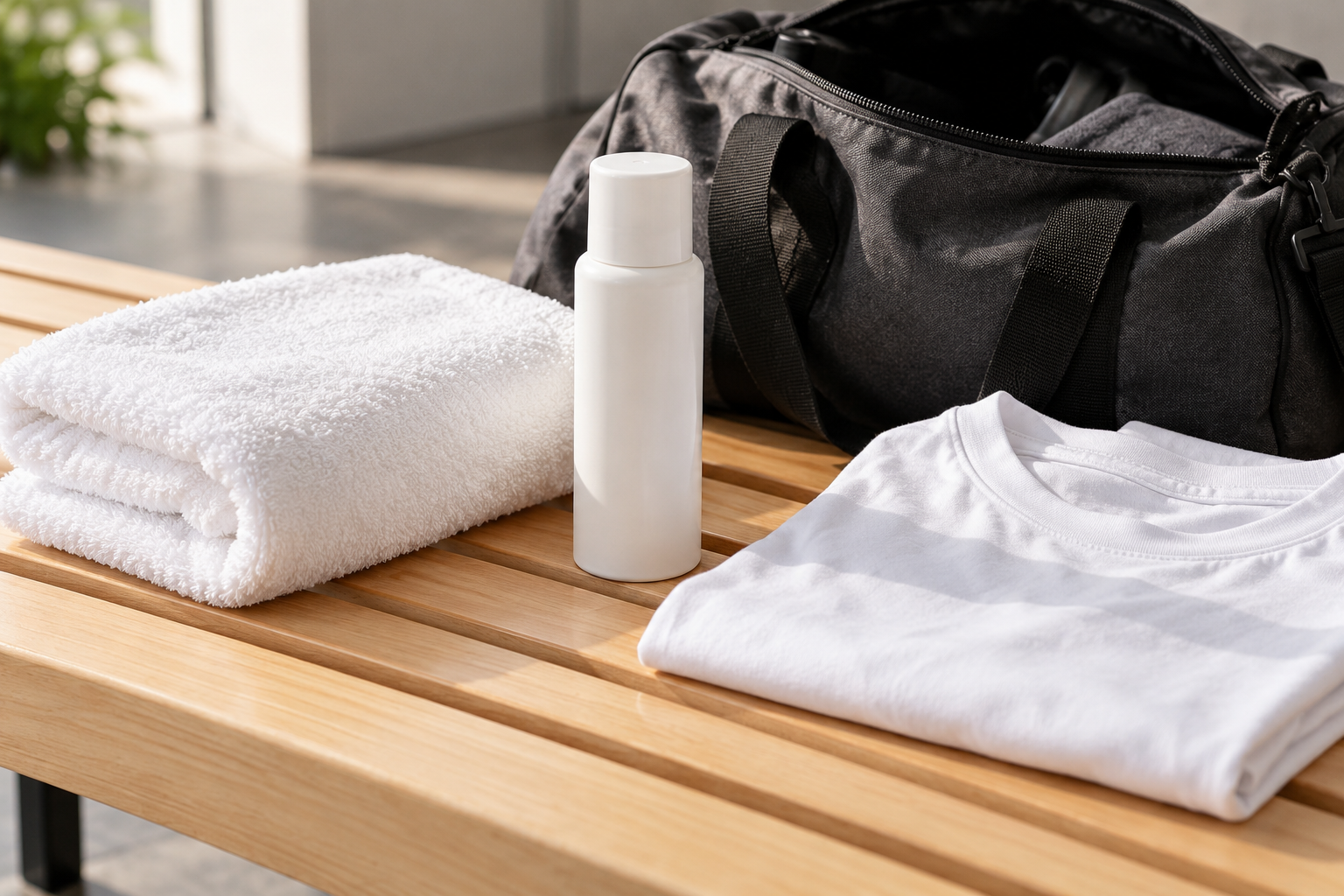
Gently blot heavy sweat with a clean towel and change out of damp clothing when possible. A skin-labeled spray can be an optional interim step if its directions permit that use.
Keep the expectation narrow. Misting does not physically wash away a layer of water-resistant sunscreen, makeup, or oil. Cleanse normally once you have access to a suitable place.
Before buying anything, consider your actual gap between exercise and washing. If you walk directly from a home workout into the shower, a separate mist may solve very little. If you regularly commute after class, portability may matter more.
Pack around that situation: a clean towel, fresh clothing, and the products you tolerate. The useful gym bag is one you can maintain consistently.

Where does the spray fit with other skincare?
Use the directions for the specific products you own as your starting point. Avoid mixing HOCl into a serum bottle or transferring it into another formula.
The manufacturer of Prequel Universal Skin Solution provides product-specific information about its formula and use. Check equivalent guidance for your chosen brand instead of assuming all sprays behave identically.
If your routine includes prescription medicine, ask your pharmacist or prescriber about adding another product. Bring the ingredient list and explain when you plan to use it. That produces a more useful answer than asking whether “acids” can be combined in general.
You also do not need to buy several new products at once. Introduce one optional change while keeping the rest familiar. Otherwise, a good or bad skin week becomes difficult to interpret.
For hydration, see our moisturizer guide for acne-prone skin. The AAD explains why moisturizer can help during acne treatment, particularly when medicines cause dryness.
Three relevant products to consider
These are practical options for different jobs in the routine. They are not a required bundle, ranked clinical winners, or products we have personally tested. Amazon links below open product searches so you can check the exact item, seller, and current packaging.
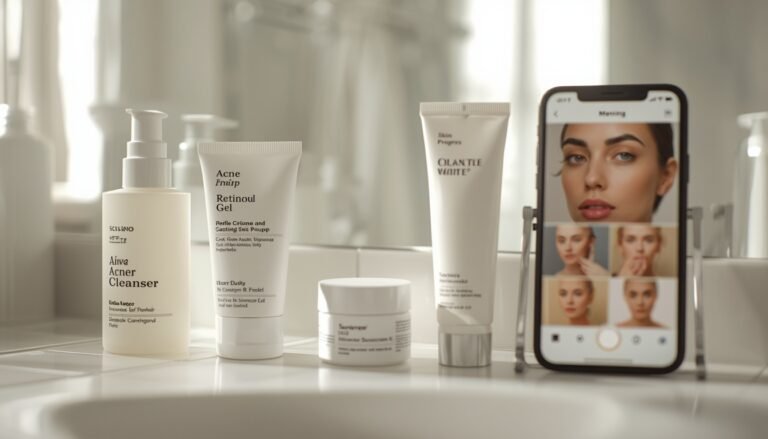
SkinSmart facial hypochlorous acid spray
Consider this if you specifically want to try the optional spray step. SkinSmart lists hypochlorous acid, sodium chloride, and ionized water for its facial cleanser formula, with directions to spray and air-dry.
Check that the listing you select is intended for facial skin. The brand sells several similarly named products, so compare the front label and instructions rather than relying on a search thumbnail. The word “cleanser” on a spray does not mean it removes makeup like a rinse-off face wash.
Find SkinSmart facial hypochlorous acid spray on Amazon.
CeraVe Hydrating Facial Cleanser
Consider this as the washing step if your skin is normal to dry and you prefer a non-foaming texture. CeraVe describes the cleanser as non-comedogenic and free of added fragrance, with ceramides and hyaluronic acid.
It has a different job from the mist. It is also different from CeraVe’s acne cleansers containing active medication. Check the full name before ordering. If your existing gentle cleanser works well, there is no clear reason to replace it just to follow this article.
Find CeraVe Hydrating Facial Cleanser on Amazon.
Vanicream Daily Facial Moisturizer
Consider this for the moisturizing step if you want a lightweight facial lotion. Vanicream’s product information lists hyaluronic acid and five ceramides and describes the formula as non-comedogenic, without botanical extracts or essential oils.
Individual tolerance still matters. A product suitable for many sensitive-skin users can still disagree with an individual. This particular moisturizer does not replace sunscreen; distinguish it from the brand’s SPF products when comparing listings.
Find Vanicream Daily Facial Moisturizer on Amazon.
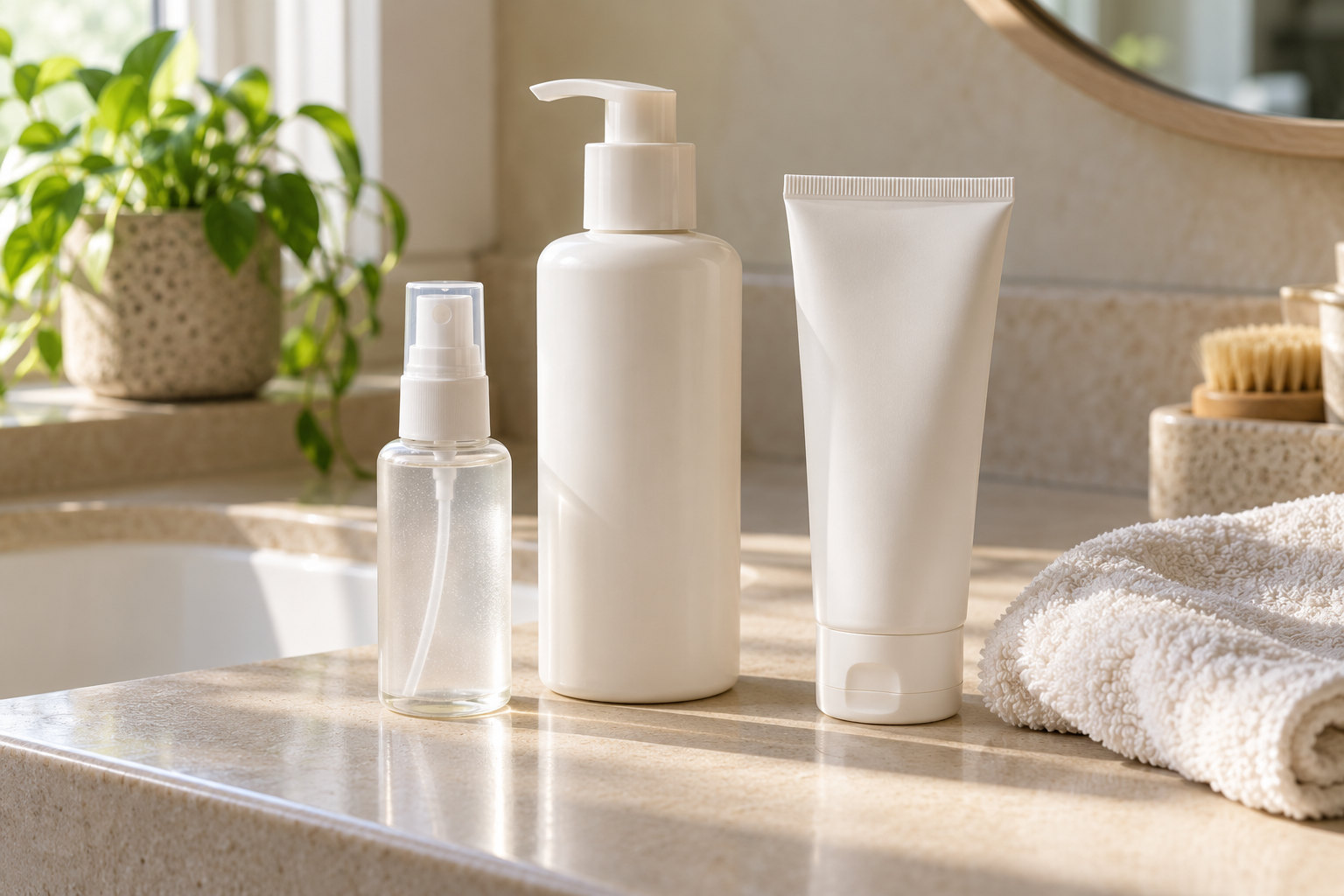
How to compare sprays without overspending
Start with the label, then look at the price. A recognizable ingredient name is only one part of a useful purchase. You also need clear facial-use directions, an ingredient list, and packaging you can use comfortably.
Compare the cost per fluid ounce between the sizes you would realistically finish. A larger bottle can look cheaper but may be inconvenient for your bag. A small bottle may suit occasional use better. Follow storage instructions and the expiry or period-after-opening information supplied by the manufacturer.
Keep the original packaging so those details remain available. Before putting the spray beside your other toiletries, read the warnings and check whether the brand specifies any restrictions. Ask the manufacturer if the listing and bottle disagree.
Avoid shopping by concentration alone. A higher number does not establish better acne results, and information about one tested formulation does not transfer automatically to another. Likewise, a premium price does not demonstrate superior clinical performance.
Finally, decide what you would stop buying to make room for this purchase. If the answer is your cleanser, sunscreen, or prescribed treatment, reconsider the priority. If your basic routine is covered and you want to try a convenient extra, choose one labeled product and assess your own tolerance.
A sensible purchase starts with a defined job, fits your budget, and does not make your daily routine harder to maintain.
Watch a dermatologist explain hypochlorous sprays
Dermatologist Dr Dray discusses hypochlorous sprays and sensitive skin in the video below. It offers additional context rather than a diagnosis or proof that every featured product treats acne. The video was published in 2020, so check current labels and instructions before purchasing.
How to decide whether the extra step is worthwhile
Write down the problem you want the spray to solve before starting. “A convenient optional step after my evening class” is specific. “Perfect skin” makes any product impossible to assess fairly.
Keep a simple record of what you use, whether your skin feels comfortable, and any new irritation. Occasional photographs in similar lighting can help you describe changes, but they cannot prove which ingredient caused them.
Do not call worsening symptoms a necessary “purge.” Stop a new optional product if it causes persistent burning, itching, swelling, or a rash, and seek medical advice when appropriate. Severe reactions need prompt care.
The AAD recommends giving appropriate acne treatments time to work, rather than repeatedly switching products. That advice should not become a promise that an HOCl spray will clear acne on a particular timeline.
Seek professional help sooner for deep painful lumps, scarring, or significant distress. A mist should never delay getting the right diagnosis and treatment. New to acne care? Start with our acne treatment basics before adding optional products.
Frequently asked questions
Can I use hypochlorous acid spray instead of washing after the gym?
No. A mist does not physically remove sunscreen, makeup, and accumulated residue. It may be an optional interim step, but cleanse gently when you can.
Should I use it before or after moisturizer?
Follow your bottle’s instructions. For a leave-on spray used after cleansing, allow it to air-dry before applying moisturizer. Do not mix products together in the bottle.
Will hypochlorous acid clear blackheads or hormonal acne?
Do not rely on it for either. Acne has several contributing factors, and an antimicrobial spray does not replace treatments aimed at clogged pores or hormonal drivers.
Can hypochlorous acid spray irritate sensitive skin?
Yes, individual reactions remain possible. Start cautiously with a facial-skin formula, follow its label, and stop if it causes persistent irritation. “Gentle” does not guarantee universal tolerance.
Do I need a spray if I already shower immediately?
Probably not as a necessary step. Prioritize a cleansing routine, appropriate acne treatment, moisturizer, and sun protection. Add a mist only if it serves a clear purpose for you.