Niacinamide for Acne: 4 Reasons It Actually Works
If you’re looking into niacinamide for acne, it’s probably because you’ve already tried everything else. Retinoids that peeled your face raw. Antibiotics that worked for a month, then quit. Benzoyl peroxide that bleached your pillowcase and dried you to a flake. So when someone tells you to “just add niacinamide,” you roll your eyes. Fair. You’ve seen “niacinamide” stamped on every serum in the aisle. It smells like filler — marketing dressed up in a lab coat. I’m not going to argue with that gut feeling. I’m going to use it. Because your suspicion is aimed at the wrong target, and by the end you’ll see exactly why niacinamide for acne is the piece your routine has been missing.
Table of Contents
Is Niacinamide for Acne Just Marketing Hype?
Let’s get this out of the way. Brands do slap niacinamide on labels to look scientific. It’s cheap. It’s stable. It plays nice with almost anything. That makes it easy to toss into a formula and call it “clinically inspired.”
So yes — most of the niacinamide near you is doing very little. Not because the ingredient is weak. Because the dose is a rounding error, buried under fragrance and filler.
That’s the trap. People judge niacinamide by the worst products carrying its name. It’s like judging coffee by gas-station decaf.
The real question isn’t “does the label say niacinamide.” It’s this: does niacinamide actually work for acne, and is there enough of it in the bottle to matter?
Does niacinamide work for acne? Yes. Niacinamide helps acne by calming inflammation, controlling oil, and repairing the skin barrier. In a head-to-head study, a 4% niacinamide gel matched prescription clindamycin at clearing inflammatory acne — without feeding antibiotic resistance. For most people, a 5% niacinamide serum used twice daily visibly calms breakouts within four to eight weeks.
Now let’s look at the study behind that answer.
Niacinamide vs. Clindamycin: What a Head-to-Head Study Found
Here’s the fact that reframes everything. Researchers put a 4% niacinamide gel head-to-head against a prescription antibiotic — topical clindamycin. Same goal: clear inflammatory acne. Different weapons.
And this isn’t a vague “studies suggest.” In a 1995 double-blind trial published in the International Journal of Dermatology, dermatologist Alan Shalita and his colleagues split 76 patients into two groups and had them apply either 4% niacinamide gel or 1% clindamycin twice a day for eight weeks. After eight weeks, 82% of the niacinamide group had improved — versus 68% on the antibiotic. Niacinamide cut red, inflamed lesions by 60%, compared with 43% for clindamycin.
Read that again. A shelf ingredient you can buy without a prescription matched — and on those measures, edged out — a medication doctors hand out for breakouts. And it did it without the antibiotic’s baggage. No feeding antibiotic resistance. No wiping out good bacteria. No prescription required.
This isn’t a single fluke, either. Reviews of the acne research keep landing in the same place. Most studies using topical niacinamide show real improvement — either against a placebo or against standard treatments.
Your skeptic brain wants to say “one study means nothing.” Agreed. But this isn’t one study. It’s a pattern, repeated across decades and skin types.
How Niacinamide Clears Acne: 4 Ways It Works
Here’s the part critics skip. Niacinamide doesn’t attack acne from one angle. It works on four at once.
It calms the inflammation
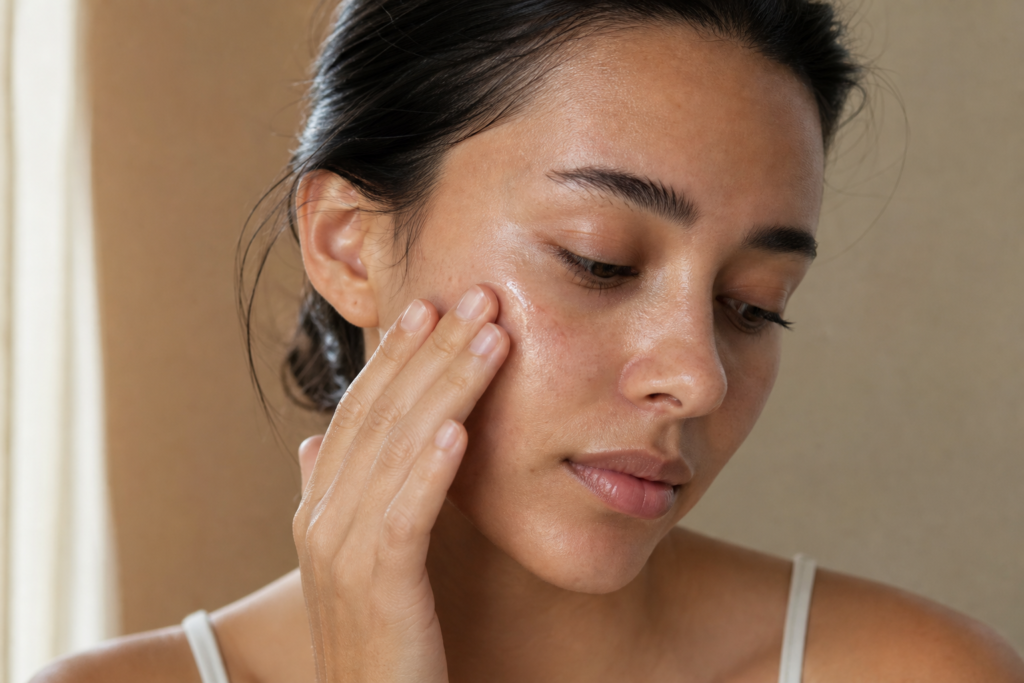
Acne is inflammation. Niacinamide turns down the exact chemical signals that make a pimple red, swollen, and sore.
It controls oil production
Niacinamide is one of the few ingredients that helps oily skin at the source. In a study published in the Journal of Cosmetic and Laser Therapy, 2% niacinamide significantly lowered oil production after just two to four weeks. Less oil means fewer clogged pores.
It rebuilds the skin barrier
Niacinamide boosts ceramides — the “mortar” holding your skin cells together. A strong barrier locks out irritation, and a strong barrier is a calmer barrier.
It doesn’t punish your skin
No stinging. No peeling. No angry rebound.
That last point is the whole game. Think about why your other treatments backfired. Retinoids and acids work by stripping your skin and speeding it up. Powerful, yes. But push too hard and your barrier cracks. A cracked barrier gets red, dry, and reactive. Then you break out more — and blame yourself for “not being consistent.”
Niacinamide does the opposite. It repairs while the strong stuff fights. It’s the ingredient that lets you keep using the treatments that actually clear acne.
How a Damaged Skin Barrier Makes Acne Worse
Let me say the quiet part loud. Most acne routines fail because they’re too aggressive, not too gentle.
You inherited a myth: acne means dirty skin, so scrub harder, dry it out, punish it. So you stacked actives. Benzoyl peroxide plus a retinoid plus an acid toner plus a “clarifying” cleanser.
Your skin didn’t get clearer. It got angrier.
That’s a wounded skin barrier crying for help. And a wounded barrier makes acne worse, not better. It lets in the very irritation that triggers breakouts.
Here’s the part that stings if you’ve fought stubborn acne for years: you weren’t failing at your routine. Your routine was failing you. It was fighting itself.
Niacinamide is the peacemaker. It’s the one active that clears skin by strengthening it instead of tearing it down. Once you feel that shift, you can’t unsee it.
Does Niacinamide Cause Breakouts or Purging?
You’ve probably read this online. Someone added niacinamide, broke out, and blamed the bottle. Let’s kill this cleanly.
Niacinamide doesn’t clog pores. It’s non-comedogenic. It’s anti-inflammatory by design — it fights the exact process that forms a pimple.
It also can’t “purge” you. Purging happens when an ingredient speeds up your skin cell turnover — that’s retinoids and acids. Niacinamide doesn’t do that. No turnover spike, no purge. Full stop.
So what happened to those people? Almost always something else. A new product added the same week. A different active. A rough patch of stress or hormones. Plain bad timing with a breakout already brewing.
When niacinamide gets blamed, the real culprit is usually standing right next to it in the routine. Check the whole shelf before you fire the one ingredient built to calm your skin.
Is Niacinamide a Cure for Acne? The Honest Limits
Here’s where I earn your trust. You’ve been burned by “miracle” claims, so I won’t hand you another.
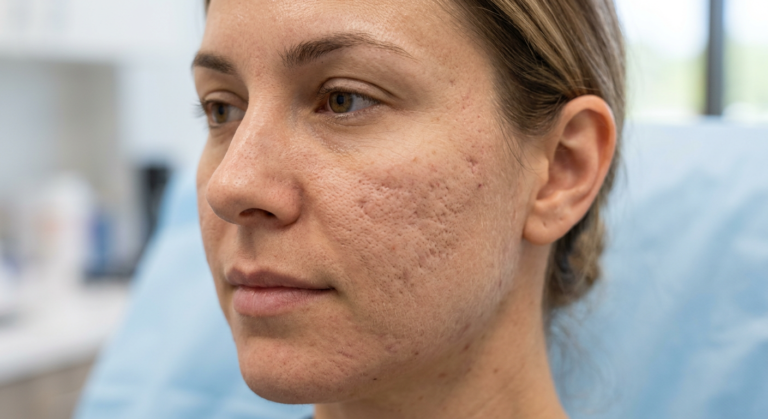
Niacinamide is not a cure. It will not clear deep, painful cystic acne on its own. If your skin is scarring, you need a dermatologist and likely prescription help. That’s not a knock — that’s just true.
Niacinamide is a team player. It shines brightest next to your other treatments, not instead of them. And that’s exactly why it belongs in your routine. Look at what it does in combination:
- Paired with benzoyl peroxide, it can outperform benzoyl peroxide alone on clogged, non-inflamed bumps.
- Paired with retinoids, it soaks up the dryness and irritation that make people quit.
- Paired with your barrier, it keeps the whole routine survivable long enough to work.
Notice what just happened. The “limitation” is the selling point. Hype merchants promise a one-bottle miracle, and your gut rejects it — correctly. Niacinamide makes a smaller, truer promise: it makes everything else work better and hurt less.
That’s the claim that survives a skeptic. That’s the claim backed by decades of data. An ingredient honest about its limits is one you can actually trust with the rest.
How to Use Niacinamide for Acne
Enough theory. Here’s the practical version, so you don’t waste money on the filler bottles.
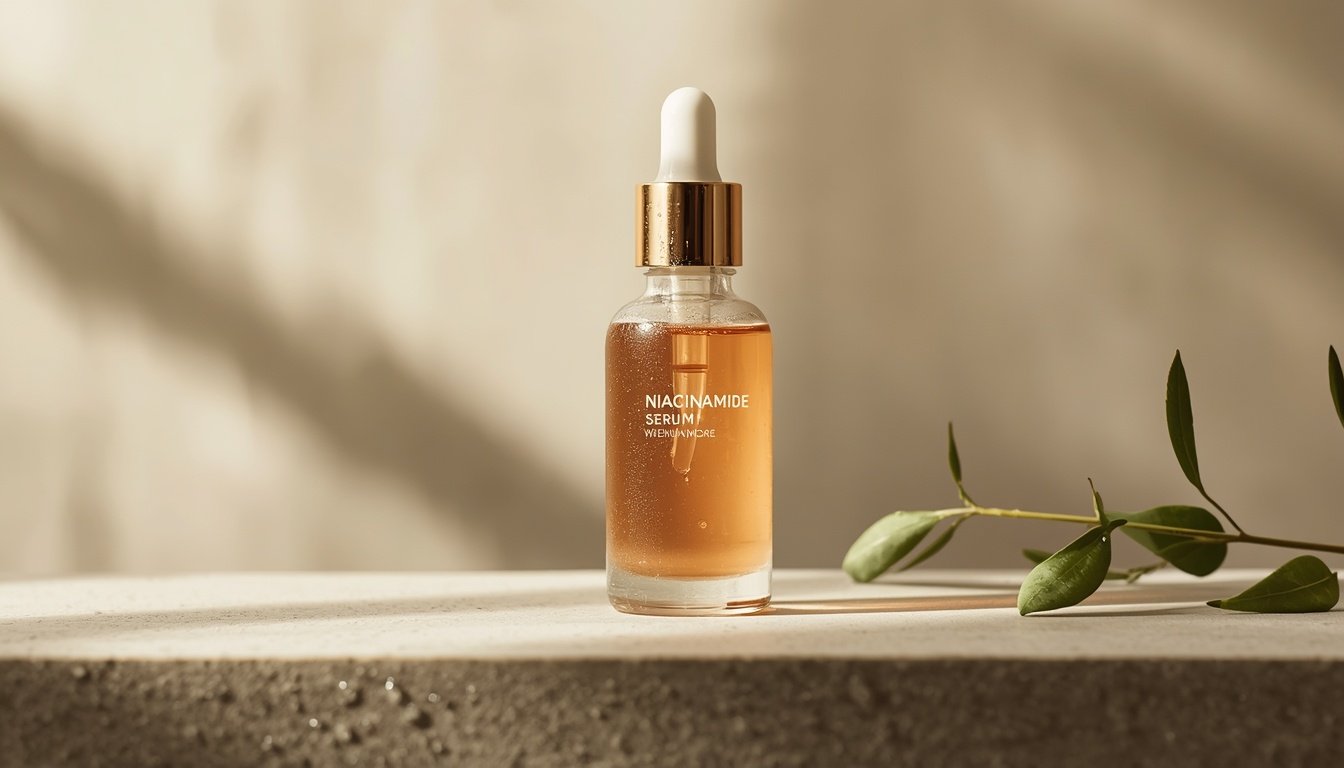
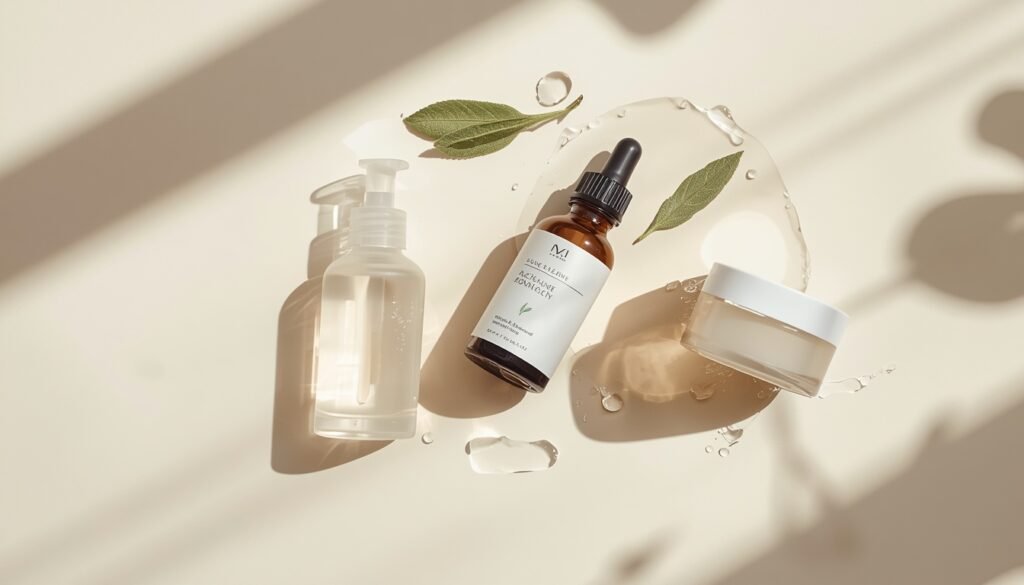
- Get a real dose. Look for 5% niacinamide. Some go up to 10%. Below 2%, you’re paying for a label.
- Use it twice a day. Clean skin, then niacinamide, then moisturizer. Morning and night both work.
- Layer it, don’t replace. Keep your benzoyl peroxide or retinoid. Niacinamide slots in alongside them.
- Give it weeks, not days. Oil control and calmer skin show up in two to four weeks. Real change takes a couple of months. Skin is slow. That’s normal.
- Keep it simple. You don’t need ten actives. You need a few that cooperate.
Niacinamide is the one that makes cooperation possible. It’s one of the cheapest, gentlest, best-studied ingredients in skincare. The barrier to trying it is almost nothing. The downside risk is close to zero.
The Bottom Line on Niacinamide for Acne
So here’s what I’d actually do. Go find the serum sitting in your bathroom right now and read the back. If niacinamide shows up at 5% or higher, you already own one of the cheapest, best-proven tools for acne there is — start using it tonight, morning and night, right alongside whatever else you’re on. If it doesn’t, spend the fifteen bucks on one that does. Niacinamide for acne won’t erase a cyst or replace your dermatologist, and anyone promising that is selling you something. What it will do is make the treatments that already work stop shredding your skin in the process. Give it eight weeks before you call it. That’s the entire ask.