
Spironolactone for Acne: 7 Facts About the Real Timeline
You started spironolactone for acne. You checked the mirror every morning. Four weeks later, your chin looks the same. So you’re wondering how long spironolactone takes to work, or if it’s working at all. Maybe you’ve already decided it isn’t.
Before you decide anything, walk through a few simple facts with me. None of them are controversial. You already believe most of them.
This post contains affiliate links. If you buy through them, we may earn a commission at no extra cost to you. See our affiliate disclosure.
Table of Contents
How Long Does Spironolactone Take to Clear Acne? The Short Answer
Spironolactone usually takes about three months to show the first clear improvement in acne, and five to six months to reach its full effect. The delay is normal: pimples form under the skin for up to eight weeks before surfacing, and the pill only prevents new clogs. It does not clear existing ones.
That’s the number. The rest of this article shows you why it’s the number, using things you already know.
Why Acne Treatments Take Weeks to Show Results
Here’s the first fact. Your skin doesn’t change overnight.
You know this from experience. A sunburn takes days to peel. A scrape takes a week or two to heal. A new moisturizer doesn’t fix dry skin by lunchtime. Nobody expects it to.
Skin is living tissue. Living tissue changes slowly.
How Long a Pimple Takes to Form Under the Skin
Here’s the second fact. A pimple doesn’t appear out of nowhere.
It feels that way. You go to bed clear and wake up with a red bump. But that bump didn’t form in eight hours.
It started as a tiny clog deep in a pore. Dermatologists call it a microcomedone. You can’t see it or feel it. (It’s the same starting point behind comedonal acne, and behind most of what causes acne in the first place.)
The clog grows slowly. Oil builds up behind it. Bacteria move in. The pore swells. Only then does the pimple break the surface, and only then do you see it.
How long does that hidden stage take? Often several weeks. Many dermatologists say up to eight.
So here’s a simple truth that follows. The pimple you see today began weeks ago.
Think of starlight. You look up and see a star. But that light left the star long ago. A breakout works the same way. You’re looking at old news.
Your Skin Cell Turnover Cycle Sets the Pace
Now the third fact. Your skin replaces itself on a cycle.
New cells form at the bottom layer. They rise slowly to the top. Then they shed. In a young adult, one full trip takes about a month. It slows down as you age.
You can’t speed that up much. No pill makes Tuesday’s skin cell arrive on Monday.
Think about a bad haircut. You can buy the best shampoo on earth. Your hair still grows half an inch a month. The shampoo isn’t failing. Hair just has a pace.
Skin has a pace too. So do pores, and so do oil glands.
Why Oral Acne Medication Works Slower Than Creams
Here’s the fourth fact. Anything that works from the inside works at the body’s pace.
A cream sits on the surface. It touches the pimple directly. That’s how benzoyl peroxide and adapalene work. A pill is different. You swallow it, your body absorbs it, and it shifts something inside. Then the skin has to respond to that shift. That response takes its own time.
Braces are a good example. The wire goes on in one day. The teeth take two years.
Nobody pulls their braces off after a month. Nobody says “my teeth look the same, so these are broken.” You’d laugh at that. The wire is working the whole time. You just can’t see it yet.
How Spironolactone Works for Hormonal Acne
Now let’s talk about the pill itself. This is the fifth fact.
Spironolactone doesn’t kill bacteria. It doesn’t dry out pimples. It doesn’t unclog a single pore.
So what does it do? It blocks hormones called androgens from acting on your skin. Cleveland Clinic explains the mechanism here.
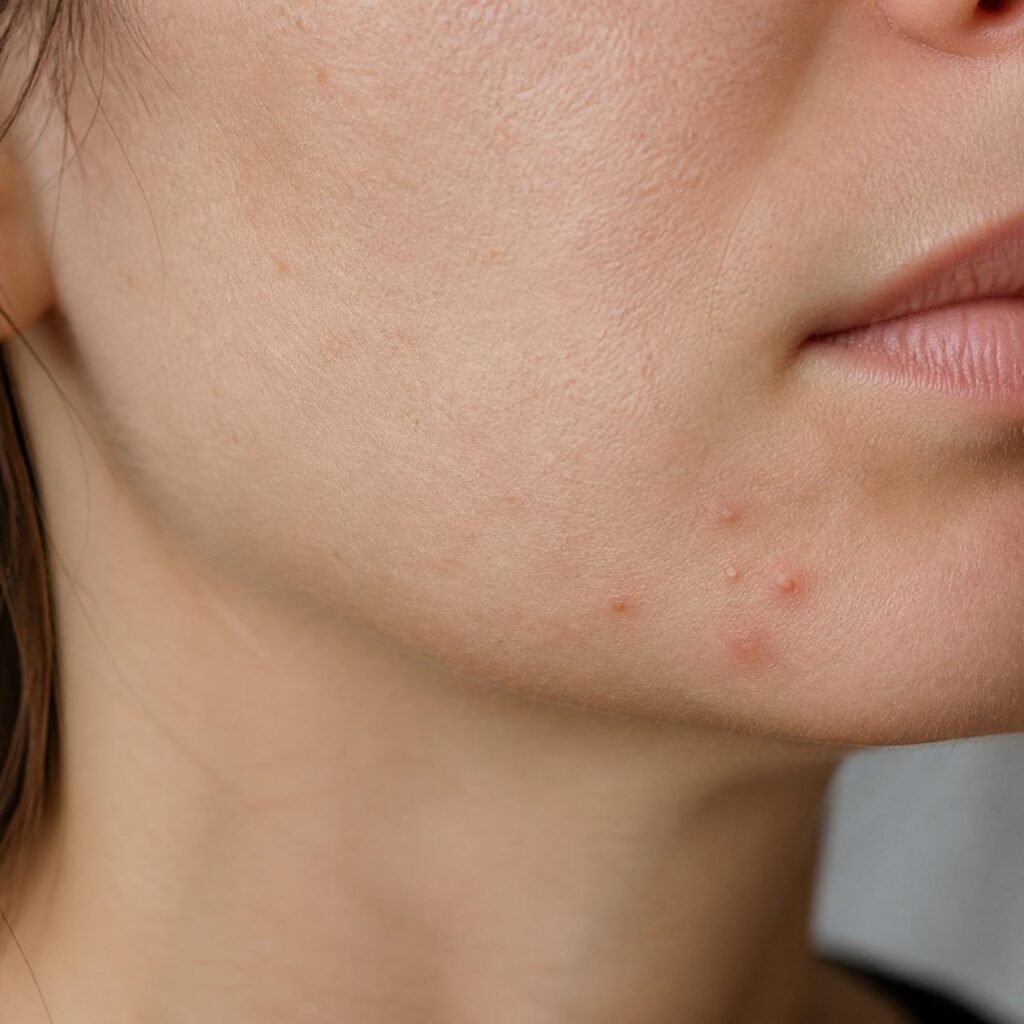
Androgens tell your oil glands to pump out oil. More signal means more oil. More oil means more clogs. More clogs mean more pimples, especially on the jaw and chin. That pattern is what most people mean by hormonal acne. It’s also why jawline acne and PCOS acne are so often treated this way.
Spironolactone turns that signal down. The glands get a quieter message. Over time, they make less oil. Less oil means fewer new clogs.
Notice two words in that sentence. “Over time” and “new.”
The glands don’t shrink in a day. They ease off gradually, over weeks. And the pill only affects what happens next. It does nothing to what already exists.
Watch: Dermatologists explain spironolactone for acne on YouTube
Spironolactone Dosage for Acne: Why Doctors Start Low
That leads to the sixth fact. Most doctors start you on a low dose.
That might be 25 or 50 milligrams a day. Many people end up on 100 or more. Your doctor does this on purpose. A slow start means fewer side effects.
But it also means something else. Your first few weeks may not be your full dose. So the clock on your “real” dose may start later than day one.
Spironolactone Not Working Yet? The Pipeline Problem
Let’s put two of these facts side by side.
Fact one: pimples form in hiding for weeks before you see them. Fact two: the pill only prevents new clogs.
So ask yourself a simple question. On the day you took your first pill, what was already in your skin?
The answer is weeks’ worth of clogs. They were already formed and already on their way up. The pill can’t call them back. They’re coming no matter what.
Picture a factory with a long conveyor belt. Boxes take eight weeks to reach the door.
Today, you shut off the machine that makes the boxes. What happens at the door tomorrow?
Boxes still come out. They come out next week too, and the week after that. Is the shutdown failing? No. The belt is just emptying.
Someone standing at the door would see no change for weeks. They might swear nothing happened inside. They’d be wrong. They’d just be looking in the wrong place.
Your mirror is the factory door. It shows you what was made weeks ago.
Breaking Out in the First Month of Spironolactone
This also explains something that frustrates people. Some folks break out in the first month and call it a spironolactone purge. Those pimples were already on the belt. The pill didn’t cause them, and it couldn’t have stopped them. If yours are deep and painful, our cystic acne guide covers what helps while you wait.
The Spironolactone Acne Timeline, Step by Step
Now let’s add it up. You’ve seen the number. Build it yourself and see if you land in the same place.
Step one: You start low and often step up. Give that a few weeks.
Step two: Your oil glands slow down gradually. Give that several more weeks.
Step three: The old clogs have to surface and heal. That’s up to eight weeks.
Step four: Your skin needs a fresh cycle or two to look different. That’s a month or more.
These steps overlap. You don’t add them end to end. But look at how big each one is. None is shorter than a few weeks. Several run close to two months.
So what’s the earliest you could fairly expect to see a change? Not week two, and not week four.
You land at about three months. And that’s for the first clear signs, not the finish line. The full effect takes longer. Think five or six months.
Here’s the part worth noticing. You didn’t need me to tell you that number. You got there from things you already believed. Skin changes slowly. Pimples start weeks early. The pill only stops new ones.
What the Research Says About Spironolactone Results
And the research matches your math. The SAFA trial, led by Professor Miriam Santer at the University of Southampton and published in The BMJ in 2023, tested spironolactone against a placebo in 410 women with acne. The women started on 50 milligrams a day and moved up to 100 at week six. (Full text on PubMed Central.)
At 12 weeks, the spironolactone group was a little ahead. About 72 percent said their acne had improved, against 68 percent on placebo. At 24 weeks, the gap was much bigger: 82 percent against 63 percent.
Dermatologists say the same thing in their offices every day. Give it three months before you judge. Give it six for the full picture.
What Spironolactone Results at Week 4 Really Mean
Now go back to where we started. Four weeks in, your chin looks the same. What does that tell you?
Run it through what you’ve already agreed to.
The pimples you see at week four began before your first pill. You agreed with that. The pill can’t touch pimples that already exist. You agreed with that too.
Your dose may have only just reached its target. Your oil glands are still easing off.
So week four doesn’t show you the pill’s results. It shows you your skin from before the pill.
Week four can’t tell you the pill is failing. It can’t tell you the pill is working, either. It’s too early for both.
It’s a seed you planted a month ago. You’re staring at bare soil. Bare soil at week four doesn’t mean a dead seed. It means week four.
This is the only place the facts lead. The honest timeline for spironolactone is months, not weeks. If you quit at week four, you haven’t tested the pill. You’ve only tested your patience. (Quitting early is one of the main reasons an acne treatment plan keeps failing.)
You’d be taking the braces off after a month.
How to Track Your Spironolactone Before and After
So here’s a better plan. It’s simple, and it takes five minutes to set up.
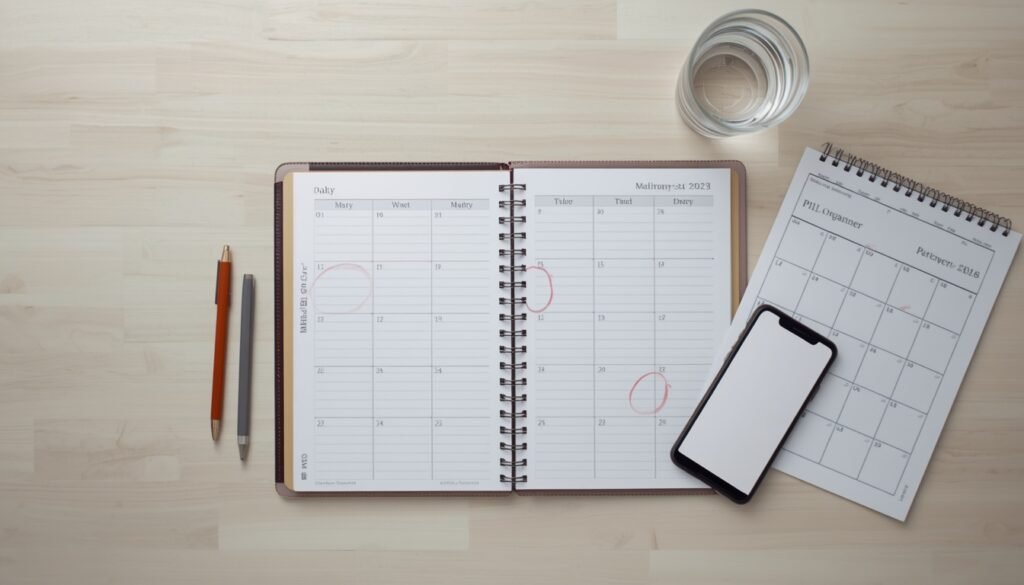
- Mark your real start date. Use the day you reached your steady dose.
- Circle the three-month mark. That’s your first fair check-in.
- Circle the six-month mark. That’s when you judge the full result.
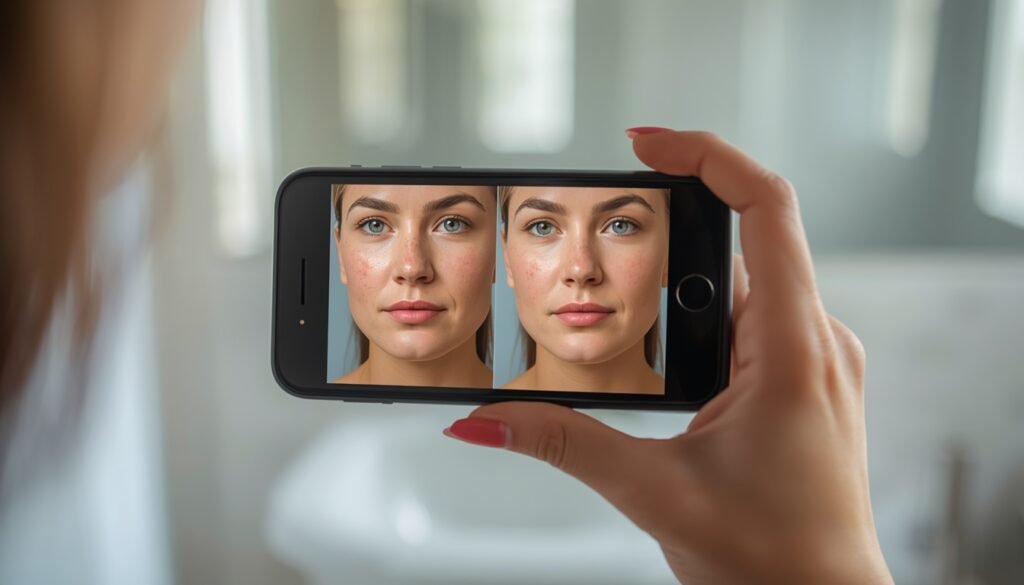
- Take one photo a month. Use the same light and the same angle.
- Stop the daily mirror check. It only shows you old news.
The photos matter more than you think. Slow change is hard to see day to day. You don’t notice a child growing. Then you see last year’s photo and gasp.
Your skin works the same way. A spironolactone before and after is month one beside month four, not Monday beside Tuesday.
What to Use on Your Skin While You Wait
Spironolactone is prescription only, so nothing below replaces it. In the SAFA trial, women kept using their topical treatments alongside the pill. A plain, gentle routine gives your skin the best chance while the belt empties. Our guide to building a simple acne routine shows how the pieces fit. Check with your prescriber before adding any new active.
- Gentle cleanser: CeraVe Foaming Facial Cleanser on Amazon. It cleans without stripping.
- Adapalene gel: Differin Gel 0.1% on Amazon. It works on clogs from the surface. Read our Differin Gel review first.
- Benzoyl peroxide wash: PanOxyl Acne Foaming Wash on Amazon. It targets red, inflamed spots. See our PanOxyl review.
- Moisturizer: La Roche-Posay Toleriane Double Repair on Amazon. More picks are in our best moisturizer for acne-prone skin guide.
- Sunscreen: EltaMD UV Clear SPF 46 on Amazon. Compare options in our best sunscreen for acne-prone skin guide.
- Weekly pill organizer: 7-day pill organizers on Amazon. A missed dose resets nothing, but steady doses keep the clock honest.
- Phone tripod with light: Phone tripods with ring light on Amazon. Same light and same angle every month makes your photos comparable.
When to Call Your Doctor About Spironolactone Side Effects
A few fair warnings belong here too. This article is general information, not medical advice, and your prescriber knows your history in a way no article can. See our medical disclaimer.
Patience has limits. Spironolactone doesn’t work for everyone. If month six looks like month one, tell your doctor. They can raise the dose, add a cream, or switch plans. That’s a normal conversation. Here are the signs it’s time to see a dermatologist.
Spironolactone side effects are a different matter. Don’t wait those out quietly. Call your prescriber about dizziness, irregular periods, or sore breasts. Also call about anything that worries you.
You also shouldn’t take this drug while pregnant or trying to conceive. Talk with your doctor about birth control.
And never change your dose on your own. Your prescriber set it for a reason.
Spironolactone for Acne: Frequently Asked Questions
How long does spironolactone take to work for acne?
Most people see the first clear improvement at about three months and the full result at five to six months. In the SAFA trial, the gap between spironolactone and placebo was small at 12 weeks and much larger at 24 weeks.
Is it normal to break out during the first month of spironolactone?
Yes. Pimples that surface in the first weeks were already forming before your first pill. The pill prevents new clogs and can’t stop the ones already on their way up.
What does it mean if spironolactone isn’t working after 3 months?
Three months is a first check-in, not a verdict. If you see no change at all, tell your prescriber. They may raise the dose or add a topical treatment. Judge the full result at six months.
Can I do anything to make spironolactone work faster?
Not much. The pace is set by your skin’s own cycle. What helps is taking it as prescribed every day and keeping a gentle routine with any topicals your doctor approves. Don’t raise the dose yourself.
What spironolactone dose is used for acne?
Doctors often start at 25 or 50 milligrams a day and step up to 100 or more if needed. The SAFA trial used 50 milligrams for six weeks, then 100. Your prescriber chooses your dose.
Will my acne come back if I stop spironolactone?
It can. The pill quiets the hormone signal only while you take it. Talk with your doctor before stopping so you have a plan. If breakouts leave marks behind, our PIE vs PIH guide explains how to treat them.
Give Spironolactone for Acne Three Months Before You Judge It
Week four was never the test. Anyone who quits spironolactone for acne at week four is grading a pill on pimples it never had a chance to stop. That’s not a verdict. That’s a guess made in a bad mood in front of a bathroom mirror.
So open your calendar now. Mark three months from the day you hit your steady dose, and take today’s photo. Keep taking the pill as prescribed. If doubts show up before that date, take them to your doctor, not to the trash can.