PIE vs PIH: The 10-Second Test to Fix Acne Marks
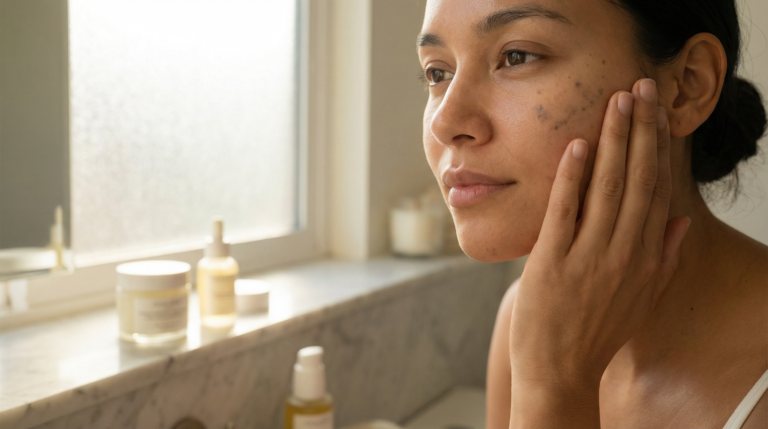
Your acne finally cleared—so why is that mark still there? If you’re staring at a spot that won’t fade no matter what you try, the real problem is that you don’t know whether you’re looking at PIE vs PIH. They look almost the same. They are not the same. One is a blood vessel problem and the other is a pigment problem, and if you treat the wrong one, you can waste months. The good news: you can tell PIE from PIH in about ten seconds. Let me walk you through it. It’s simpler than it looks.
Table of Contents
What Causes Acne Marks: Blood vs. Melanin
Let’s start with two facts about your skin. Both are obvious. Just nod along.
Your skin has blood vessels in it—tiny ones, sitting close to the surface. When you blush or scrape your knee, you see red. That red is blood showing through the skin.
Your skin also makes pigment. It’s called melanin. Melanin is the brown color in a tan, a freckle, or a mole. It is not red. It’s brown.
So two different things live in your skin. Blood, which looks red or pink. And melanin, which looks brown or dark. They are not the same substance. One is red. One is brown. Easy so far, right?
What Happens to Skin During a Breakout
Now picture a pimple. A pimple is inflammation—your skin’s reaction to everything that clogs and irritates a pore. Your skin is angry and irritated in that one spot.
When skin gets inflamed, your body sends in a healing response. Sometimes that response overreacts. Think of a car alarm that keeps blaring long after the danger is gone.
That alarm can hit two things underneath. It can damage or stretch out the tiny blood vessels. Or it can push your melanin-making cells into overdrive so they pump out extra brown pigment. Sometimes it hits your blood vessels. Sometimes it hits your pigment cells. That’s the whole fork in the road.
Why Your Acne Mark Is Red or Brown
Follow the logic. It’s clean.
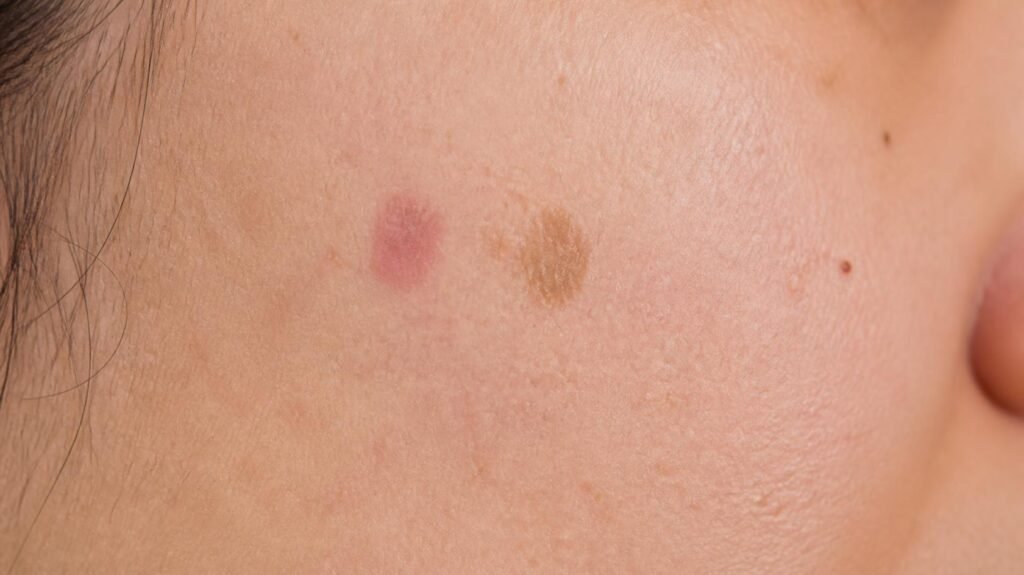
If the inflammation damaged your blood vessels, the mark shows up red or pink. That’s blood showing through, same as always.
If the inflammation kicked your pigment cells into gear, the mark shows up brown or dark. That’s extra melanin, same as a freckle.
The color of your mark is a clue. It tells you what went wrong underneath. Red means blood vessels. Brown means melanin. The mark is basically pointing at its own cause.
PIE vs PIH: What the Two Acne Marks Are Called
These marks aren’t random, and dermatologists have named both. Researchers have even mapped out why inflammation leaves behind red versus brown marks.
The red or pink one is called post-inflammatory erythema—PIE for short. “Erythema” is just the medical word for redness.
The brown or dark one is called post-inflammatory hyperpigmentation—PIH for short. “Hyperpigmentation” just means extra pigment.
Same fork in the road. Just with proper names now.
How to Tell PIE From PIH: The Press Test
Want to know which one you have? There’s an easy check.
PIE (post-inflammatory erythema) is a red or pink acne mark caused by damaged blood vessels near the skin’s surface. PIH (post-inflammatory hyperpigmentation) is a brown or dark mark caused by excess melanin. Press the mark: red that fades is PIE, dark that stays is PIH.
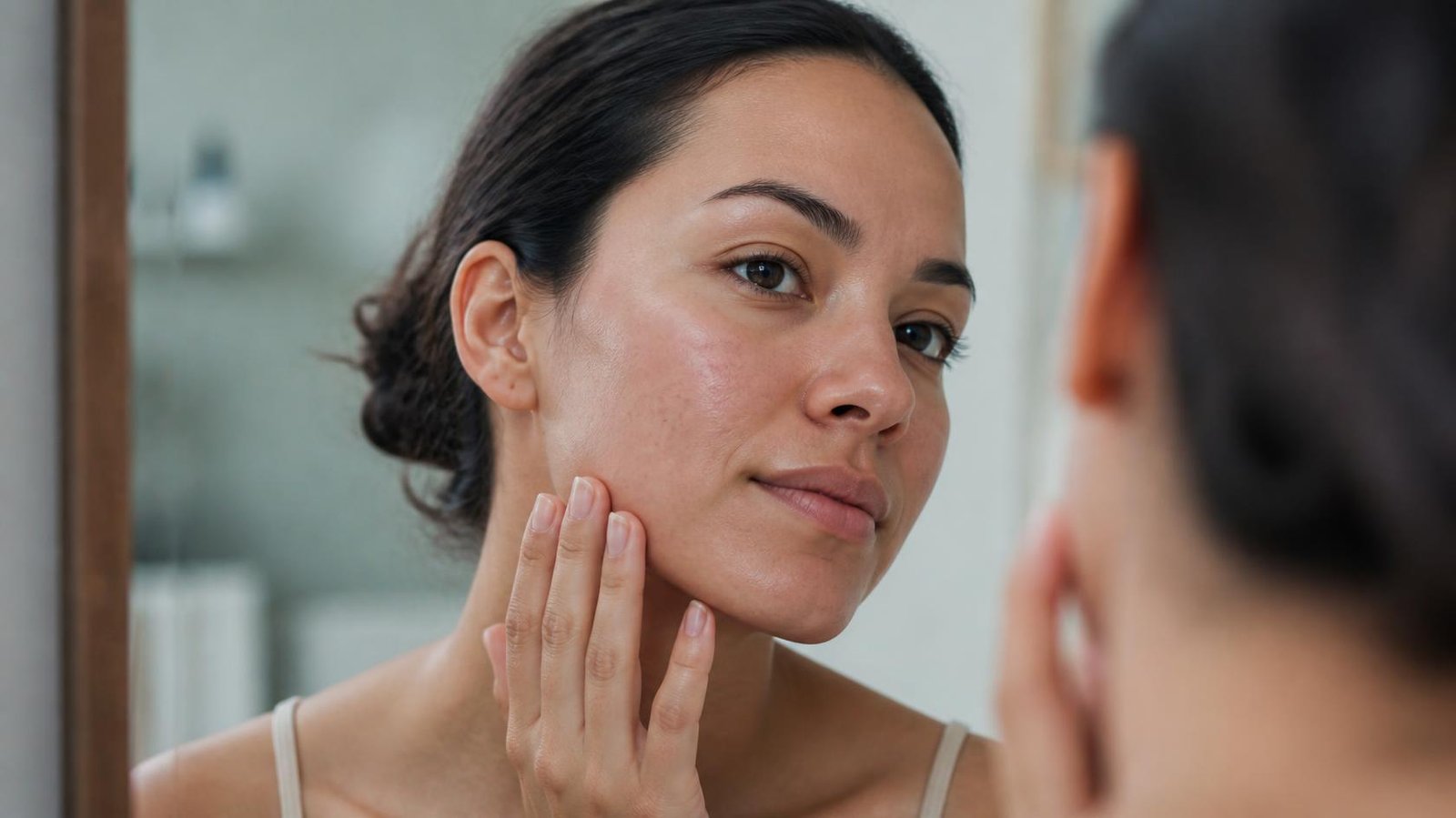
Here’s how to run it. Press your finger gently on the mark, then watch what happens.
If it’s a red mark from blood vessels, pressing pushes the blood out of the way. The mark fades or vanishes for a second. Then the red rushes back when you let go.
A brown mark won’t do that. Melanin doesn’t move when you press. The color stays put.
So here’s your test:
- Fades when pressed = red mark = PIE = blood vessels
- Stays the same = dark mark = PIH = melanin
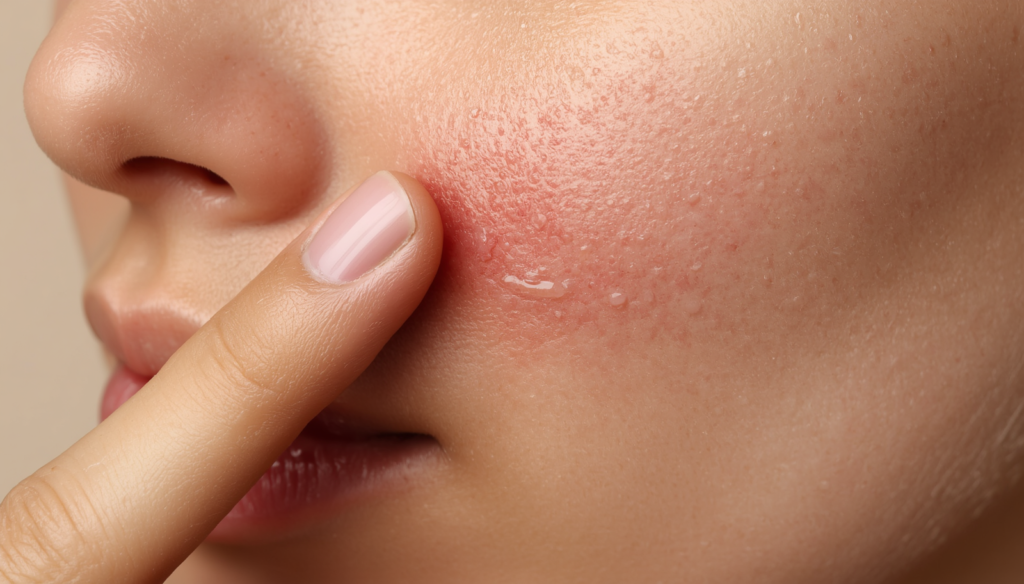
You just diagnosed yourself in ten seconds. And this isn’t a random internet hack—checking whether a mark blanches under pressure is the same basic test dermatologists use in the clinic to tell a vascular mark from a pigmented one.
Want to see the difference in action? This short walkthrough shows how to spot PIE vs PIH and fade red and brown marks the right way:
Why Red Marks and Dark Spots Need Different Treatments
Now connect the dots.
Two different problems live under your skin. One is blood vessels. The other is pigment. They are not the same thing—we agreed on that at the start.
A tool that fixes blood vessels does nothing to pigment. A tool that fixes pigment does nothing to blood vessels. This should feel obvious. You wouldn’t grab a wrench to hammer a nail.
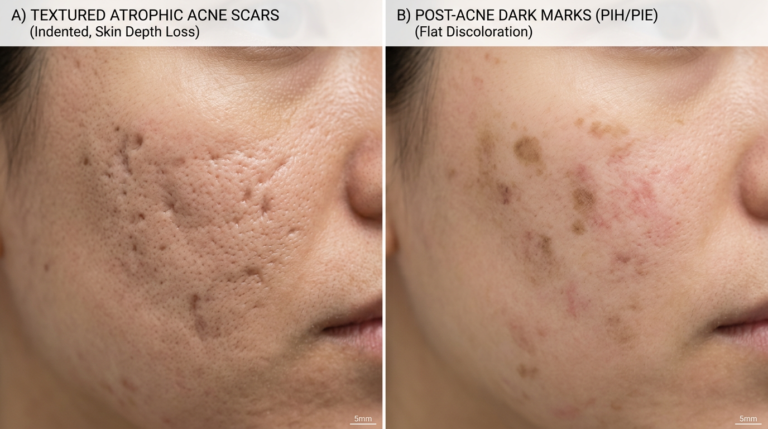
So a treatment aimed at red marks won’t fade brown ones. And a treatment for brown marks won’t touch red ones. If you’re not even sure what you’re looking at yet, start with acne scars vs. dark marks so you’re not chasing the wrong fix.
Why People Waste Months on the Wrong Acne Marks
Here’s the trap. Most people assume every leftover mark is a “dark spot”. They lump all post-acne marks under “hyperpigmentation” and reach for a brightening serum.
But brightening products target melanin. And a red mark has no extra melanin—it’s a blood vessel problem. So the product does nothing. The mark stays. The person decides their skin is broken.
I learned this the hard way. I spent three months and a full bottle of brightening serum on a red mark that had no extra pigment in it at all. The serum never stood a chance. I wasn’t failing. I was using the wrong tool.
That’s the whole story of red marks vs dark spots: two marks that look alike, with completely different fixes.
How to Treat PIE and PIH
Now the fix makes sense. Match the tool to the problem.
How to Treat Red Marks (PIE)
To fade PIE, you calm inflammation and help blood vessels heal—the same principles behind soothing post-acne redness and irritation. Good options:
- Niacinamide, which helps strengthen capillary walls and cut redness
- Azelaic acid to calm the inflammation
- Sunscreen every day—heat, UV, and even visible light can worsen inflammation and trigger flushing
- Barrier support like ceramides, so vessels can recover—here’s how to repair a damaged skin barrier
How to Treat Dark Spots (PIH)
To fade PIH, you slow melanin and speed up cell turnover. PIH responds best to pigment-suppressing skincare and gentle exfoliation—think retinoids and melanin-blocking ingredients (see the best products for dark marks after acne, and the full breakdown of post-acne hyperpigmentation).
One more thing worth knowing: post-inflammatory erythema usually clears faster than PIH, and pigment can take months to fully fade, so red marks often clear sooner than brown ones.
Does Sunscreen Help PIE and PIH?
Here’s a bonus that surprises people: the sun is bad for both marks.
Sun makes pigment cells produce more melanin, so it darkens brown marks. Sun also inflames skin and widens blood vessels, so it worsens red marks too.
That’s why daily sunscreen shows up on both lists. It’s a non-negotiable part of any simple acne routine, and it’s the one habit that protects you no matter which mark you have.
The Best Products for PIE and PIH
Some links below are affiliate links. If you buy through them, this site may earn a small commission at no extra cost to you.
Once the press test tells you what you’re dealing with, match the product to the mark. Here’s what to reach for.
For red marks (PIE) — calm inflammation, support blood vessels:
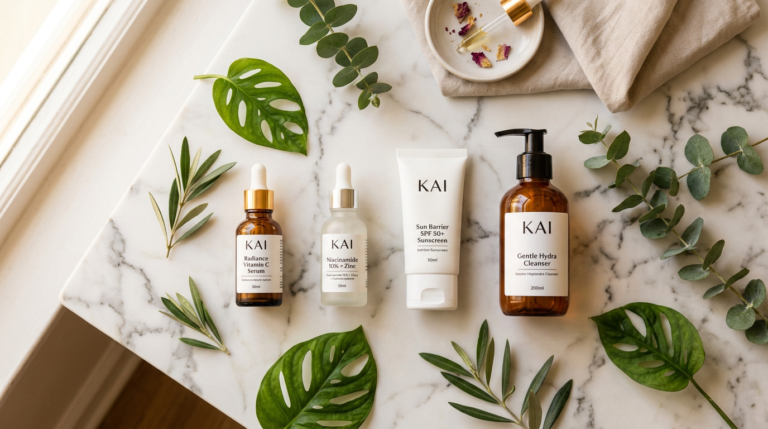
- The Ordinary Niacinamide 10% + Zinc 1% — a budget-friendly niacinamide serum to cut redness and strengthen capillary walls.
- The Ordinary Azelaic Acid Suspension 10% — azelaic acid to quiet the inflammation behind red marks.
- CeraVe Moisturizing Cream — ceramides and barrier support so damaged vessels can recover.
For dark spots (PIH) — slow melanin, speed up turnover:
- CeraVe Resurfacing Retinol Serum — a gentle retinol to speed cell turnover and fade post-acne pigment.
- TruSkin Vitamin C Serum — a melanin-targeting antioxidant serum for brown marks.
For both (the one you can’t skip):
- EltaMD UV Clear SPF 46 — a lightweight daily sunscreen with niacinamide. Sun makes both PIE and PIH worse, so this one protects you either way.
PIE vs PIH: Frequently Asked Questions
How do I know if I have PIE or PIH? Press the mark with a clean finger. If it fades or turns pale for a second and the red rushes back when you let go, it’s PIE—a blood vessel problem. If the color stays exactly the same, it’s PIH—a pigment problem.
Do PIE and PIH go away on their own? Often, yes—but slowly. PIE tends to fade over weeks to months as blood vessels heal, while PIH can linger for months and sometimes longer, especially in deeper skin tones. Daily sunscreen and the right actives speed both up.
Can you have PIE and PIH at the same time? Yes. After inflammatory acne it’s common to have both at once—red marks and brown marks sitting side by side. You treat each one for what it is, and sunscreen covers both.
Why isn’t my brightening serum fading my red marks? Because brightening serums target melanin, and red marks (PIE) have no extra melanin—they’re a blood vessel issue. That’s the classic red marks vs dark spots mix-up. Switch a red mark to niacinamide and azelaic acid instead.
Does vitamin C help PIE or PIH? Vitamin C mainly helps PIH by interfering with melanin, so it’s a solid pick for brown marks. For red PIE, it’s more about calming and antioxidant support than erasing the redness—niacinamide and azelaic acid do more of the heavy lifting.
When should I see a dermatologist for acne marks? If a mark hasn’t budged after a few months of the right approach, book a board-certified dermatologist. Stubborn PIE and PIH sometimes need in-office treatment like lasers, and a pro can confirm which mark you’re actually treating.
How to Get Rid of Your Acne Marks: Start Here
Here’s what it comes down to. You can’t fix a mark you haven’t identified, and PIE vs PIH is the only difference that matters. Red that fades under your finger is a blood vessel problem—reach for niacinamide and azelaic acid. Dark that stays put is a pigment problem—reach for retinoids and melanin blockers. Both get sunscreen, every morning, no exceptions.
So go find a mirror and press on that mark right now. You’ll know which one you’re dealing with before you finish this paragraph. Then buy the one product that actually treats it—not the three that don’t. If the mark still won’t budge after a few months of the right approach, it’s time to see a dermatologist; some cases need in-office treatment like lasers, and a good one will tell you straight.
Stop guessing. Start pressing.