Benzoyl Peroxide Wash Contact Time: How Long Is Enough?
You bought an acne wash, but the instructions online disagree: rinse immediately, wait two minutes, or leave it on for five. Meanwhile, your skin feels tight and you wonder whether longer contact would finally make the treatment work.
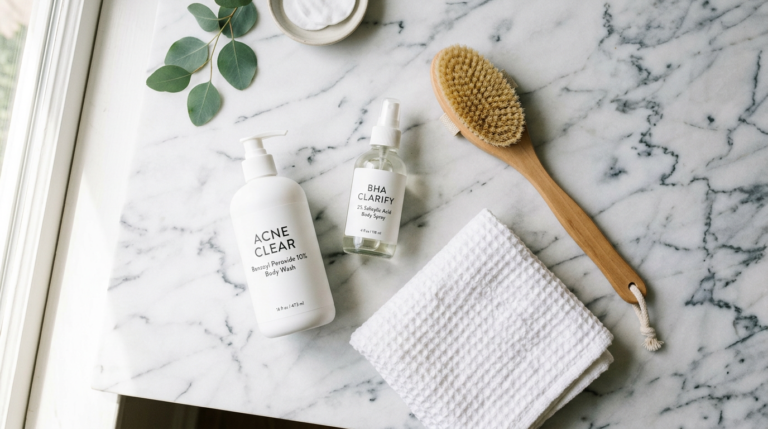
Benzoyl peroxide wash contact time depends on the product and treatment area. Follow your bottle’s directions first. Many washes specify one to two minutes; advice for back acne sometimes allows longer contact. Extra time is not automatically better, especially when your skin is irritated.
This guide separates practical instructions from laboratory findings, then shows how to fit a rinse-off treatment into a manageable routine. It is educational information, not a personalized treatment plan.
Table of Contents
Benzoyl peroxide wash contact time: start with the label
Check three things before turning on the tap: the active ingredient, its percentage, and whether the product is a wash or a leave-on treatment. Similar-looking tubes can have different instructions.
For a concrete example, the manufacturer’s directions for PanOxyl Acne Creamy Wash 4% say to wet the area, apply and massage for one to two minutes, then rinse thoroughly and pat dry. That timing belongs to this product; do not transfer it automatically to every cleanser.
Keep the tube where you can read it before use. If a clinician gave you different instructions for your particular treatment, clarify any mismatch with them rather than combining the longest timings from several websites.
Face versus back: why recommendations differ
The NHS benzoyl peroxide guide, reviewed September 7, 2026, describes one to two minutes for a gel wash. The American Academy of Dermatology’s back-acne guidance discusses two to five minutes on the back, where skin is thicker.
These recommendations address different contexts. The back-acne advice is not a reason to extend a facial wash beyond its label. If body breakouts are your main concern, our guide to managing back acne covers the wider routine around treatment.
Imagine two people using different products: one follows a facial cleanser’s one-minute instruction, while another has a dermatologist-directed back regimen. Neither should copy the other’s timer without checking the formulation and intended use.
| What you are checking | What to do next |
|---|---|
| Your wash gives a clear application time | Use that instruction consistently. Do not borrow a longer timer from a different brand or treatment area. |
| Your bottle says rinse but gives no time | Ask a pharmacist or the manufacturer for product-specific advice. A percentage alone cannot supply the missing instruction. |
| Your clinician prescribed a different schedule | Confirm the exact product, application area, frequency, and timing with them so the plan is unambiguous. |
| You cannot tolerate the directed routine | Seek advice about the formulation or schedule. Repeatedly adding contact time makes it harder to find a comfortable plan. |
What the contact-time study actually tells us
A 2022 laboratory study by Boonchaya and colleagues tested benzoyl peroxide against isolated Cutibacterium acnes. Under its experimental conditions, 5% and 10% concentrations achieved bactericidal activity against all tested isolates after 30 seconds; 2.5% required 15 minutes.
Those numbers are easy to turn into misleading skincare rules. The experiment measured bacterial killing in a laboratory system, not acne improvement in people using commercial face washes. It did not establish a universal cleansing time or prove that a 4% wash is ineffective.
Formulation, delivery to follicles, tolerance, and repeated use matter in practice. The useful takeaway is that concentration and exposure interact. The unhelpful leap is deciding that every lower-strength wash needs a 15-minute mask.
Likewise, a fast laboratory result does not mean the strongest wash will clear your skin fastest. Choose a product you can use as directed rather than building a routine around a single experimental number.
How to use a benzoyl peroxide wash without overdoing it
Dr. Abby Waldman’s video below demonstrates medicated cleansing and discusses contact time around the six-minute mark. Her demonstration also shows gentle rinsing and explains the towel-bleaching issue. Use it as a visual aid alongside your own product’s directions. This is a third-party video.
Before your first full application, MedlinePlus recommends a small-area trial: use a small amount on one or two intended treatment areas for three days, then proceed according to the package if there is no reaction or discomfort. This does not guarantee that later irritation cannot occur.
A practical washing sequence
1. Prepare before applying. Read the directions, move your towel within reach, and decide how you will time the wash. A timer is useful if you routinely underestimate a minute; no special skincare device is necessary.
2. Wet the intended area if directed. Use lukewarm water. Keep the wash away from eyes, lips, nostrils, and broken skin. Take particular care around the hairline so the product does not spread into hair.
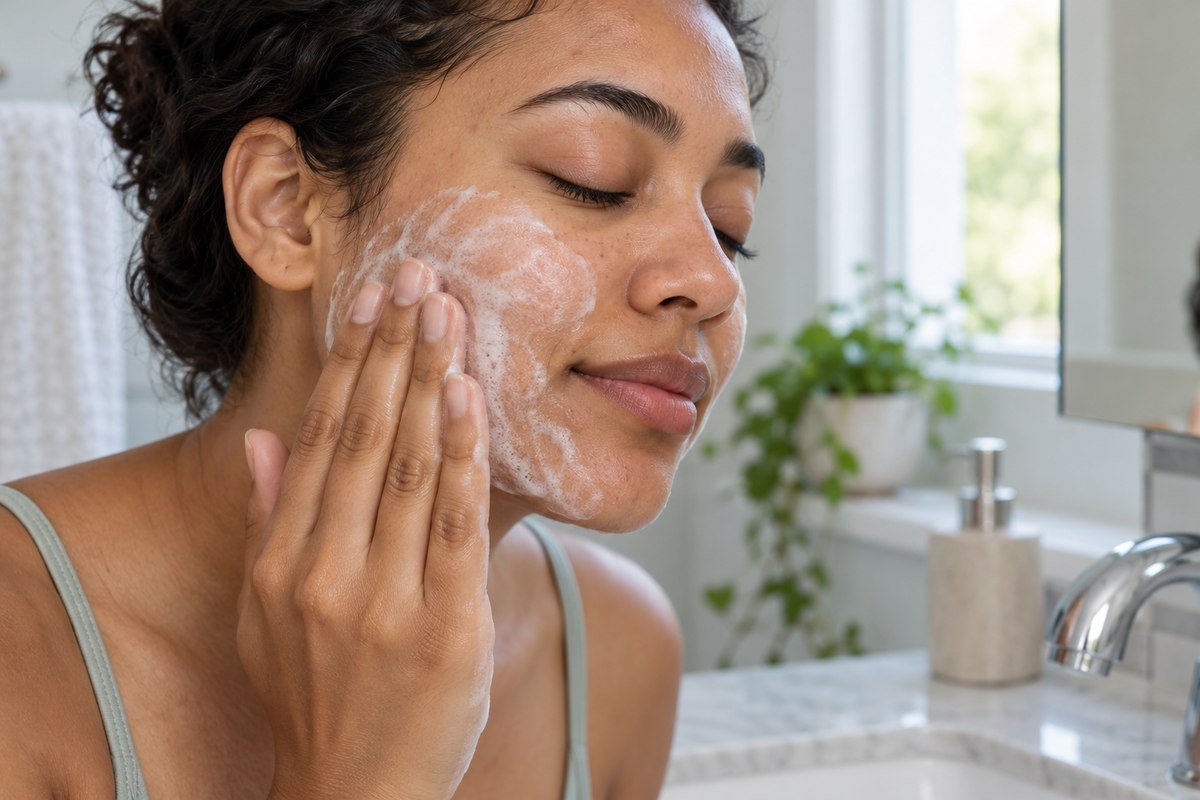
3. Apply gently for the specified time. Use fingertips and the amount stated on the packaging. Do not add a scrub, cleansing brush, or gritty exfoliant to make the session feel more effective. More friction is not a substitute for following directions.
4. Rinse thoroughly. Pay attention to the jawline and edges of the treated area. Wash your hands afterward. A rinse-off cleanser should not remain on your face as an overnight treatment.
5. Pat dry and moisturize. Choose a moisturizer you already tolerate. You do not need to introduce several new serums on the same day as a medicated wash.
For example, if you forget whether you started timing before or after spreading the product, simplify the process next time. Consistent use of the label’s sequence is more useful than trying to compensate with an extra-long wash today.
Build the rest of the routine around tolerance
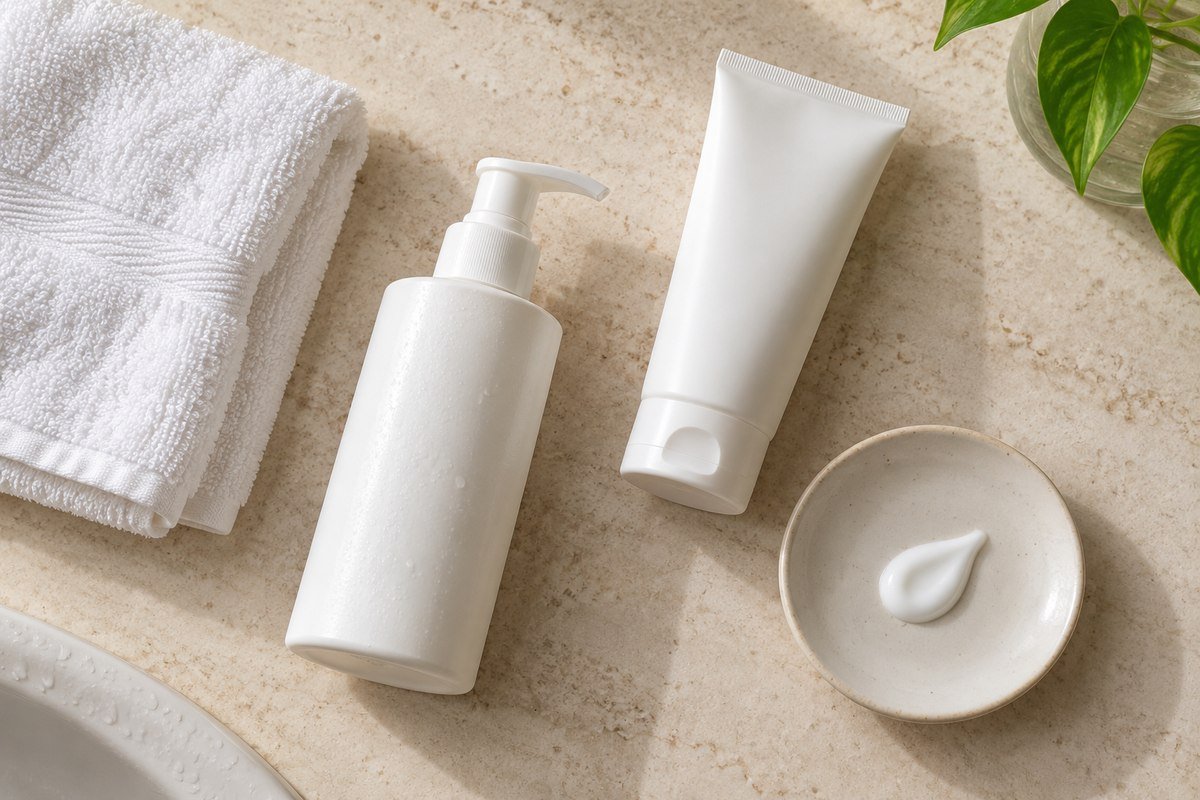
A medicated wash already supplies an acne treatment step. Think about what each additional bottle contributes before adding another active ingredient. A second acne cleanser, peeling toner, and spot treatment can make it difficult to identify the cause if irritation develops.
A simple planning framework is a wash used as directed, moisturizer, and daytime sun protection. For the surrounding steps, see our simple acne routine guide. If you already have prescription instructions, build around that plan rather than replacing it with an online template.
Keep a short note of the product, strength, frequency, and contact time. If you change all four at once, the next week’s skin reaction will be hard to interpret. A useful note might read: “Same wash and timing; added a new exfoliating toner Tuesday.” Bring that information to a pharmacist or dermatologist if problems arise.
For moisturizer shopping, prioritize a comfortable texture and a formula you tolerate over a long list of fashionable ingredients. Our moisturizer guide for acne-prone skin explains options. A non-comedogenic label can help narrow a shortlist, but individual tolerance still matters.
Two products that fit this approach
This article contains affiliate links. As an Amazon Associate I earn from qualifying purchases. Recommendations are based on product information, not personal testing.
PanOxyl Acne Creamy Wash, 4% benzoyl peroxide
This rinse-off option suits readers seeking a benzoyl peroxide cleanser labeled for the face, chest, and back. Its one-to-two-minute directions give a clear starting point for this article’s main question.
The buying consideration is tolerance: a creamy format still contains an active medicine and can cause dryness or irritation. Check that the listing and delivered tube say 4% Acne Creamy Wash; the brand also sells other formulations. You do not need two benzoyl peroxide washes in the same routine. View PanOxyl Acne Creamy Wash on Amazon.
Vanicream Daily Facial Moisturizer, 3 fl oz
This moisturizer offers hyaluronic acid and ceramides for readers who want a separate hydration step after rinsing. It may suit people who prefer a straightforward facial lotion rather than another acne-active product.
It does not replace acne medication or sunscreen, and a sensitive-skin positioning cannot guarantee that every person will tolerate it. Check the current ingredient list and distinguish the Daily Facial Moisturizer from the brand’s other creams and SPF products. Keep using your existing moisturizer if it already works comfortably. View Vanicream Daily Facial Moisturizer on Amazon.
Avoid the mistakes that make timing harder
Leaving the wash on while doing something distracting
A shower routine can make it easy to forget a medicated wash while conditioning hair or shaving. Finish the timed treatment and rinse before moving on. If the phone timer lives outside the bathroom, choose a simple reminder you can use without handling it with wet hands.
Trying to push through significant irritation
Mild dryness and peeling can occur. Persistent burning, marked swelling, blistering, or worsening discomfort deserve attention rather than a longer timer. Stop the product and get medical advice for a significant reaction. Hives, throat tightness, facial swelling, faintness, or breathing difficulty require urgent medical help.
Do not automatically call a worsening rash “purging.” Record when symptoms began and which products you used. That helps a professional distinguish routine irritation from a reaction requiring a different approach.
Forgetting towels and clothing
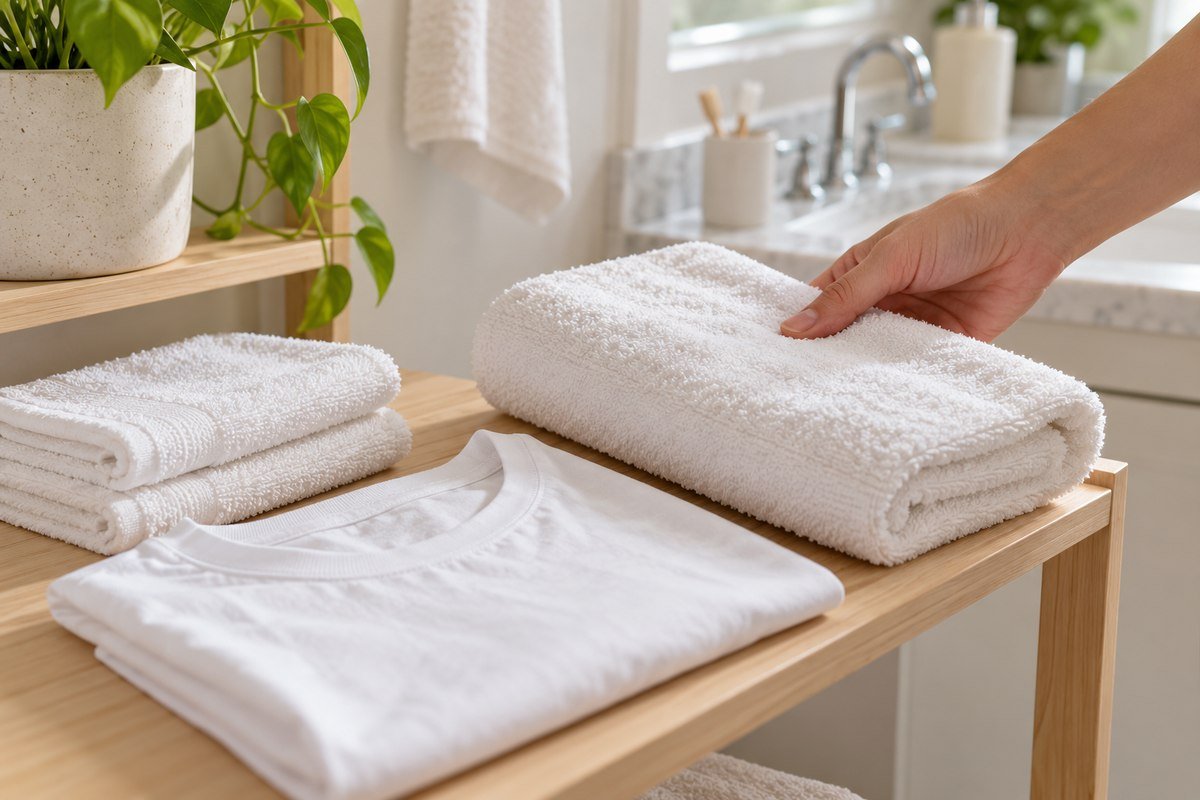
Benzoyl peroxide can bleach hair and colored fabrics. Rinse carefully and consider a dedicated white towel or an older towel you do not mind discoloring. Avoid wiping wet product onto clothing or bedding.
White fabric is a practical precaution, not a reason to skip rinsing. Keep the towel separate from items used to remove makeup, and wash it according to its care instructions. You do not need expensive “acne-proof” linens to organize this part of the routine.
When changing the timer is the wrong next step
Judge progress over weeks rather than after one wash. MedlinePlus notes that effects may take four to six weeks. If acne is worsening or is not improving, ask a clinician to review the treatment rather than repeatedly extending exposure.
Deep painful lesions, scarring, or breakouts affecting your wellbeing warrant professional assessment sooner. Our guide to when to see a dermatologist for acne can help you prepare for that conversation.
Bring the actual tube or a photo of its label and a short account of how you use it. “I use this 4% wash once each morning for the label’s stated time” gives a clinician more useful information than “I tried everything.”
Choose a repeatable routine
Start with the instructions on your own wash, use gentle technique, rinse thoroughly, and keep the supporting routine manageable. If the product is uncomfortable or results are disappointing, review the plan with a professional. The goal is an effective treatment you can tolerate, not the longest possible contact time.
Frequently asked questions
How long should I leave benzoyl peroxide wash on my face?
Follow your specific product’s label. Many washes specify one to two minutes. Do not extend facial application simply because you saw longer advice for back acne. Ask a pharmacist if the instructions are unclear.
Can I leave a benzoyl peroxide wash on overnight?
No. Rinse-off washes should be rinsed away as directed. A leave-on gel is a different formulation with its own instructions; do not treat the two formats as interchangeable.
Does a 4% wash need longer than a 10% wash?
There is no universal timing rule based only on percentage. Formulation and directions matter. The laboratory contact-time study did not test every commercial wash or measure acne improvement in people.
Should I use benzoyl peroxide wash every day?
Follow the package or your clinician’s plan. Frequency and contact time are separate instructions. If dryness or irritation becomes troublesome, ask a pharmacist or dermatologist about adjusting the routine.
Do I need moisturizer after a benzoyl peroxide wash?
A moisturizer you tolerate can help manage dryness after rinsing. Choose a simple option rather than automatically adding another acne-active product. Use appropriate sun protection during the day.
Will rinsing prevent benzoyl peroxide from bleaching towels?
Thorough rinsing helps reduce residue, but treat colored fabrics cautiously. A dedicated white or older towel is a practical precaution. Do not wipe unrinsed wash onto towels, clothing, or bedding.