Winter Acne Routine: 7 Powerful Fixes for Painful Skin
Your summer cleanser still leaves your face shiny, but now your cheeks sting when you moisturize. A winter acne routine needs to address both problems: ongoing breakouts and skin that no longer tolerates the same products. Adding another acid usually makes that decision harder.
Start by identifying what changed. Keep effective treatment in view, remove unnecessary irritation, and adjust hydration to the areas that actually feel dry. The seven changes below help you build a practical morning and evening plan without buying an entirely new shelf of products.
Affiliate disclosure: As an Amazon Associate, we earn from qualifying purchases, at no additional cost to you. Product suggestions are optional; use suitable products you already tolerate. This educational guide does not replace individual medical advice.
Table of Contents
Build your winter acne routine around symptoms
A calendar cannot diagnose your skin. Winter can make dryness more noticeable, but not everyone experiences worse acne in cold weather. An older observational study published in 1996 reported that approximately one-third of participants described winter worsening and approximately one-third summer worsening. Self-reported seasonal patterns are not proof that cold air directly causes every breakout.
The useful question is whether you have more recognizable pimples, more irritation, or both. For a winter acne routine, these distinctions are more actionable than assigning every new bump to the weather. Take one clear photo and write down your current products before changing anything.
Winter acne routine check: breakouts or irritation?
Blackheads, whiteheads, and familiar inflamed pimples suggest ongoing acne. Widespread tightness, flaking, burning, or a rash after applying products suggests irritation deserves attention too. These patterns can overlap, and photographs alone cannot reliably distinguish acne from eczema, rosacea, or folliculitis.
For example, two usual chin pimples with otherwise comfortable skin do not justify replacing an effective routine. Two pimples plus burning across both cheeks call for a review of the whole product stack. If symptoms are persistent, spreading, or difficult to identify, ask a clinician rather than treating every patch as clogged pores.
1. Replace the stripping cleanse, not every product
The first change in a winter acne routine is often the wash. A face that feels squeaky or tight afterward is giving you useful feedback. Choose a gentle cleanser and use your fingertips; brushes, rough cloths, and gritty scrubs add friction without making acne medication more effective.
The American Academy of Dermatology recommends gentle washing up to twice daily and after sweating. More frequent washing is not a substitute for acne treatment. Rinse thoroughly with lukewarm water and pat instead of rubbing. There is no need to chase a universal minute-long cleansing target.
If you use a medicated wash, check its directions separately. Leaving benzoyl peroxide on longer because winter breakouts seem stubborn can increase irritation. Our benzoyl peroxide wash contact-time guide explains why the particular formula and instructions matter.
Optional product: Vanicream Gentle Facial Cleanser is a soap-free, non-comedogenic option without essential oils. Consider it when your existing wash leaves tightness; it cleanses but does not replace an acne medicine. The manufacturer lists the current formula and directions.

2. Match moisturizer to your dry areas
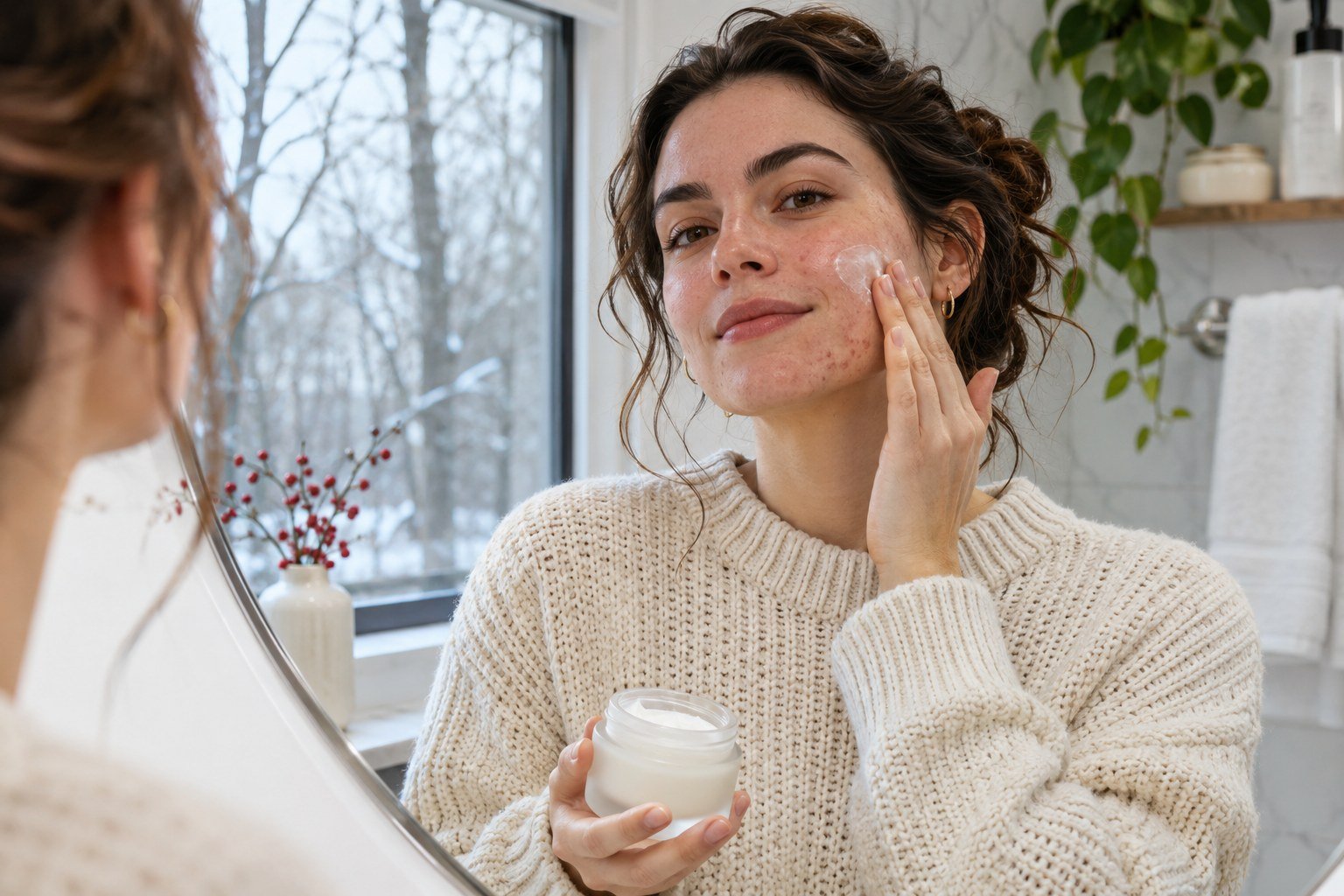
A winter acne routine can use different amounts of the same moisturizer across the face. Your cheeks may need more than your forehead. Begin with a fragrance-free, non-comedogenic product you find comfortable; a heavier texture is not automatically better, and an oil-free label does not promise individual tolerance.
Apply moisturizer after washing, while the skin is still slightly damp, unless a treatment step requires dry skin first. Avoid repeatedly wetting the face between every layer. If your cheeks stay tight after absorption, try a little more there before adding another serum.
The AAD explains that moisturizer can help people tolerate drying acne treatments, including benzoyl peroxide and topical retinoids. This is supportive care, not evidence that moisturizer alone clears acne. Hydration and acne control are related goals with different jobs.
Optional product: Vanicream Daily Facial Moisturizer contains glycerin, hyaluronic acid, squalane, and five ceramides according to its manufacturer ingredient list. It is a reasonable lightweight hydration option, not a promise of zero breakouts. Introduce it without simultaneously changing your cleanser and treatment.
Keep a winter acne routine affordable: finish a moisturizer that works rather than replacing it because a new product says “barrier.” Read our dry acne-prone skin guide if dryness remains the main problem throughout the year.
3. Review acne treatment before adding another active
A comfortable winter acne routine should still respect the treatment plan that controls your breakouts. Do not abandon a prescribed medicine simply because the season changed. Equally, do not assume persistent burning is a necessary sign that it is working. Bring the symptom and your full routine to the prescriber or pharmacist.
For adapalene, MedlinePlus notes that dryness and irritation may occur during the first two to four weeks, and full benefit can take eight to twelve weeks or longer. Wind and cold can be particularly irritating. More frequent application will not make that process safely finish sooner.
Avoid adding a salicylic acid toner, exfoliating mask, and retinoid together to “fix” flakes. Ask whether the existing treatment frequency, amount, or supporting products need adjustment. People using a prescription combination should follow its particular instructions, not copy a schedule intended for a different ingredient.
For a moisturizer-buffering discussion specific to adapalene, see our adapalene sandwich method guide. A winter acne routine is broader than that technique: cleansing, sun protection, comfort, and product overload still matter. Pregnancy, plans for pregnancy, and breastfeeding require treatment-specific advice before choosing medicines.
4. Keep sunscreen in the morning plan
Shorter days do not remove the need for sun protection. Make sunscreen part of your winter acne routine rather than saving it for beach weather. Choose broad-spectrum SPF 30 or higher and combine it with shade and suitable clothing. Follow the label for generous application and reapplication.
A moisturizer with SPF can simplify a rushed morning if you apply it as a sunscreen, not as a tiny dab of face cream. If it pills, try fewer unnecessary layers underneath rather than using less protection. A product that you dislike wearing is unlikely to become a reliable daily habit.
Optional product: Vanicream Facial Moisturizer Broad Spectrum SPF 30 combines a non-comedogenic moisturizer with zinc-oxide sunscreen. Its directions specify application fifteen minutes before sun exposure and reapplication at least every two hours; use water-resistant sunscreen for swimming or sweating. Check finish and comfort on your own complexion.
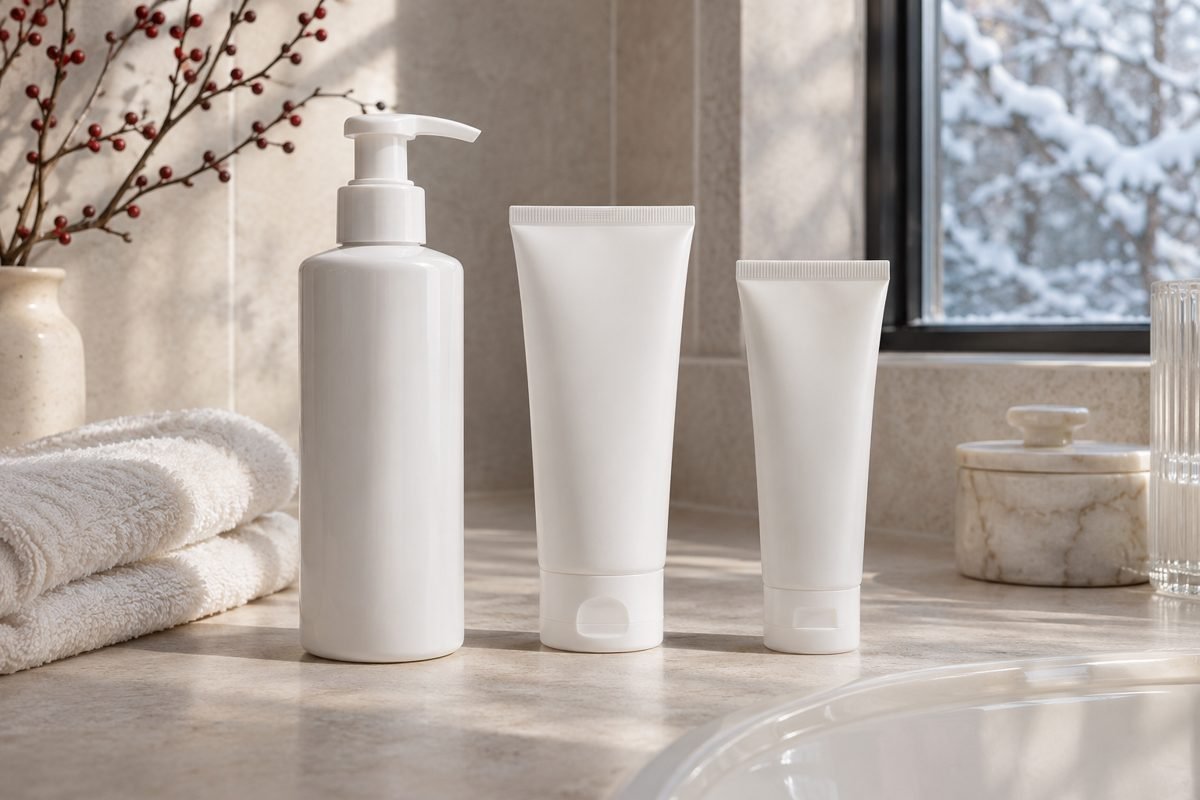
Those three examples cover different jobs, so you do not need to buy them as a matching set. Keep the cleanser, moisturizer, or sunscreen you already tolerate. Check the exact product name, seller, and package instructions when buying; formulas and listing variants can change.
Before buying, compare the front label with the full ingredient list and directions. Similar-looking bottles can contain an exfoliating acid in one version and no acne active in another. Save a photo of the exact package you started using, including its strength. That small habit makes a winter acne routine easier to troubleshoot when a retailer changes a listing or you accidentally reorder a different version. A matching brand name alone does not mean two products do the same job.
5. Remove friction and unnecessary exfoliation
A winter acne routine can fail outside the bathroom. A scratchy scarf against the same jawline, repeated rubbing with tissues, or a tight collar may make already irritated areas feel worse. Choose softer clean fabric, reduce rubbing where possible, and notice whether the distribution matches the contact area.
Do not scrub visible flakes away to create a smooth surface for makeup. Skip optional abrasive products while irritation is being assessed. If makeup stings, adding a primer to hide the reaction is less useful than identifying which layer triggered it. Keep a short list rather than trying to remember every application.
For example, if your cheek began burning after a new exfoliating pad, record that change first. Do not immediately label your familiar moisturizer as pore-clogging because you also noticed a pimple. A timeline helps separate a plausible irritation trigger from coincidental acne fluctuations.
6. Make showers and indoor air less drying
A winter acne routine extends to how you wash your body. The AAD recommends warm rather than hot showers lasting five to ten minutes for dry skin. Moisturize afterward. If back or chest acne needs a medicated wash, follow its directions instead of increasing both heat and exposure time.
A humidifier may help when indoor air is dry, but it is optional and is not an acne treatment. Clean and maintain it according to its instructions. Do not buy one expecting it to compensate for an irritating cleanser or an overloaded active-ingredient routine.
For your bedroom and desk, consider the practical exposure: are you sitting directly beside a heater, or repeatedly washing after coming indoors? Change the avoidable source of discomfort before buying another serum. A winter acne routine should fit the room and schedule you actually have.
Watch: The American Academy of Dermatology video below demonstrates general dry-skin care. Use it alongside the acne-specific guidance here; it does not replace directions for your medicines.
7. Track comfort separately from acne progress
Do not judge a winter acne routine only by tomorrow’s mirror. Tightness and burning are different outcomes from the number of new pimples. Keep two brief notes: how comfortable your face feels after washing, and whether new acne lesions are appearing over time.
One weekly photograph in similar lighting is more useful than twenty close-ups taken under different bathroom bulbs. Record product changes and treatment start dates. This simple record can show whether irritation began before or after a new product and makes a dermatology conversation more precise.
Allow an appropriate treatment trial under the product directions and clinician guidance. Do not wait through significant side effects just to complete a calendar target. Painful deep lesions, scarring, a persistent rash, or substantial distress are reasons to seek professional help rather than keep experimenting.
If a product causes hives, swelling, blistering, or severe burning, stop using it and obtain prompt medical advice. Trouble breathing or swelling of the lips, tongue, or throat needs emergency care. A winter acne routine is not the right tool for a serious reaction.
A practical morning and evening checklist
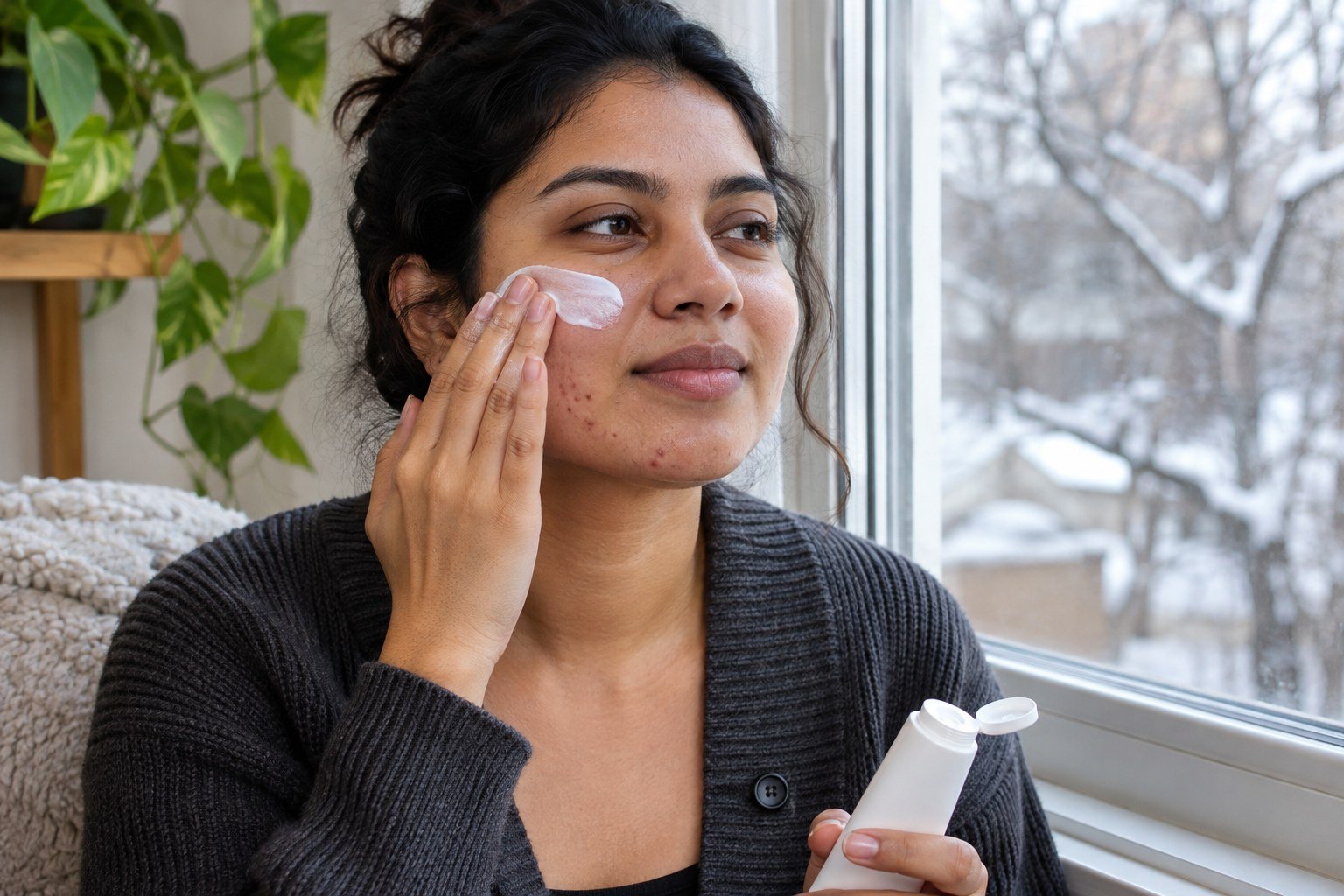
Keep the winter acne routine visible beside the products you use. In the morning, cleanse gently as needed, apply your prescribed or label-directed morning treatment if applicable, moisturize where needed, and use sunscreen. At night, remove sunscreen and makeup gently, use your treatment as directed, and moisturize in the order advised for that treatment.
On a busy workday, the priority is a repeatable basic plan rather than perfect timing between five cosmetic layers. If you repeatedly skip treatment because it feels uncomfortable, bring that information to your clinician. A theoretically effective plan cannot help much when you cannot tolerate following it.
For combination skin, keep the same basic sequence but adjust moisturizer by area. For skin that burns with nearly everything, prioritize assessment and review our damaged skin barrier guide. For a straightforward foundation year-round, use our simple acne routine guide.
If your routine worked until the heating came on: make a short inventory of everything that touches your face, including makeup removers and spot treatments. Pick the most obvious avoidable source of tightness first. Keep the rest of the winter acne routine steady so you can tell whether that change helps. Replacing four products at once loses that information.
If only your cheeks are dry: note where you apply each product instead of automatically covering the whole face with more moisturizer. You might need extra hydration on the cheeks while your forehead remains comfortable. Do not spread a spot treatment farther to make the routine feel symmetrical. Your winter acne routine should reflect the areas you actually treat.
If you are travelling between climates: pack familiar basics in their original containers where practical and keep the directions accessible. A hotel bathroom, different water temperature, and a rushed evening can change how you use products even when the formulas stay the same. Record those changes before deciding the entire winter acne routine has failed.
For each scenario, decide in advance what would justify medical advice: worsening pain, persistent burning, a new rash, or scarring. Bring the product names and a short timeline. This gives the clinician something specific to assess and avoids another appointment spent trying to reconstruct which acid or retinoid you used last week.
Frequently asked questions
Why does my acne seem worse in winter?
Cold weather, indoor dryness, and changes in products can coincide with irritation or breakouts, but winter worsening is not universal. Check whether you have familiar pimples, widespread flaking, or both before changing treatment.
Should I stop adapalene during winter?
Do not stop a prescribed treatment simply because the season changed. If dryness or burning develops, ask your prescriber or pharmacist about the amount, frequency, and supporting products. Follow the directions for your particular medicine.
Can oily skin need moisturizer in winter?
Yes. Oiliness and dry or irritated areas can occur together. Choose a comfortable non-comedogenic moisturizer and adjust the amount by area rather than assuming the whole face needs a heavy cream.
Should I exfoliate flaky acne-prone skin?
Avoid scrubbing or adding acids to irritated, peeling skin. Review your existing products and moisturize appropriately. Persistent burning, cracking, or a rash deserves medical assessment rather than stronger exfoliation.
How long should I try a winter acne routine?
Track comfort from the beginning, but judge acne treatment over its recommended trial period. Adapalene can take eight to twelve weeks or longer for full benefit. Seek advice sooner for significant irritation, painful lesions, or scarring.
Do I need sunscreen when it is cold or cloudy?
Yes. Use broad-spectrum SPF 30 or higher alongside shade and clothing, and follow application and reapplication directions. A moisturizer with SPF only provides its intended protection when applied adequately as sunscreen.
The most useful winter acne routine is the one you can follow comfortably while keeping a suitable acne treatment on track. Start with the symptom you can identify, change one avoidable source of irritation, and use your notes to decide what needs professional review.