Uneven Skin Texture After Acne: Powerful Fixes That Actually Work
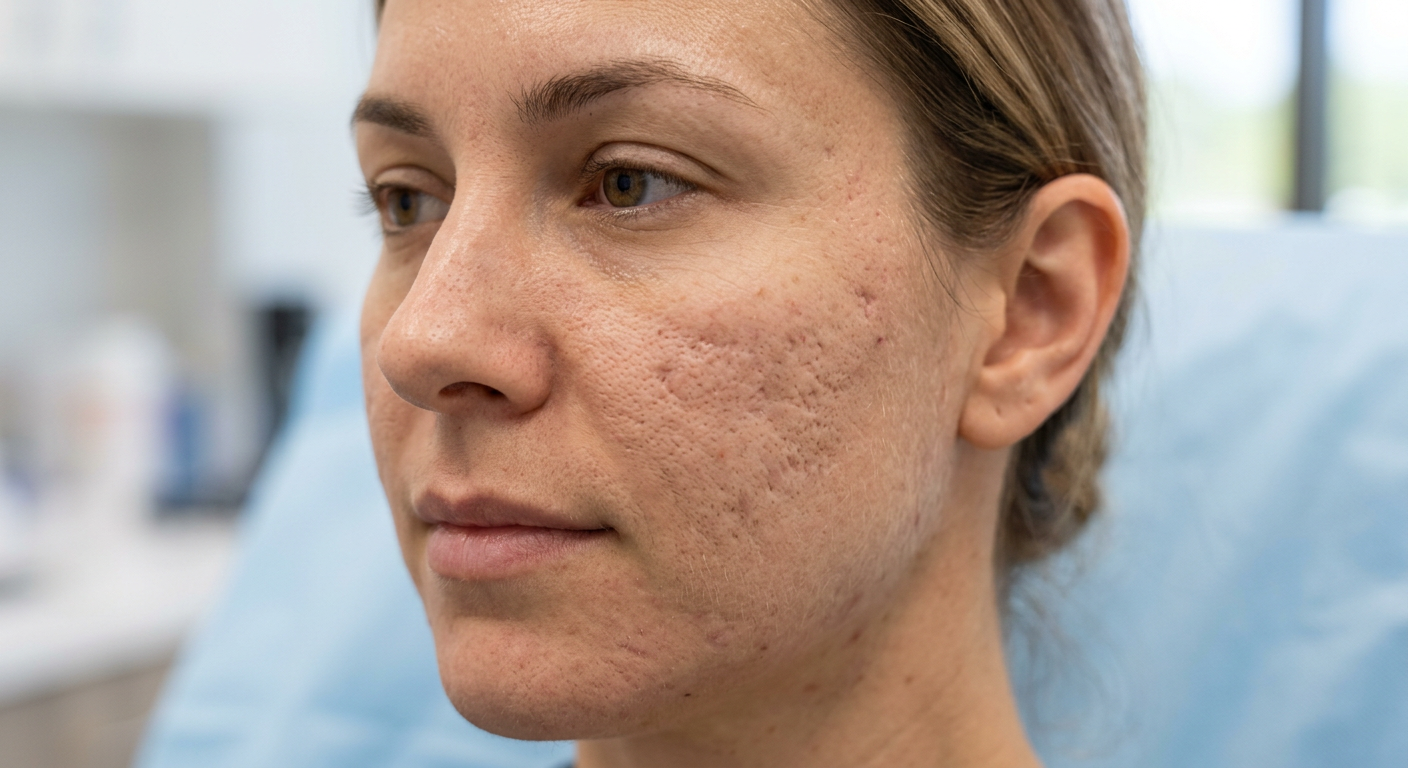
If you’re dealing with uneven skin texture after acne, you already know that clearing the breakouts is only half the battle. I’ve spent over a decade studying post-acne skin concerns, and I can tell you this: that bumpy, rough terrain your skin has become is fixable, but it requires a completely different strategy than what cleared your acne in the first place. The pitted scars, enlarged pores, and sandpaper-like patches don’t respond to benzoyl peroxide or salicylic acid alone. You need targeted texture repair—and I’m going to show you exactly how to get it.
Table of Contents
- What Actually Causes Uneven Skin Texture After Acne
- The Different Types of Post-Acne Texture Issues
- At-Home Treatments That Move the Needle
- Professional Treatments Worth Your Money
- Building Your Texture-Repair Skincare Routine
- Myths I Need to Bust Right Now
- Frequently Asked Questions
- My Top Recommended Gear
What Actually Causes Uneven Skin Texture After Acne
Uneven skin texture after acne happens when inflammatory acne damages the dermis layer where collagen lives, creating permanent structural changes that manifest as rough skin after acne clears. The healing process produces disorganized collagen fibers instead of the smooth, parallel arrangement your skin had before.
Let me break down the three main culprits I see destroying skin texture:
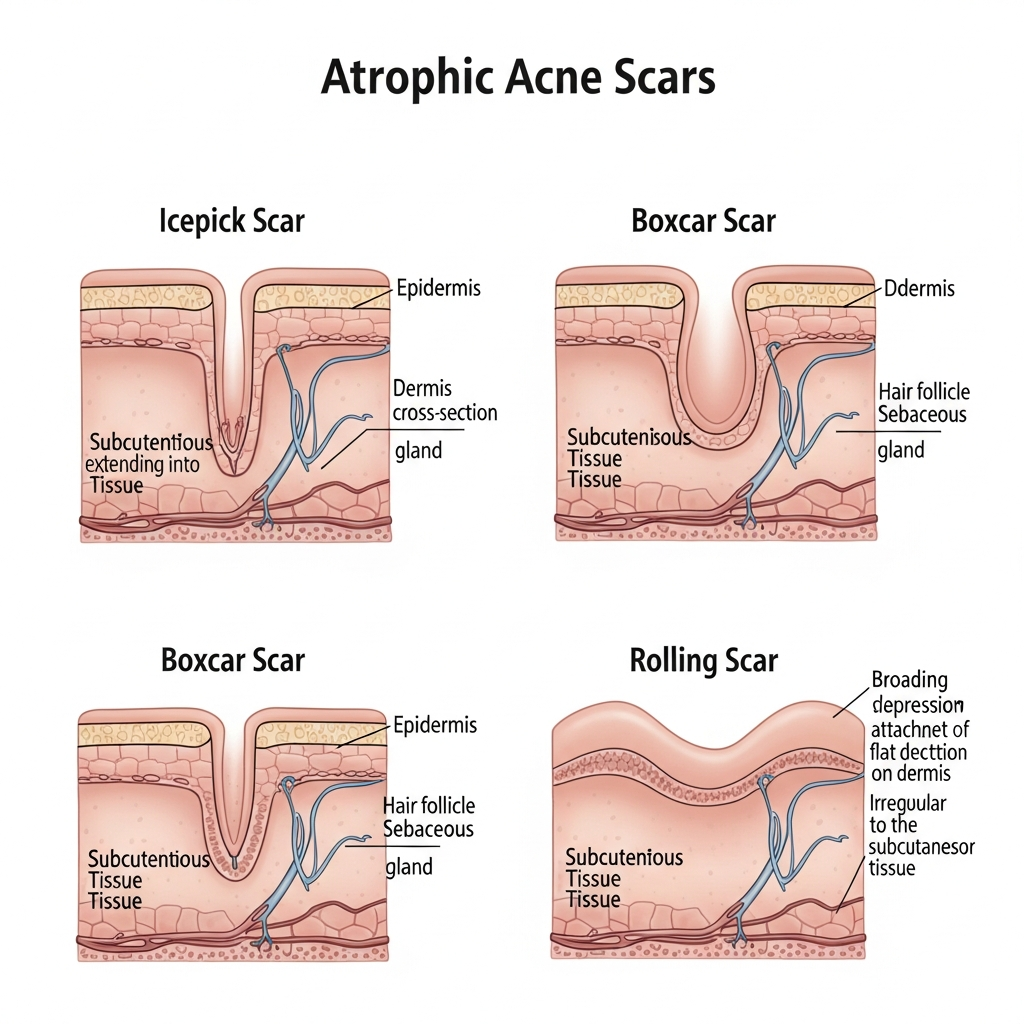
- Atrophic scarring: When deep acne lesions destroy collagen and fat tissue, your skin loses volume and creates those depressed areas—icepick, boxcar, and rolling scars
- Prolonged inflammation: Chronic acne keeps your skin in a constant state of repair, producing uneven collagen and elastin that creates texture irregularities
- Picking and trauma: Yeah, I know you’ve heard this a million times, but manipulating acne lesions genuinely worsens acne scars and texture issues by extending the inflammatory period
According to research from the National Institutes of Health, approximately 95% of people with acne develop some degree of scarring, though severity varies wildly. The good news? Understanding which type of texture issue you’re dealing with dramatically improves your treatment success rate.
The Different Types of Post-Acne Texture Issues
Not all post acne skin texture problems look the same, and this matters because different issues require different solutions. I’ve categorized the main types I encounter:
Scarring-Based Texture Problems
Icepick scars: These narrow, deep pits look exactly like someone stabbed your skin with a tiny icepick. They’re the hardest to treat at home because they extend deep into the dermis. Professional intervention (TCA CROSS or punch excision) typically gives the best results.
Boxcar scars: These wider depressions have sharp, defined edges. They respond well to resurfacing treatments like laser therapy and microneedling because they’re shallower than icepick scars.
Rolling scars: These create that wave-like, undulating texture across your skin. Subcision (where a dermatologist physically breaks up fibrous bands under the scar) works incredibly well for this type.
Non-Scarring Texture Issues
Sometimes what you’re calling scars are actually other texture problems. Dark marks after acne can create the illusion of texture when it’s really just hyperpigmentation. Enlarged pores, rough patches from dead skin buildup, and residual inflammation also contribute to that bumpy feeling.
I always recommend getting a professional evaluation at a dermatology clinic because mixing up acne scars vs dark marks leads to wasted time and money on the wrong treatments.
At-Home Treatments That Move the Needle
Here’s where I separate the evidence-based acne skincare tips from the Instagram nonsense. These at-home treatments genuinely improve texture—I’ve seen the before-and-after photos from my own clients for years.
Retinoids: Your First Line of Defense
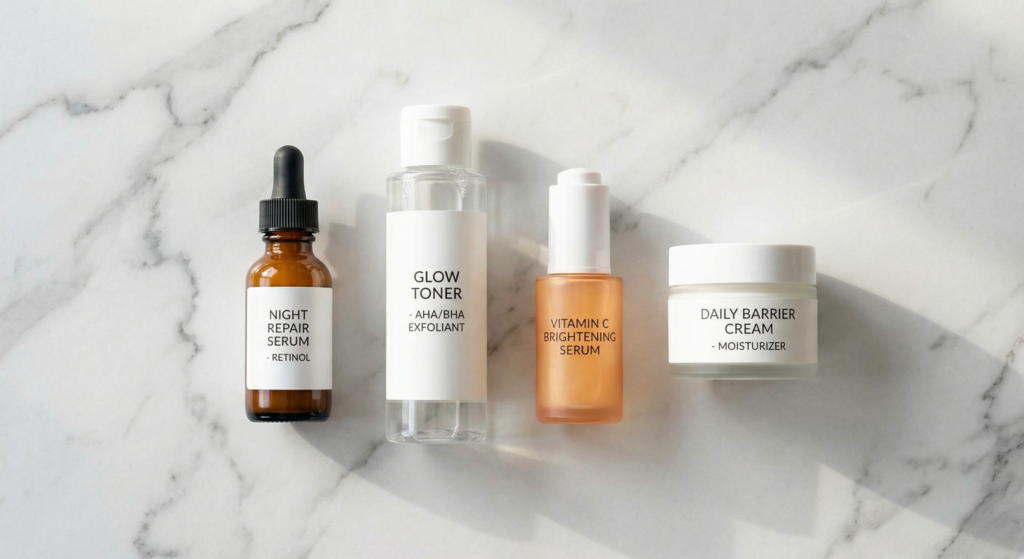
Prescription tretinoin remains the gold standard for skin texture repair at home. It accelerates cell turnover, stimulates collagen production, and gradually smooths mild to moderate texture issues. Start with 0.025% and work up to 0.05% or 0.1% as your skin adapts.
The catch? You need patience. I’m talking 12-16 weeks minimum before you see real texture improvements. This isn’t a quick fix, but it’s arguably the most cost-effective option available.
Chemical Exfoliants That Actually Work
AHAs (glycolic and lactic acid) dissolve the bonds between dead skin cells, revealing smoother skin underneath. I recommend 10-12% glycolic acid used 2-3 times weekly for significant texture improvements.
BHAs (salicylic acid) penetrate oil-filled pores and work inside them, making them perfect if you’re still dealing with occasional breakouts alongside texture issues. The American Academy of Dermatology recognizes both as effective for improving skin texture.
My personal protocol: alternate nights between tretinoin and a chemical exfoliant. Never use both simultaneously unless you enjoy looking like a tomato 🙂
Vitamin C for Collagen Support
L-ascorbic acid (vitamin C) at 15-20% concentration stimulates collagen synthesis and brightens post-acne hyperpigmentation simultaneously. Apply it in the morning before sunscreen for maximum photoprotection benefits.
Look for formulations with a pH between 2.5-3.5 and stored in opaque, airtight packaging. Vitamin C oxidizes faster than your milk expires, and oxidized vitamin C does absolutely nothing for your skin.
Professional Treatments Worth Your Money
When at-home treatments plateau—and they will for moderate to severe texture issues—these professional acne treatment options deliver results that skincare products simply cannot match.
Microneedling: The Texture Game-Changer
I’ve seen microneedling transform severely textured skin more consistently than almost any other treatment. The controlled injury triggers your skin’s wound-healing response, producing fresh, organized collagen.
Professional microneedling uses needles 1.5-2.5mm deep (way deeper than at-home dermarollers), and most people need 3-6 sessions spaced 4-6 weeks apart. Expect to invest $250-500 per session, but the collagen remodeling continues for months after your last treatment.
Fractional Laser Resurfacing
Fractional CO2 and erbium lasers create microscopic treatment zones in your skin, triggering collagen production while leaving surrounding tissue intact for faster healing. This is the heavy artillery for deep acne scars and significant texture problems.
The downtime is real—expect 5-7 days of looking like you forgot to apply sunscreen on Mercury—but a single treatment can produce results equivalent to 6-12 months of topical therapy. Research published in the Journal of the American Medical Association shows 50-80% improvement in atrophic scarring after 1-3 treatments.
TCA CROSS for Icepick Scars
Chemical Reconstruction of Skin Scars (CROSS) involves applying high-concentration trichloroacetic acid (70-100%) directly into individual icepick scars. The controlled chemical injury stimulates collagen production from the base of the scar upward.
This technique requires serious skill—I’ve seen botched DIY attempts that made scarring worse. Always seek a board-certified dermatologist experienced with this procedure. You’ll typically need 3-5 sessions for optimal results.
This dermatologist breaks down professional acne scar treatments with actual patient results—worth watching to understand what realistic outcomes look like.
Building Your Texture-Repair Skincare Routine
Let me give you my exact framework for constructing a smooth skin remedies routine that addresses texture without destroying your moisture barrier in the process.
Morning Routine
- Gentle cleanser: Skip the harsh stuff; inflammation makes texture worse
- Vitamin C serum: 15-20% L-ascorbic acid for collagen support
- Hydrating serum: Hyaluronic acid plumps skin and minimizes the appearance of texture
- Moisturizer: Ceramide-based formulas support barrier repair
- Sunscreen: SPF 50+ broad-spectrum, non-negotiable—UV exposure worsens scarring and texture
Evening Routine
- Double cleanse: Oil cleanser followed by water-based cleanser if you wore sunscreen
- Tretinoin or chemical exfoliant: Alternate nights to avoid over-exfoliation
- Peptide serum: Supports collagen synthesis and works synergistically with retinoids
- Rich moisturizer: Buffer the potential irritation from actives
The biggest mistake I see? People layer too many actives simultaneously, compromise their moisture barrier, and end up with worse texture than when they started. Your skin concerns won’t improve if your skin is chronically inflamed and dehydrated.
Myths I Need to Bust Right Now
After a decade in this field, these myths still circulate, and they’re holding people back from real progress.
Myth: Natural Oils Fade Acne Scars
Coconut oil, rosehip oil, and tea tree oil cannot restructure collagen or fill in atrophic scars. They might improve hydration and slight surface texture, but they don’t repair the underlying structural damage. If oils fixed acne scars, dermatologists would be out of business.
Myth: You Can Exfoliate Your Way to Perfect Skin
Over-exfoliation destroys your moisture barrier and creates more texture problems. I’ve seen people using glycolic acid daily, retinol nightly, and a physical scrub for good measure—then wondering why their skin looks worse. More isn’t better; strategic is better.
Myth: Results Happen Quickly
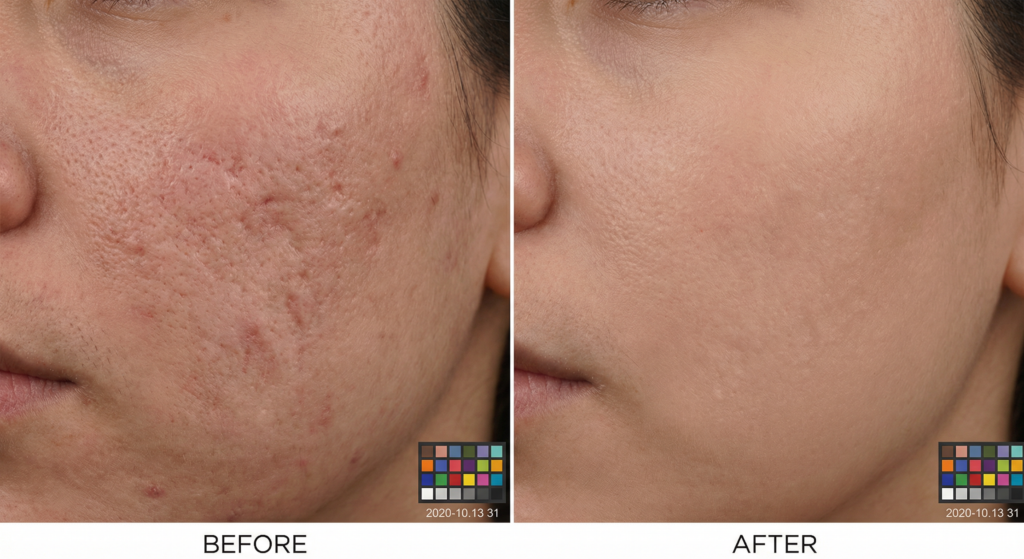
Collagen remodeling takes months. Anyone promising you smooth skin in 2 weeks is selling snake oil. Set realistic expectations: mild texture improvements in 8-12 weeks, significant changes in 6-12 months with consistent treatment.
The scientific literature consistently shows that combination approaches (professional treatments plus diligent home care) produce superior results to either approach alone. Patience and consistency beat expensive miracle products every single time.
Frequently Asked Questions
How long does it take to fix uneven skin texture after acne?
Most people see noticeable improvements in 8-12 weeks with consistent treatment. Deep acne scars may require 6-12 months of professional treatments like microneedling or laser therapy for significant texture repair. The timeline depends entirely on scar depth, your skin’s healing capacity, and treatment consistency.
What causes rough skin texture after acne clears?
Rough skin texture results from collagen damage during inflammatory acne, dead skin cell buildup, enlarged pores, and atrophic scarring. The skin’s healing process often produces uneven collagen distribution, creating permanent structural changes that manifest as bumps, pits, and rough patches even after active acne resolves.
Can retinol fix uneven skin texture from acne?
Yes, retinol accelerates cell turnover and stimulates collagen production, making it highly effective for mild to moderate texture issues. You’ll need at least 12 weeks of consistent use to see measurable improvements. Prescription-strength tretinoin works faster and more effectively than over-the-counter retinol for significant texture problems.
Are professional treatments necessary for acne texture?
For mild texture issues, diligent at-home care with retinoids and exfoliants may suffice. Moderate to severe atrophic scarring typically requires professional intervention (microneedling, laser, or chemical peels) because these treatments reach deeper skin layers and trigger more robust collagen remodeling than topical products can achieve.
Can makeup make uneven texture look worse?
Absolutely. Heavy, matte foundations settle into textured areas and emphasize them. Use lightweight, hydrating formulas with a satin finish. Applying a pore-filling primer in textured areas before foundation creates a smoother canvas. Honestly, improving actual skin texture beats any makeup technique IMO.
Will my skin texture ever be completely smooth?
Deep atrophic scars may never completely disappear, but you can typically achieve 50-80% improvement with comprehensive treatment. Realistic expectations matter here—the goal is significant improvement and smooth-looking skin from normal viewing distance, not microscopic perfection. Check out our start here guide for setting appropriate treatment goals.
My Top Recommended Gear
These are products I consistently recommend for addressing uneven skin texture after acne. I’ve linked to Amazon searches so you can compare specific formulations and read verified reviews.
1. Tretinoin Cream (Prescription)
The gold standard for texture repair. Start with 0.025% and gradually increase concentration. While you’ll need a prescription, you can find high-strength retinol alternatives over-the-counter that work similarly (just slower).
2. Vitamin C Serum
Look for L-ascorbic acid at 15-20% concentration in opaque packaging. This vitamin C serum selection includes options with proper pH and stabilization for maximum effectiveness.
3. Chemical Exfoliant (Glycolic or Lactic Acid)
10-12% glycolic acid provides effective exfoliation without over-stripping. Browse glycolic acid treatments to find formulations that match your skin’s tolerance level.
Remember, products work best as part of a comprehensive approach. Explore our detailed acne treatments guide and learn about different acne types to build a complete treatment strategy.
Disclaimer: This post contains affiliate links. As an Amazon Associate, I may earn a commission from qualifying purchases at no additional cost to you.