How to Build a Simple Acne Routine for Clearer Skin
Table of Contents
- What Is a Simple Acne Routine (And Why You Need One)?
- Why Most Acne Routines Fail Before They Start
- The 3-Step Foundation: Cleanse, Treat, Moisturize
- Choosing the Right Acne Treatment for Your Skin Type
- Common Mistakes That Sabotage Your Clear Skin Progress
- Advanced Tips for Stubborn, Persistent Acne
- Frequently Asked Questions
- My Top Recommended Gear
What Is a Simple Acne Routine (And Why You Need One)?
Figuring out how to build a simple acne routine shouldn’t require a PhD in chemistry — yet every forum, influencer, and brand out there makes it feel that way. You’re dealing with breakouts, your bathroom counter looks like a Sephora clearance shelf, and nothing seems to work. The frustration is real, and honestly? Most of that frustration comes from overcomplication, not from your skin being “impossible.”
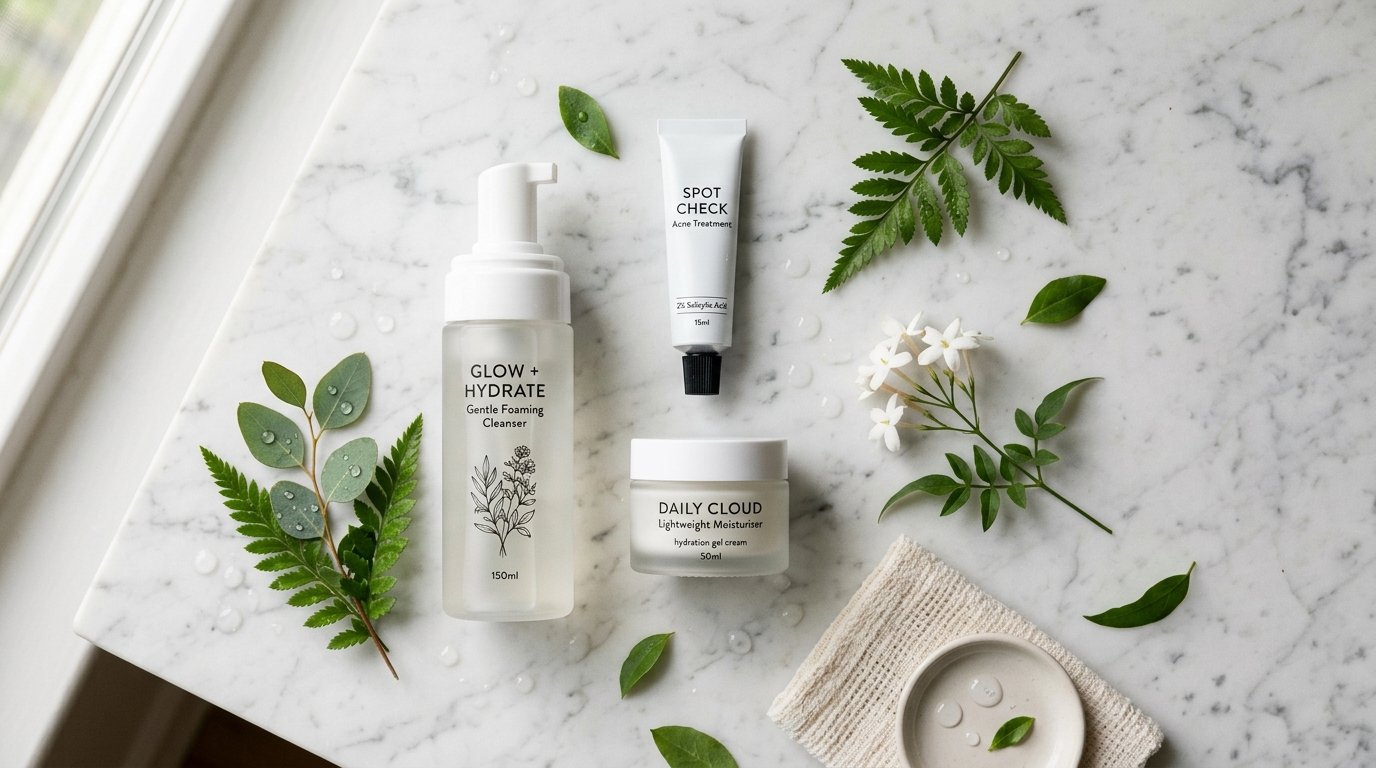
A simple acne routine is a streamlined, 3-step skincare system — cleanser, treatment, moisturizer — designed to fight breakouts without overwhelming your skin barrier. It prioritizes consistency and proven active ingredients over trendy 12-step protocols. For most people with mild to moderate acne, this foundational approach delivers better long-term results than complex regimens.
I’ve spent over a decade watching people destroy their skin barriers with aggressive routines they saw on TikTok. The irony? The folks who stick with a boring, simple acne routine consistently outperform the product junkies. If you’re brand new to all this, I’d recommend checking out our Start Here guide before going further — it’ll give you the lay of the land.
Why Most Acne Routines Fail Before They Start
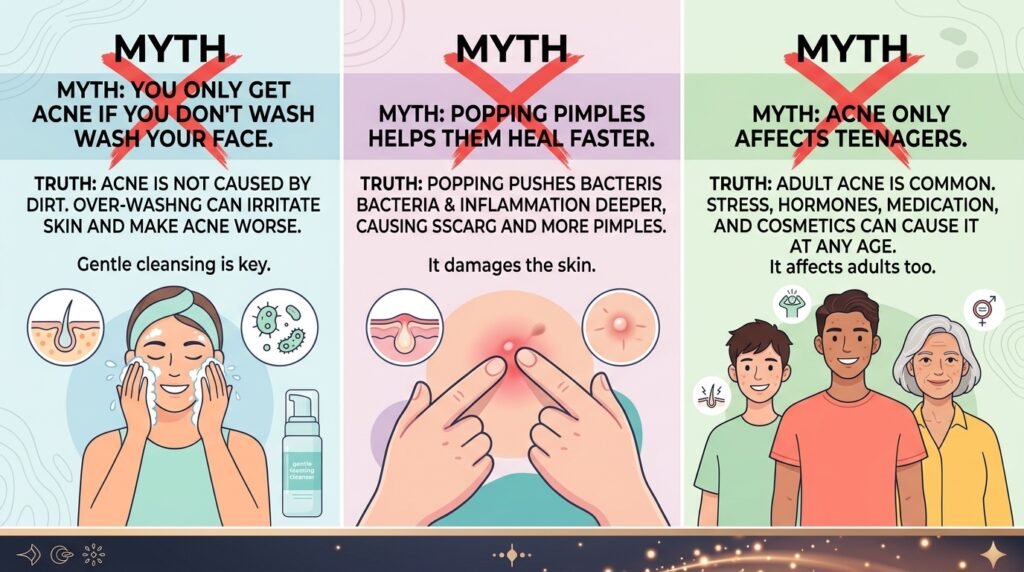
Let me bust a few myths that have probably already cost you time and money.
Myth #1: More Products = Better Results
This is the single biggest lie in skincare for acne. Layering a vitamin C serum, two different acids, a retinoid, AND a clay mask every single night isn’t “being thorough” — it’s assault on your moisture barrier. When your barrier breaks down, your skin overproduces oil, traps bacteria, and you get more acne. The American Academy of Dermatology consistently recommends simplicity for acne-prone skin.
Myth #2: You’ll See Results in a Week
Nah. Skin cell turnover takes about 28 days. The National Institute of Arthritis and Musculoskeletal and Skin Diseases (NIAMS) notes that most acne treatments need 6–8 weeks to show meaningful improvement. If you’re switching products every two weeks because you’re “not seeing results,” you’re resetting the clock every single time.
Myth #3: Oily Skin Doesn’t Need Moisturizer
I hear this one constantly. Skip your moisturizer, and your skin panics — it ramps up sebum production to compensate for the dryness. Now you’ve got dehydrated, oily skin that’s even more acne-prone. Great job. 🙂 The fix is simple: use a lightweight, non-comedogenic moisturizer. Always.
The 3-Step Foundation: Cleanse, Treat, Moisturize
Here’s the core of your beginner skincare routine. Master these three steps before you even think about adding serums, toners, or that fermented snail mucin essence your coworker swears by.
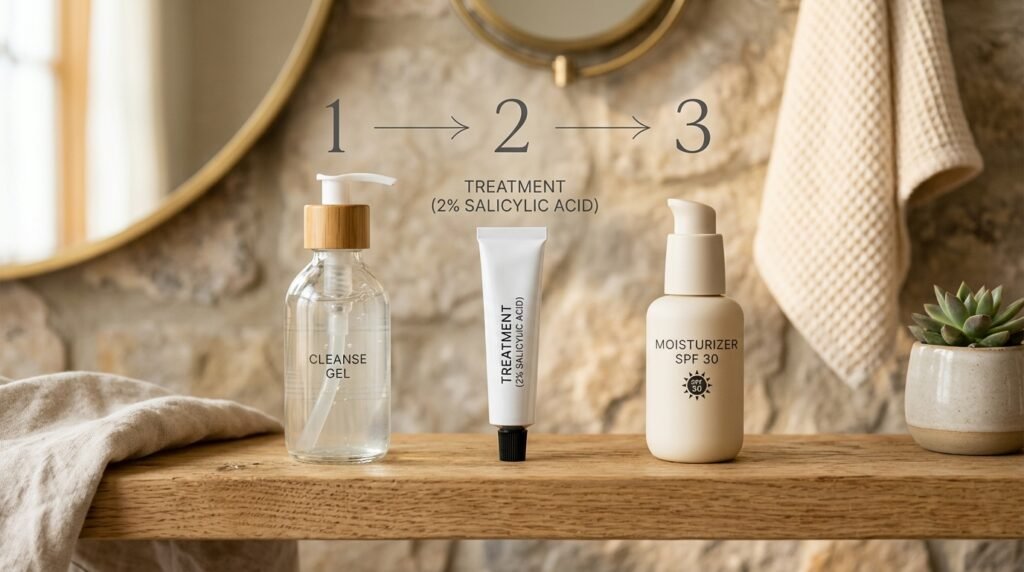
Step 1: Gentle Cleanser (AM + PM)
Use a sulfate-free, non-foaming or lightly foaming gel cleanser with a pH between 4.5 and 5.5. You want to remove dirt, oil, and makeup without stripping your skin. I recommend cleansers with ceramides or niacinamide for added barrier support. Wash for a full 60 seconds — most people rush through this and wonder why their cleanser “doesn’t work.”
Step 2: Targeted Acne Treatment (PM, or AM + PM)
This is where the magic happens. Your two workhorse ingredients for acne treatment basics are:
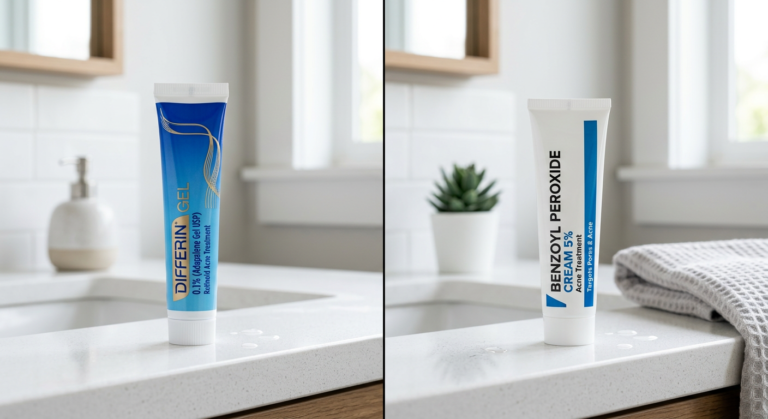
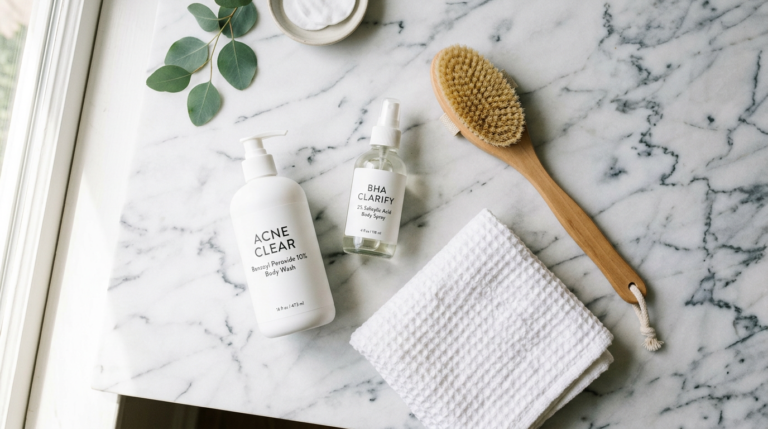
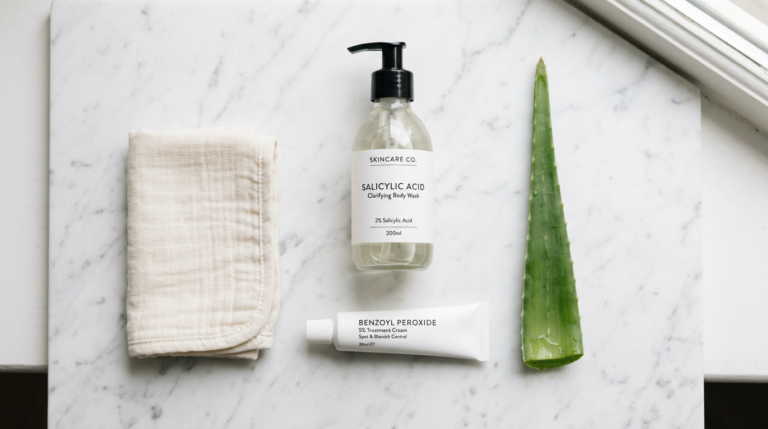
- Benzoyl Peroxide (2.5%–5%): Kills acne-causing bacteria (C. acnes). Start at 2.5% — research from PubMed shows it’s nearly as effective as 10% with significantly less irritation.
- Salicylic Acid (0.5%–2%): A beta-hydroxy acid (BHA) that penetrates pores to dissolve excess sebum and dead skin cells. Best for blackheads and whiteheads.
Not sure which one to pick? I wrote an entire deep-dive on benzoyl peroxide vs. salicylic acid that breaks it down by skin type and acne severity.
Step 3: Lightweight Moisturizer + SPF (AM) / Moisturizer (PM)
In the morning, use a moisturizer with at least SPF 30. Acne treatments make your skin photosensitive, and UV damage triggers post-inflammatory hyperpigmentation — those dark marks that linger long after a pimple heals. At night, a simple oil-free moisturizer does the job. Look for ingredients like hyaluronic acid, squalane, or niacinamide.
If you want to explore the full spectrum of treatment options beyond the basics, our acne treatments resource page covers everything from topicals to prescriptions.
Choosing the Right Acne Treatment for Your Skin Type
Not all acne is created equal, and your skincare routine needs to reflect that. Here’s my shortcut decision framework after years of trial-and-error (and helping hundreds of readers figure this out):
- Mostly blackheads and whiteheads (comedonal acne): Lead with salicylic acid. It excels at unclogging pores.
- Red, inflamed pimples (inflammatory acne): Benzoyl peroxide is your first-line defense. It targets bacteria directly.
- A mix of both: Alternate — salicylic acid in the morning, benzoyl peroxide at night. Or use salicylic acid as your cleanser and benzoyl peroxide as a leave-on treatment.
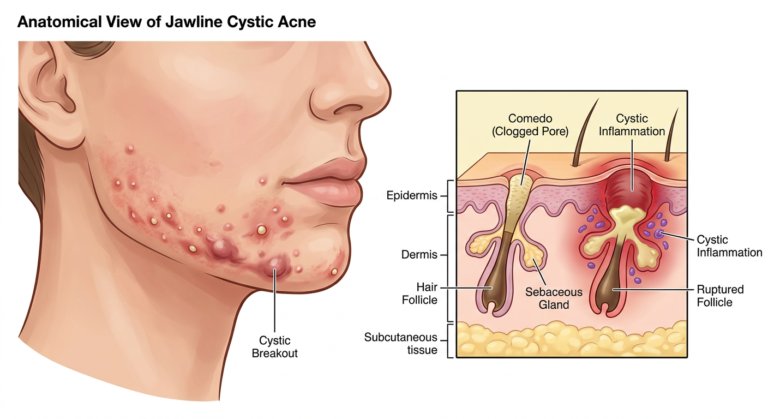
- Severe, cystic, or nodular acne: See a dermatologist. No OTC simple acne routine will adequately address deep cystic lesions — you may need prescription retinoids, antibiotics, or isotretinoin.
Understanding your specific acne type makes a massive difference in choosing the right actives. I can’t stress this enough — treating blackheads with a strategy designed for cystic acne (and vice versa) wastes your time and money.
For those just getting started, our guide on the best acne treatments for beginners walks you through first-purchase recommendations step by step.
Common Mistakes That Sabotage Your Clear Skin Progress
I’ve made every single one of these mistakes. Learn from my suffering, please.
Over-Exfoliating
Using a scrub, an AHA toner, AND a BHA treatment in the same night is a one-way ticket to a compromised moisture barrier. Pick one exfoliation method and use it 2–3 times per week max. Your skin is not a hardwood floor that needs sanding.
Skipping Sunscreen
I know — sunscreen feels greasy, and it seems counterintuitive when you’re already oily. But the FDA is crystal clear: UV protection is non-negotiable, especially when using acne actives. Modern mineral and chemical sunscreens formulated for acne-prone skin feel nothing like that thick white paste from childhood. Find one you actually enjoy wearing.
Popping and Picking
You already know this is bad. I already know you’re going to do it anyway. At minimum, use hydrocolloid pimple patches instead. They physically protect the blemish from your fingers, absorb gunk, and create an optimal healing environment. IMO, they’re one of the best inventions in modern skincare.
Switching Products Too Frequently
The “product hopping” trap is real. Give each new product or routine at least 6–8 weeks. If you change three things at once and your skin improves, you’ll have no idea which change actually helped. If it gets worse, same problem. Isolate your variables like a scientist.
Expert Commentary: This video from a board-certified dermatologist gives an excellent visual walkthrough of building a basic acne routine — it complements everything I’ve outlined above and is especially helpful if you’re a visual learner.
Advanced Tips for Stubborn, Persistent Acne
Once you’ve nailed the basics for 8–12 weeks and want to level up, here are the acne skincare tips I share with readers who’ve plateaued:
Introduce a Retinoid
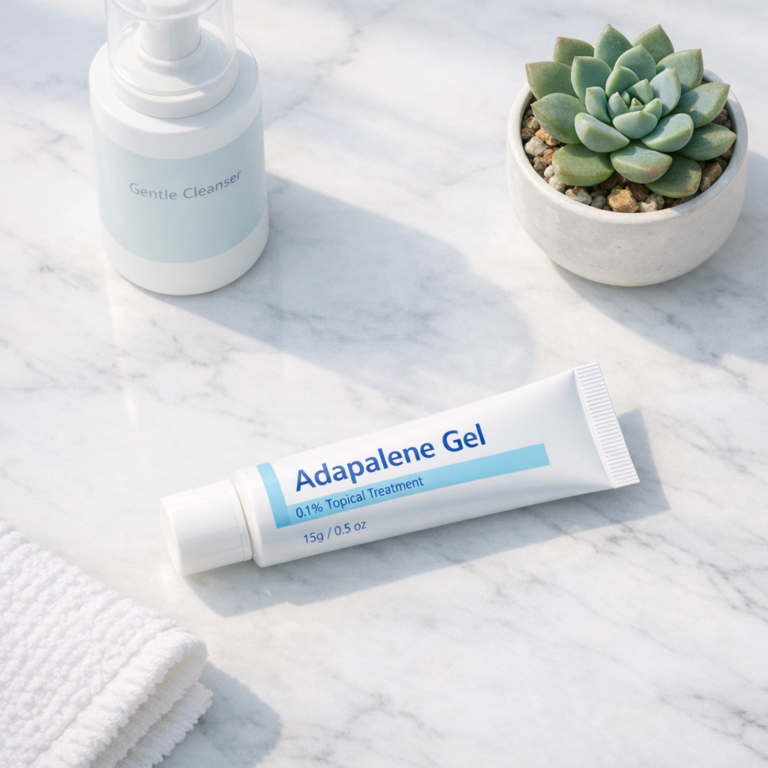
Adapalene 0.1% (Differin) is available over the counter and is a game-changer for persistent acne and post-acne marks. Start using it every third night, then every other night, then nightly as tolerated. Expect a “purging” phase during weeks 2–6 — it gets worse before it gets better, and that’s normal.
Consider Your Diet and Lifestyle
I’m not going to tell you chocolate causes acne — the science isn’t that simple. But emerging research consistently links high-glycemic diets and dairy consumption with increased acne severity. Stress management and sleep quality also play measurable roles. Address the obvious lifestyle factors before blaming your genes.
Track Your Skin
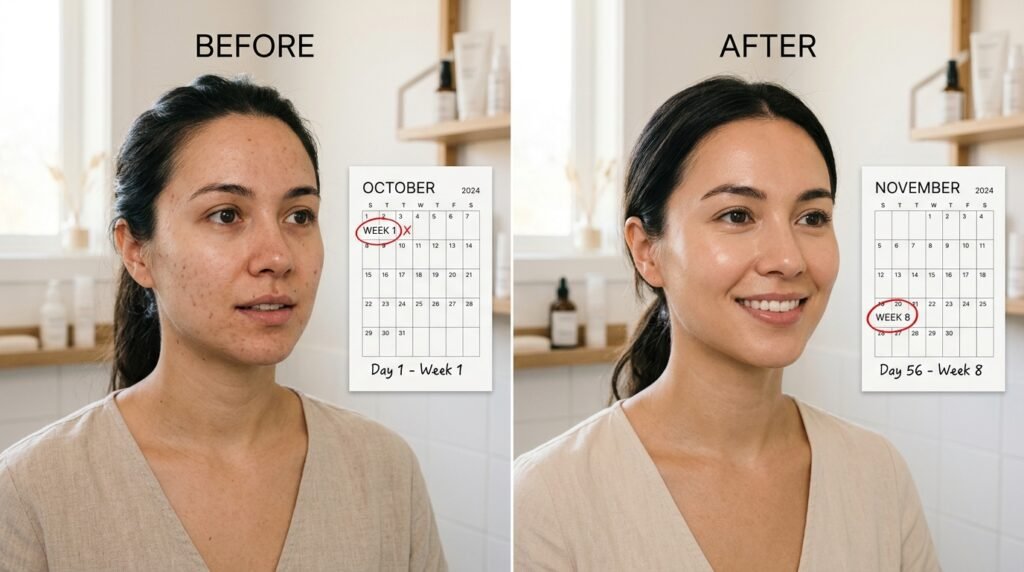
Take a photo of your face every Sunday under the same lighting. After 8 weeks, compare week 1 to week 8. You almost certainly look better than you think — we tend to focus on the one active pimple and forget about the 15 that healed. Data beats feelings when assessing a skincare routine.
If you’re dealing with multiple skin concerns beyond just acne — like redness, sensitivity, or hyperpigmentation — your routine adjustments will look a bit different, and that page covers those nuances.
Frequently Asked Questions
How many products do I need in a simple acne routine?
You only need three core products: a gentle cleanser, an acne treatment (like benzoyl peroxide or salicylic acid), and a lightweight moisturizer with SPF for daytime. Adding more products before mastering these basics often causes more irritation than improvement.
How long does it take for an acne routine to show results?
Most dermatologists agree you should give a new acne routine at least 6 to 8 weeks before judging its effectiveness. Skin cell turnover takes roughly 28 days, so you need at least two full cycles to see meaningful changes.
Can I use benzoyl peroxide and salicylic acid together?
Yes, but with caution. Many people alternate them — using salicylic acid in the morning and benzoyl peroxide at night — to avoid over-drying or irritating the skin. Starting with one and introducing the second gradually is the safest approach.
Should I moisturize if I have oily, acne-prone skin?
Absolutely. Skipping moisturizer signals your skin to produce even more oil to compensate. Use a non-comedogenic, oil-free moisturizer to maintain your skin barrier without clogging pores. This is one of the most underrated clear skin tips out there.
When should I see a dermatologist instead of doing this on my own?
If your acne is severe (deep cysts, widespread nodules), if OTC treatments haven’t helped after 12 weeks, or if acne is causing scarring or significant emotional distress, book that appointment. There’s zero shame in getting professional help — a derm has tools in their arsenal that no drugstore product can match.
My Top Recommended Gear
These are products I’ve personally used, tested, or recommended to readers over the years. They align perfectly with the simple acne routine framework I outlined above.
- CeraVe Foaming Facial Cleanser: The gold standard gentle cleanser for acne-prone skin. Ceramides + niacinamide + the right pH. Hard to beat. Check price on Amazon
- La Roche-Posay Effaclar Duo Acne Treatment with Benzoyl Peroxide: A 5.5% micronized benzoyl peroxide that’s remarkably gentle for its strength. Excellent leave-on treatment for inflammatory acne. Check price on Amazon
- EltaMD UV Clear Broad-Spectrum SPF 46: My all-time favorite sunscreen for acne-prone skin. Lightweight, niacinamide-infused, and never causes breakouts for me. Check price on Amazon
Disclaimer: This post contains affiliate links. As an Amazon Associate and ClickBank Partner, I may earn a commission from qualifying purchases at no additional cost to you.