Dry Acne-Prone Skin: Powerful Fixes That Work
Managing dry acne-prone skin feels like walking a tightrope while juggling flaming torches. You treat the acne, your skin turns into the Sahara. You moisturize heavily, boom—breakouts galore. I spent years stuck in this maddening cycle before I finally cracked the code, and honestly? Most mainstream advice gets it completely wrong.
Here’s the frustrating truth: the skincare industry loves pushing aggressive acne treatments that obliterate your moisture barrier. Then they wonder why you’re dealing with irritation, flaking, AND pimples simultaneously. Your skin concerns deserve smarter solutions, not harsher products.
I’m going to share the exact strategies that transformed my approach to sensitive acne skin—tactics I’ve refined over a decade of obsessive research and real-world testing. No generic advice, no fluffy promises. Just proven methods that actually deliver results.
Table of Contents
- Understanding Why Dry Skin Gets Acne
- The Moisture Barrier Science You Need to Know
- Building Your Dry Skin Routine for Clear Skin
- Acne Treatment Tips That Won’t Destroy Your Skin
- Advanced Tactics for Stubborn Cases
- Myth-Busting: Common Mistakes to Avoid
- Frequently Asked Questions
- My Top Recommended Gear
Understanding Why Dry Skin Gets Acne
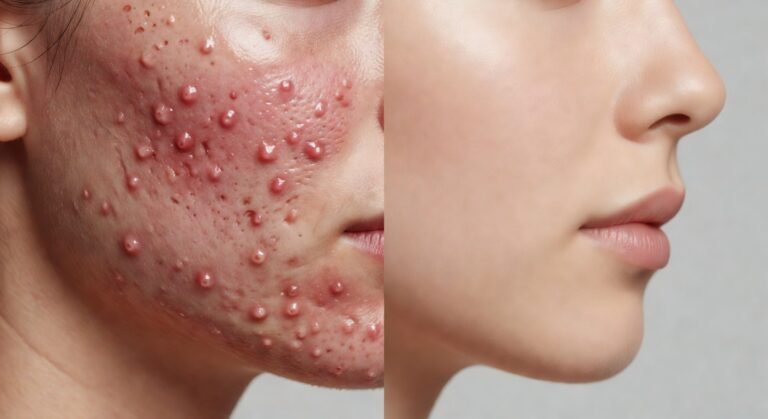
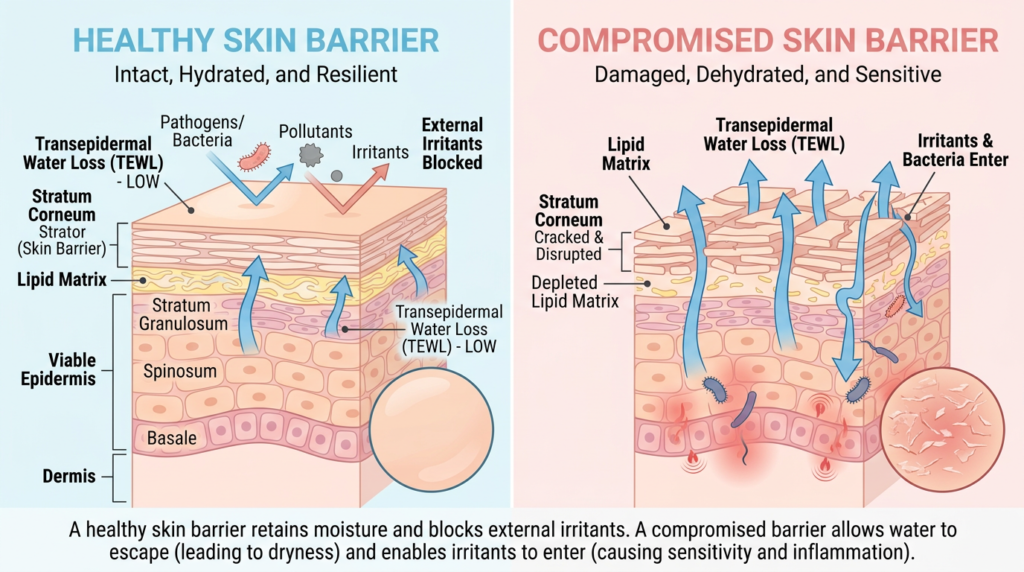
Dry acne-prone skin occurs when a compromised moisture barrier triggers compensatory oil production while dead skin cells accumulate and clog pores. This creates the perfect environment for both dehydration and breakouts to coexist, requiring balanced hydrating acne care rather than aggressive drying treatments.
Let me bust a major myth right now: acne isn’t just an oily skin problem. According to research published by the American Academy of Dermatology, acne affects people across all skin types, and dry skin presents unique challenges that most standard treatments ignore.
When your skin lacks adequate moisture, several problematic things happen simultaneously:
- Compromised barrier function allows bacteria and irritants easier access to your pores
- Dead skin cells don’t shed properly, creating blockages
- Sebaceous glands kick into overdrive trying to compensate for dryness
- Micro-cracks in dry skin trap debris and bacteria
Understanding this mechanism changes everything about how you should approach skincare for breakouts. You’re not fighting one battle—you’re managing two interconnected issues that require a unified strategy.
The Moisture Barrier Science You Need to Know
Your skin’s moisture barrier (technically called the stratum corneum) functions like a brick wall. The “bricks” are dead skin cells, and the “mortar” consists of lipids—ceramides, cholesterol, and fatty acids. When this structure gets damaged, everything falls apart.
Research from the National Institutes of Health confirms that a healthy skin barrier is essential for maintaining both hydration AND a balanced microbiome that keeps acne-causing bacteria in check.
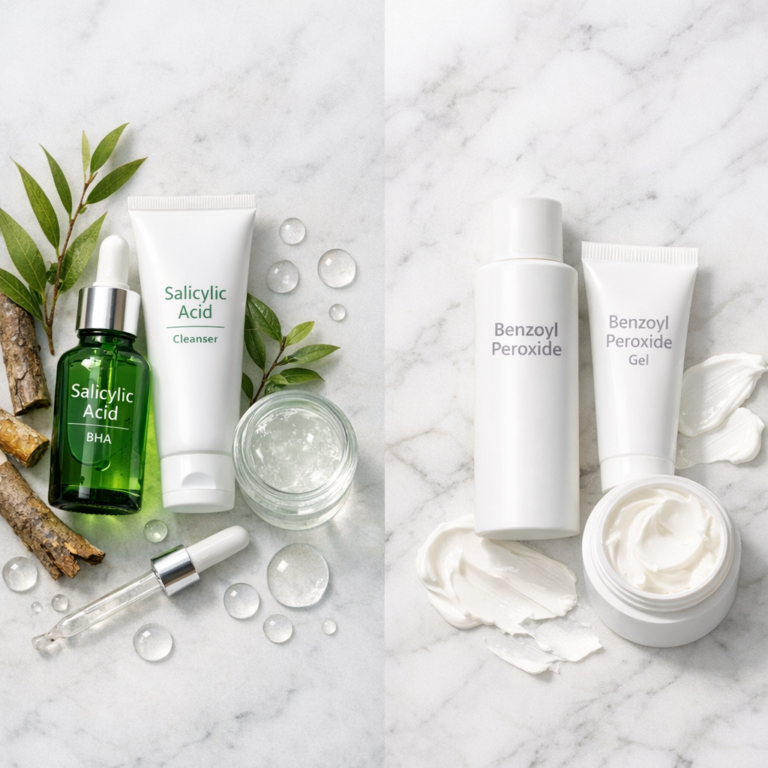
Here’s what most people miss: aggressive acne treatments often destroy this barrier. Benzoyl peroxide, salicylic acid, retinoids—all phenomenal acne fighters that can absolutely wreck your moisture levels if used incorrectly. IMO, this is where 90% of people sabotage their progress.
The solution isn’t abandoning these treatments. It’s learning to use them strategically while simultaneously rebuilding and protecting your barrier. This dual-focus approach forms the foundation of effective hydrating acne care.
Building Your Dry Skin Routine for Clear Skin
After testing hundreds of products and routines (my bathroom looked like a Sephora explosion for years), I’ve distilled the perfect dry skin routine into a specific framework. This isn’t about using more products—it’s about using the right ones in the right order.
Morning Routine Protocol
- Gentle cleanser: Skip foaming formulas. Use cream or milk cleansers with a pH between 4.5-6.5
- Hydrating toner: Apply to damp skin—this locks in 10x more moisture
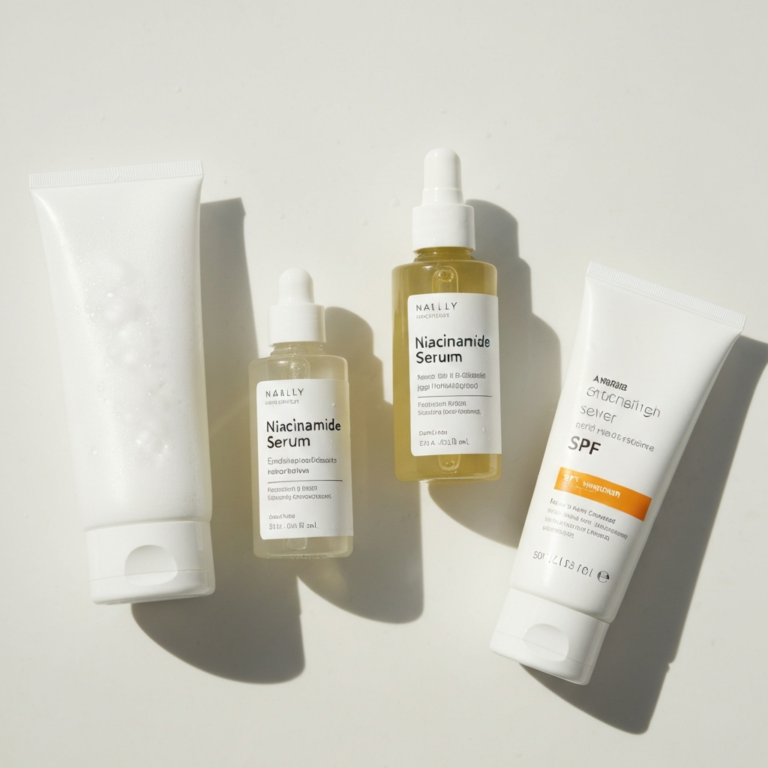
- Lightweight serum: Hyaluronic acid or niacinamide work brilliantly here
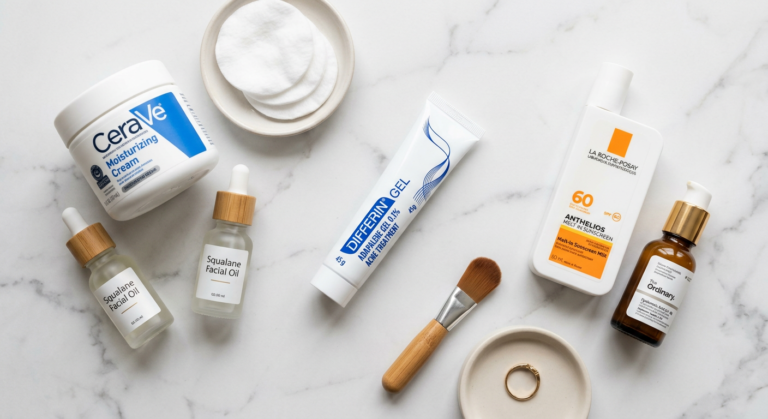
- Moisturizer: Non-comedogenic with ceramides or squalane
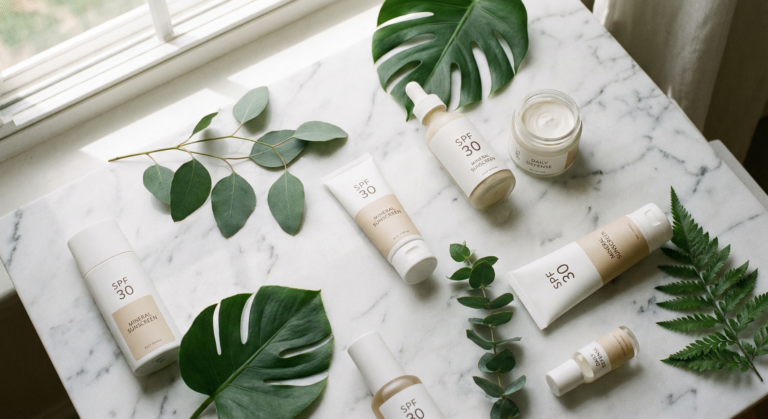
- SPF 30+: Non-negotiable. Sun damage worsens both dryness and post-acne marks
Speaking of post-acne concerns, if you’re dealing with dark marks after acne, proper sun protection becomes even more critical. Those hyperpigmented spots darken dramatically with sun exposure.
Evening Routine Protocol
- Oil cleanser (first cleanse): Dissolves sunscreen and makeup without stripping
- Water-based cleanser (second cleanse): Removes remaining impurities
- Treatment product: Retinoid OR chemical exfoliant (never both same night)
- Hydrating essence: Multiple thin layers beat one thick layer
- Rich night cream: Your skin repairs while you sleep—give it resources
- Occlusive (optional): Thin layer of petroleum jelly or sleeping mask on extremely dry areas
The “sandwich method” deserves special mention here. When using potentially irritating treatments like retinoids, apply moisturizer first, wait 5 minutes, apply treatment, wait 5 minutes, apply more moisturizer. This buffers the active ingredient and significantly reduces irritation while maintaining efficacy.
Acne Treatment Tips That Won’t Destroy Your Skin
Here’s where I see people mess up constantly with their acne treatment tips: they go nuclear on their acne while completely ignoring their skin type. Treating breakouts on dry skin requires modified strategies.
Choosing the Right Active Ingredients
Not all acne-fighting ingredients are created equal for dry skin. Here’s my hierarchy:
Best choices for dry acne-prone skin:
- Azelaic acid (10-20%): Anti-inflammatory, brightening, gentle enough for daily use
- Niacinamide (4-5%): Reduces sebum, strengthens barrier, calms redness
- Retinoids (start low): Bakuchiol for sensitive skin, low-dose retinol for others
- Sulfur treatments: Old-school but effective, less drying than benzoyl peroxide
Use with caution:
- Salicylic acid: Limit to 0.5-1% concentrations, use only on active breakouts
- Benzoyl peroxide: Never exceed 2.5% strength, always buffer with moisturizer
The Journal of Clinical and Aesthetic Dermatology published research showing that 2.5% benzoyl peroxide works just as effectively as 10% with significantly less irritation. Higher isn’t better—it’s just harsher.
If you’re unsure which acne types you’re dealing with, identifying them correctly helps you choose appropriate treatments. Inflammatory acne responds better to anti-inflammatory ingredients, while comedonal acne needs exfoliation-focused approaches.
The “Slow Introduction” Rule
I cannot stress this enough: introduce ONE new active ingredient every 4-6 weeks. Your skin needs time to acclimate, and if you add multiple products simultaneously, you’ll never know what’s helping versus what’s causing problems. Patience isn’t sexy, but it works 🙂
Advanced Tactics for Stubborn Cases
When basic routines aren’t cutting it, these advanced strategies have made the biggest difference for my stubborn sensitive acne skin:
The “Skin Cycling” Method
Rather than using actives daily, rotate them strategically:
- Night 1: Exfoliation (gentle chemical exfoliant)
- Night 2: Retinoid
- Nights 3-4: Recovery (hydration focus only, no actives)
This cycling approach allows your skin to benefit from powerful actives while maintaining barrier integrity. It’s particularly effective when dealing with uneven skin texture after acne.
Expert Commentary: Dr. Whitney Bowe, the dermatologist who popularized skin cycling, breaks down exactly how this method works and why it’s particularly beneficial for compromised skin barriers—essential viewing for anyone with dry, reactive skin.
Ingredient Layering Secrets
Some combinations amplify results; others cause irritation disasters. My proven stacks:
Winning combinations:
- Niacinamide + Hyaluronic Acid (hydration powerhouse)
- Azelaic Acid + Centella Asiatica (anti-acne + healing)
- Ceramides + Peptides (barrier repair)
Avoid combining:
- Retinoid + Vitamin C (same routine—use different times of day)
- Multiple acids simultaneously
- Benzoyl peroxide + Retinoid (same routine—they deactivate each other)
Myth-Busting: Common Mistakes to Avoid
Let me save you from the painful lessons I learned the hard way with these clear skin tips that counter mainstream “wisdom”:
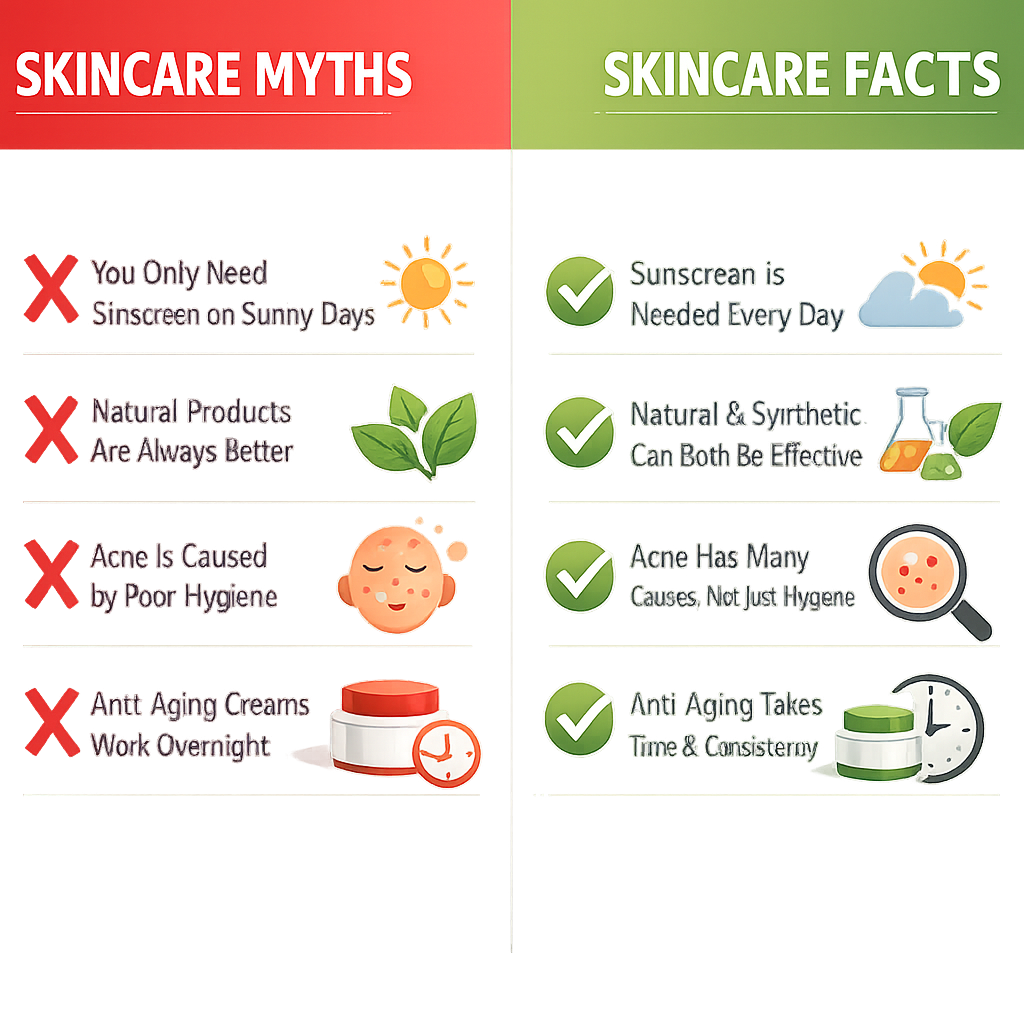
Myth: “You Need to Dry Out Acne”
Reality: Dehydrating pimples doesn’t heal them faster—it just creates flaky, angry skin that takes longer to recover. Hydrated skin heals more efficiently, and studies show moisturized skin absorbs treatments better.
Myth: “Oil-Free Products Are Always Better”
Reality: Many oils are actually non-comedogenic and beneficial. Squalane, rosehip, and jojoba oils can help balance sebum production without clogging pores. The “oil-free” label often means products rely on silicones or alcohols instead—not necessarily an improvement.
Myth: “Your Skin ‘Purges,’ So Stick With Harsh Products”
Reality: While legitimate purging exists with certain actives (primarily retinoids), prolonged irritation and new breakouts in unusual areas signal product intolerance, not purging. If it’s getting worse after 6-8 weeks, stop.
Myth: “Natural Products Are Gentler”
Reality: Some of the most irritating ingredients are “natural”—essential oils, witch hazel, and citrus extracts can trigger inflammation and worsen both dryness and acne. The FDA doesn’t regulate “natural” claims on cosmetics, making this term essentially meaningless.
For those dealing with lasting marks from breakouts, understanding the difference between acne scars vs dark marks helps you choose appropriate treatments. They require completely different approaches.
If you’re new to building an effective routine, my start here guide walks you through the fundamentals before tackling more advanced strategies. And for those with oilier zones, the best moisturizer for oily acne-prone skin guide covers combination skin scenarios.
Frequently Asked Questions
Can dry skin actually cause acne?
Yes, dry skin can trigger acne. When your skin becomes dehydrated, it compensates by producing excess sebum, which can clog pores and lead to breakouts. Additionally, dry, flaky skin can trap bacteria and dead cells in pores, creating the perfect environment for pimples to form.
Should I use moisturizer if I have acne?
Absolutely. Skipping moisturizer is one of the biggest mistakes for acne-prone skin. Choose lightweight, non-comedogenic formulas with ingredients like hyaluronic acid, niacinamide, or ceramides that hydrate without clogging pores. Proper hydration actually helps your skin heal faster and reduces the severity of breakouts.
What ingredients should I avoid with dry acne-prone skin?
Avoid harsh alcohols (denatured alcohol, SD alcohol), strong sulfates in cleansers, high concentrations of benzoyl peroxide without proper hydration support, and heavy fragrances. These ingredients strip moisture and irritate sensitive acne skin, worsening both dryness and breakouts simultaneously.
How often should I exfoliate dry acne-prone skin?
Limit exfoliation to 1-2 times per week maximum. Over-exfoliating damages your moisture barrier and worsens both dryness and breakouts. Opt for gentle chemical exfoliants like PHAs (polyhydroxy acids) or low-concentration lactic acid over physical scrubs, which can cause micro-tears in already compromised skin.
Is retinol safe for dry acne-prone skin?
Retinol can be highly effective but requires careful introduction. Start with low concentrations (0.25-0.3%), apply only 2-3 times weekly initially, and always buffer with moisturizer using the sandwich method. This allows you to reap the acne-fighting and cell-turnover benefits while minimizing dryness and irritation.
My Top Recommended Gear
After testing countless products on my own dry acne-prone skin, these are the categories that made the most significant difference in my routine. I’ve linked to searches so you can compare current options and prices:
- Ceramide Moisturizer for Acne: Ceramide-based moisturizers restore your skin barrier while remaining lightweight enough for breakout-prone skin. Look for formulas with niacinamide as a bonus ingredient.
- Gentle Hydrating Cleanser: Low-pH hydrating cleansers remove impurities without stripping essential moisture. Cream and milk formulas work best for dry skin types dealing with breakouts.
- Azelaic Acid Treatment: Azelaic acid serums (10%) are my absolute favorite for dry acne-prone skin—they fight breakouts, reduce redness, and fade dark marks without the harsh drying effects of other acne treatments.
Disclaimer: This post contains affiliate links. As an Amazon Associate, I may earn a commission from qualifying purchases at no additional cost to you.