Best Sunscreen for Acne-Prone Skin You Need
Finding the best sunscreen for acne-prone skin feels like defusing a bomb — one wrong ingredient, and your face explodes with breakouts. I get it. You’ve probably grabbed a sunscreen off the shelf, slathered it on with good intentions, and woken up the next morning with three new pimples as a thank-you gift. The frustrating truth? Most mainstream sunscreens are formulated for “normal” skin, which means they’re loaded with pore-clogging oils, heavy emollients, and fragrances that treat acne-prone faces like a crime scene. But here’s the good news: the right SPF for acne exists, and I’ve spent the better part of a decade narrowing down exactly what works. This guide breaks down the science, busts the myths, and hands you a shortlist of products that actually protect your skin without wrecking it.
Table of Contents
- Why Sunscreen Is Non-Negotiable for Acne-Prone Skin
- What Actually Makes a Sunscreen Acne-Safe
- Chemical vs. Mineral Sunscreen: The Real Debate
- Ingredients to Avoid Like the Plague
- My Top Picks for Best Sunscreen for Acne-Prone Skin
- How to Apply Sunscreen Without Triggering Breakouts
- Myth-Busting: Sunscreen and Acne Edition
- Frequently Asked Questions
- My Top Recommended Gear
Why Sunscreen Is Non-Negotiable for Acne-Prone Skin
The best sunscreen for acne-prone skin is a lightweight, non-comedogenic formula with SPF 30 or higher that uses oil-free, fragrance-free ingredients — ideally with zinc oxide or modern chemical filters — to protect without clogging pores or triggering breakouts.
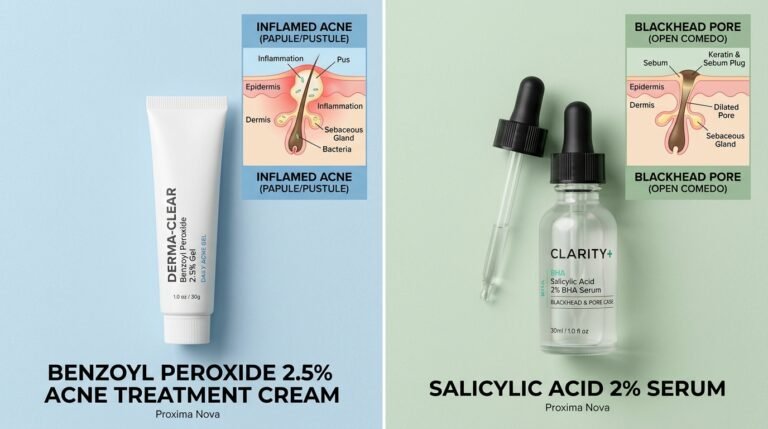
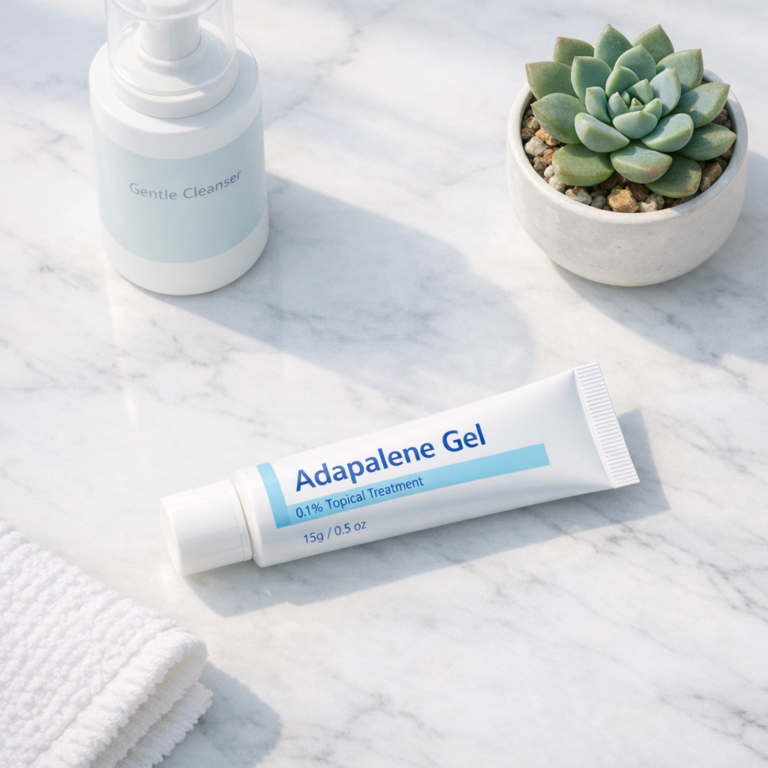
Let me be blunt: if you’re using acne treatments without sunscreen, you’re actively sabotaging your own progress. Most active ingredients in acne care — retinoids, AHAs, benzoyl peroxide, salicylic acid — increase your skin’s sensitivity to UV radiation. The FDA has been clear that UV exposure on sensitized skin accelerates hyperpigmentation, the dark marks that linger long after a pimple heals.
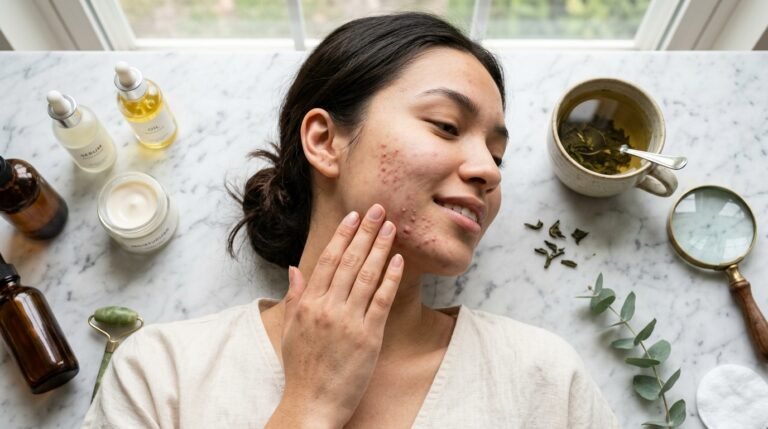
And here’s what really grinds my gears: post-inflammatory hyperpigmentation (PIH) is often worse than the acne itself. You clear a breakout only to stare at a brown or red splotch for months. Sunscreen is the single most effective way to prevent that. Not a serum. Not a fancy vitamin C. Sunscreen. Period.
UV exposure also degrades your skin barrier, which increases transepidermal water loss and — surprise — makes your oil glands overcompensate. More oil means more clogged pores. More clogged pores means more acne. It’s a vicious cycle, and a solid acne-prone skin sunscreen breaks it.
What Actually Makes a Sunscreen Acne-Safe
Not all sunscreens deserve a spot on your sensitive acne skin. The label “non-comedogenic” is a start, but it’s not regulated by the FDA — any brand can slap it on a tube. So you need to look deeper. Here’s my checklist after years of testing and reviewing products for our product reviews section:
- Oil-free base: Water-based or gel-based formulas distribute evenly without leaving a greasy film that traps bacteria.
- Fragrance-free: Synthetic fragrances are among the top irritants for reactive skin. Skip them entirely.
- Lightweight texture: A lightweight facial sunscreen should feel like nothing on your skin within 60 seconds of application.
- Mattifying agents: Silica or niacinamide help control shine, which is a huge win for sunscreen for oily skin.
- No heavy occlusives: Ingredients like coconut oil, shea butter in high concentrations, and isopropyl myristate are red flags.
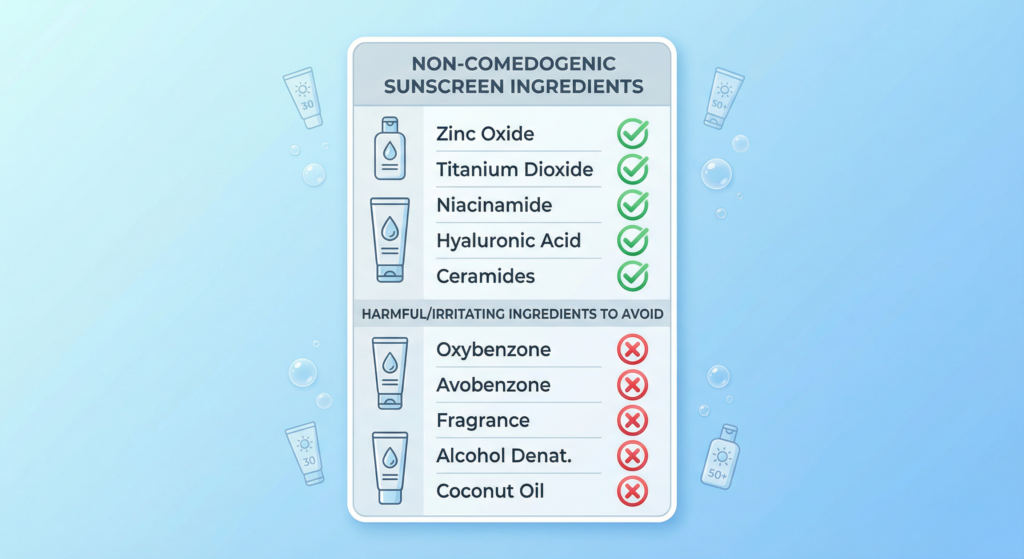
According to a study published in the Journal of the American Academy of Dermatology, comedogenicity testing on rabbit ears (yes, that’s the classic method) doesn’t always translate to human skin. So I rely heavily on real-world testing and community feedback rather than lab ratings alone.
Chemical vs. Mineral Sunscreen: The Real Debate
This is where things get spicy. The internet loves to scream “mineral only!” for acne-prone skin, but honestly? It’s more nuanced than that.
Mineral sunscreens (zinc oxide, titanium dioxide) sit on top of the skin and physically deflect UV rays. Zinc oxide is genuinely anti-inflammatory — dermatologists have used it in diaper cream and calamine lotion for decades. For sensitive acne skin, this anti-inflammatory action is a legitimate bonus. The downside? Many mineral formulas leave a white cast, feel chalky, and can pill under makeup. That texture issue drives people to skip reapplication, which defeats the whole purpose.
Chemical sunscreens absorb UV rays and convert them to heat. Newer-generation filters like Tinosorb S, Tinosorb M, and Uvinul A Plus offer broad-spectrum coverage in elegant, lightweight formulations. If you tolerate chemical filters well (and most people do), a lightweight facial sunscreen with these modern ingredients can feel like wearing nothing at all. The key is to patch test — apply behind your ear or on your inner arm for 48 hours first.
My honest take? IMO, the best approach is whichever one you’ll actually use consistently. A mineral sunscreen gathering dust in your drawer protects exactly zero percent of your face. If you’re using benzoyl peroxide for acne, you NEED daily SPF regardless of formula type.
Ingredients to Avoid Like the Plague
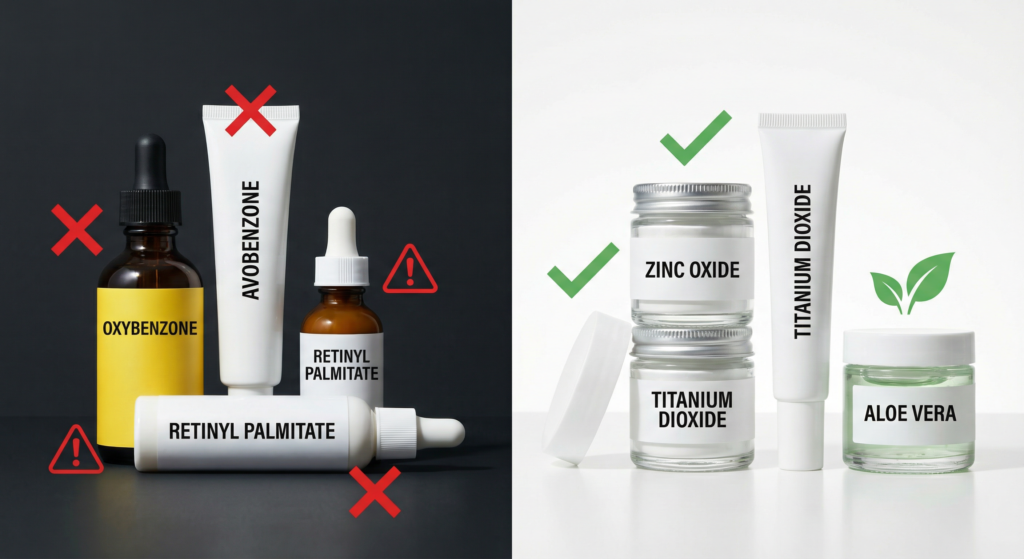
Here’s my blacklist — ingredients I’ve seen trigger breakouts repeatedly across hundreds of reader reports and my own testing:
- Isopropyl myristate / Isopropyl palmitate: Highly comedogenic emollients. They make sunscreen feel silky but absolutely wreck acne-prone pores.
- Coconut oil (Cocos Nucifera): Scores a 4 out of 5 on the comedogenicity scale. Hard pass.
- Ethylhexyl palmitate: Another sneaky pore-clogger hiding in “gentle” formulas.
- Artificial fragrance/parfum: Irritant that can trigger inflammatory acne in sensitive individuals.
- Oxybenzone: Beyond its environmental concerns flagged by the EPA, it’s a known skin sensitizer.
- Heavy dimethicone concentrations: A little dimethicone is fine; a lot creates an occlusive film that traps sebum.
Pro tip: download the INCIDecoder app. Paste any product’s ingredient list and it flags comedogenic ingredients instantly. I use it before buying anything — and I’ve been doing this for over a decade. That’s insider knowledge you won’t find in most blog posts 🙂
My Top Picks for Best Sunscreen for Acne-Prone Skin
After testing dozens of formulas and cross-referencing with dermatological research from the American Academy of Dermatology, here are my current go-to recommendations for the best SPF for breakouts:
1. EltaMD UV Clear Broad-Spectrum SPF 46
This is the gold standard. Contains 5% niacinamide (controls oil, reduces redness), zinc oxide for mineral protection, and hyaluronic acid for hydration without heaviness. Oil-free, fragrance-free, and recommended by more dermatologists than any other single product I’ve encountered. Works beautifully under makeup and pairs perfectly with a quality moisturizer for acne-prone skin.
2. La Roche-Posay Anthelios Light Fluid SPF 50+
If you want chemical protection with an ultra-light, watery texture, this is it. Uses Mexoryl SX and XL (La Roche-Posay’s proprietary filters) and feels genuinely weightless. No white cast, no greasiness. I’ve recommended this to readers with various acne types and the feedback has been overwhelmingly positive.
3. Supergoop! Unseen Sunscreen SPF 40
A totally clear, oil-free gel-primer hybrid. It doubles as a makeup primer (smooth, velvety finish) and contains no fragrance. Great for anyone who hates the “sunscreen feeling.” It’s a chemical formula, so patch test first, but most oily and acne-prone users love its mattifying effect.
4. Australian Gold Botanical Tinted Face Sunscreen SPF 50
A tinted mineral option that eliminates white cast concerns entirely. Contains titanium dioxide and zinc oxide in a matte, BB-cream-like formula. Perfect if you want light coverage and sun protection in one step. The botanical antioxidants (kakadu plum, eucalyptus) are a nice bonus.
Expert Commentary: This dermatologist-led video breaks down exactly how to choose and apply sunscreen when you have active acne — it’s one of the most practical, no-fluff explanations I’ve found on the topic.
How to Apply Sunscreen Without Triggering Breakouts
Even the best non-comedogenic sunscreen can cause problems if you apply it wrong. Here’s the protocol I follow — and recommend to everyone who visits our start here guide:
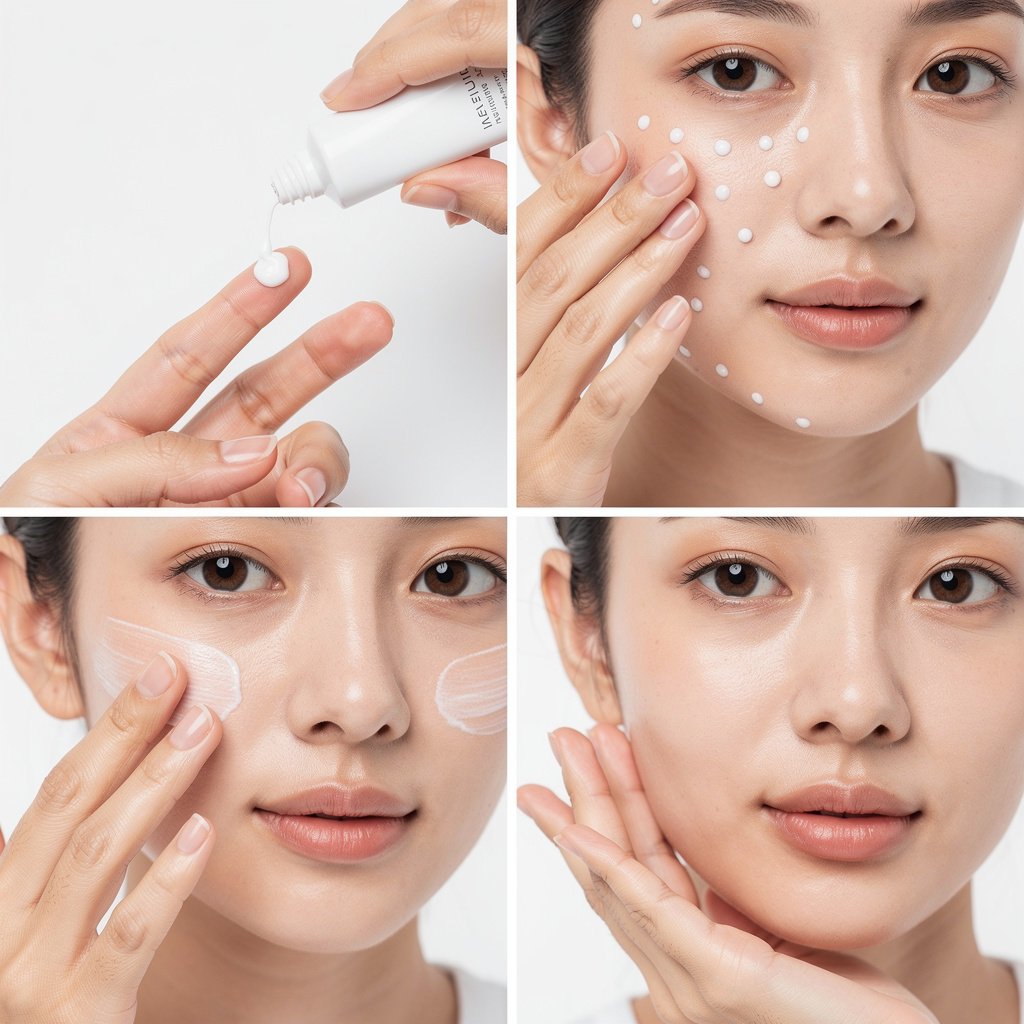
- Apply to clean, dry skin: After your moisturizer absorbs (give it 60 seconds), apply sunscreen as the final skincare step before makeup.
- Use the two-finger rule: Squeeze two lines of sunscreen along your index and middle finger. That’s approximately the ¼ teaspoon needed for adequate facial coverage.
- Don’t rub aggressively: Pat and press the product in. Aggressive rubbing can irritate inflamed acne and distribute the product unevenly.
- Reapply strategically: For desk workers, a single morning application suffices. If you’re outdoors, reapply every two hours using a powder SPF or SPF setting spray to avoid disturbing underlying layers.
- Double-cleanse at night: This is non-negotiable. An oil-based cleanser first (micellar water works too), followed by a gentle water-based cleanser. Sunscreen residue left overnight is a breakout factory.
And here’s an advanced tactic most people miss: if you use salicylic acid for acne in your evening routine, it actually helps dissolve any sunscreen residue trapped in pores. So your PM actives and your AM protection work as a system, not in isolation. Pretty cool, right?
Myth-Busting: Sunscreen and Acne Edition
Myth #1: “SPF in my moisturizer/foundation is enough.”
Nope. You’d need to apply 7-14 times the normal amount of foundation to get the labeled SPF protection. Dedicated sunscreen is a separate, essential step.
Myth #2: “Higher SPF is always better for acne-prone skin.”
SPF 30 blocks ~97% of UVB rays. SPF 50 blocks ~98%. SPF 100 blocks ~99%. The marginal gains above SPF 30 are minimal, but the formulation required to achieve ultra-high SPF often uses heavier ingredients that can aggravate sunscreen for oily skin concerns. SPF 30–50 is the sweet spot.
Myth #3: “You don’t need sunscreen on cloudy days.”
Up to 80% of UV radiation penetrates clouds. If you skip SPF because it’s overcast, you’re gambling with PIH and barrier damage. Don’t be that person.
Myth #4: “Mineral sunscreen is always better for acne.”
I covered this above, but it bears repeating — an elegant chemical formula you use daily beats a mineral formula you hate wearing. Consistency trumps chemistry every single time. NGL, I went years using only mineral before realizing a well-formulated chemical option worked better for my skin.
Frequently Asked Questions
Can sunscreen actually cause acne breakouts?
Yes, certain sunscreens with comedogenic ingredients like coconut oil, cocoa butter, or heavy silicones can clog pores and trigger breakouts. Always choose a non-comedogenic sunscreen specifically formulated for acne-prone skin to avoid this problem.
What SPF level is best for acne-prone skin?
SPF 30 is the sweet spot for daily use on acne-prone skin. It blocks approximately 97% of UVB rays without requiring the heavier formulations that SPF 50+ products often use, which can feel greasy and contribute to clogged pores.
Should I use chemical or mineral sunscreen if I have acne?
Both can work, but mineral sunscreens with zinc oxide are often preferred because zinc has natural anti-inflammatory and antibacterial properties. Chemical sunscreens with newer filters like Tinosorb are also excellent options if you prefer a lightweight facial sunscreen with an invisible finish.
Can I skip sunscreen if I use acne treatments like benzoyl peroxide or salicylic acid?
Absolutely not. Active acne treatments like benzoyl peroxide, salicylic acid, and retinoids increase your skin’s photosensitivity dramatically. Skipping sunscreen while using these ingredients can cause hyperpigmentation, sunburn, and worsen acne scarring.
How often should I reapply sunscreen on acne-prone skin?
Reapply every two hours during direct sun exposure. For daily indoor or light outdoor activity, a single morning application is generally sufficient. Consider using a powder sunscreen or SPF setting spray for midday touch-ups to avoid disturbing your skincare layers.
My Top Recommended Gear
These are the three products I personally trust and recommend most for anyone searching for the best sunscreen for acne-prone skin. I’ve tested each extensively:
- EltaMD UV Clear Broad-Spectrum SPF 46 — The dermatologist favorite with niacinamide. Best all-around pick for oily, breakout-prone skin.
- La Roche-Posay Anthelios Light Fluid SPF 50+ — Ultra-lightweight chemical formula. Perfect for those who hate the feel of sunscreen entirely.
- Supergoop! Unseen Sunscreen SPF 40 — Clear gel-primer that doubles as a mattifying makeup base. A fan favorite in the acne-prone community.
Disclaimer: This post contains affiliate links. As an Amazon Associate, I may earn a commission from qualifying purchases at no additional cost to you.