Best Acne Treatments for Beginners for Faster Clear Skin
Finding the best acne treatments for beginners feels impossible when every brand screams that their product is the miracle cure. You’ve tried random spot treatments, scrubbed your face raw with charcoal washes, and maybe even slathered on toothpaste at 2 AM (please tell me I’m not the only one who did that). Here’s the painful truth: most of what you’ve been doing is making your acne worse. I spent years helping people fix the damage from bad skincare advice before they ever fixed the acne itself. This guide is the corrective playbook I wish someone had handed me when I was staring at my own breakouts in the mirror fifteen years ago.
Table of Contents
- What Are the Best Acne Treatments for Beginners?
- Why Most Beginners Get Acne Treatment Wrong
- The Essential Beginner Acne Routine (Step by Step)
- Top Acne Products That Actually Work for New Users
- Myth-Busting: What Doesn’t Work (and Why)
- Advanced Tactics Most Dermatologists Won’t Tell You First
- Frequently Asked Questions
- My Top Recommended Gear
What Are the Best Acne Treatments for Beginners?
The best acne treatments for beginners are benzoyl peroxide (2.5%), adapalene (Differin 0.1%), and salicylic acid (2%). These three over-the-counter actives have the strongest clinical evidence for treating mild-to-moderate acne and should be used one at a time within a simple, consistent routine.
I know that sounds almost disappointingly simple. Where’s the 12-step Korean skincare routine? Where’s the $90 serum with snail mucin and unicorn tears? You don’t need them—not yet, and honestly, maybe not ever. The American Academy of Dermatology consistently recommends starting with just one active ingredient and building from there. I’ve watched hundreds of beginners wreck their skin barrier by doing too much, too fast. Don’t be that person.
If you’re brand new to all of this, I’d recommend checking out our getting started guide before going further—it lays the foundation for everything I’m about to cover.
Why Most Beginners Get Acne Treatment Wrong
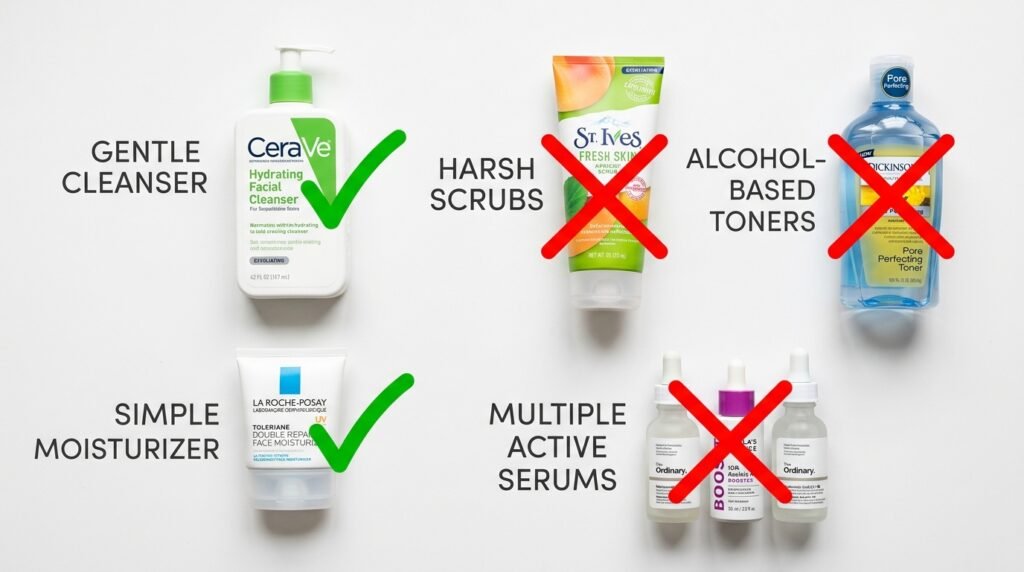
Here’s what I see constantly: someone gets a breakout, panics, buys five products in one Target run, and applies all of them that same night. By day three, their face is red, flaking, and somehow breaking out more. They assume acne treatment doesn’t work and quit. Sound familiar?
The core mistake is confusing aggression with effectiveness. Your skin isn’t a kitchen floor—you can’t just hit it with industrial-strength cleaner and expect results. According to research published on PubMed, over-cleansing and using multiple actives simultaneously significantly increases transepidermal water loss, which weakens your skin barrier and increases inflammation.
The three biggest beginner mistakes I see:
- Stacking actives on day one. Benzoyl peroxide + salicylic acid + retinoid = a chemical war zone on your face.
- Skipping moisturizer. “My skin is oily, I don’t need it” — wrong. Dehydrated skin overproduces oil. Every single time.
- Quitting after two weeks. Acne treatment takes 6-12 weeks. If you bail before that, you never gave it a chance.
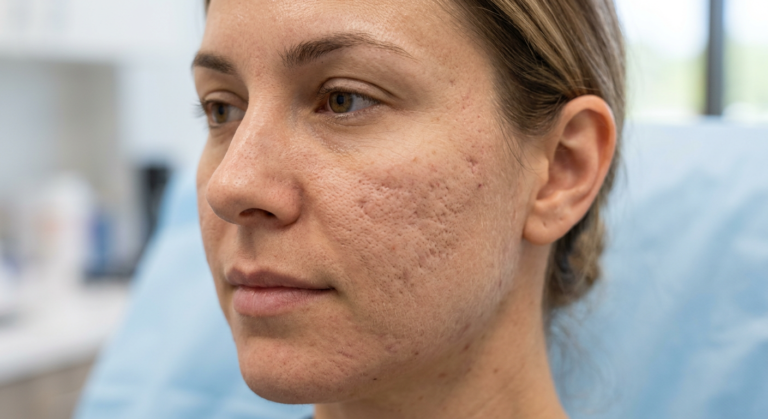
Understanding what type of acne you’re dealing with changes everything about which treatment to pick. Comedonal acne (blackheads and whiteheads) responds best to retinoids. Inflammatory acne (red, angry pimples) responds best to benzoyl peroxide. Don’t guess—identify first.
The Essential Beginner Acne Routine (Step by Step)
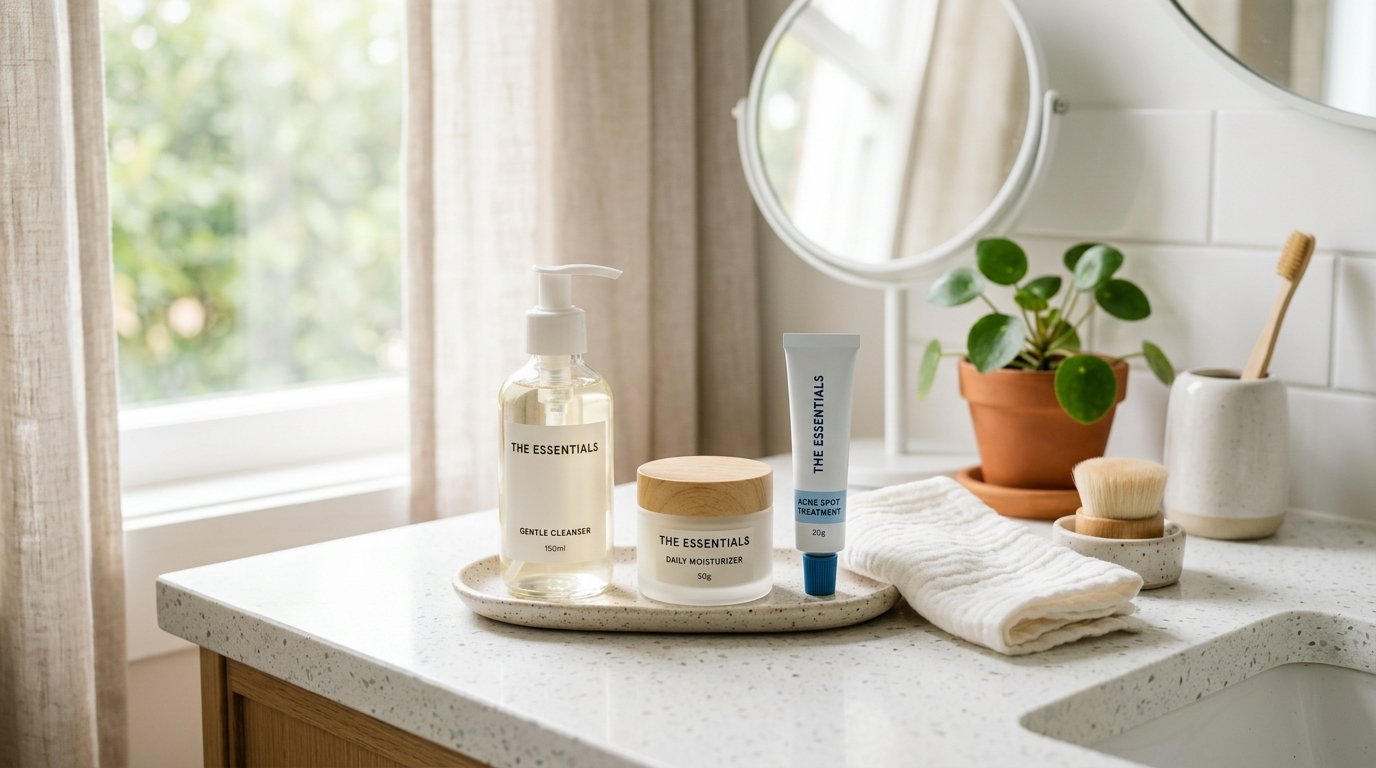
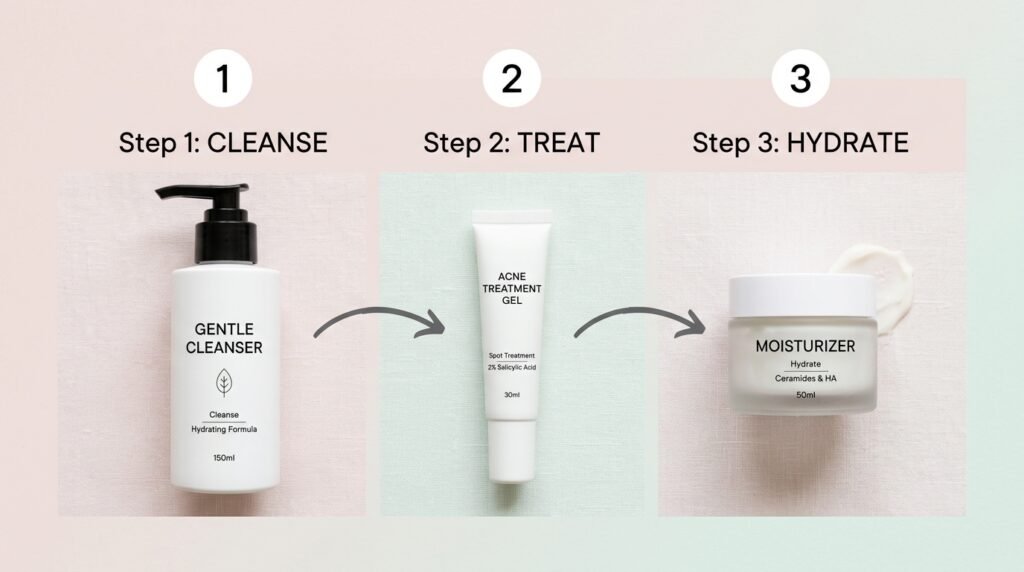
I’ve built this beginner skincare routine based on what actually has clinical backing, not what looks pretty on Instagram. Here’s your morning and evening protocol:
Morning Routine
- Step 1: Gentle Cleanser — Use a fragrance-free, non-foaming or lightly foaming cleanser (think CeraVe, Vanicream, or La Roche-Posay). Wash for 60 seconds. Yes, time it.
- Step 2: Moisturizer — Apply a lightweight, non-comedogenic moisturizer while your skin is still slightly damp.
- Step 3: Sunscreen (SPF 30+) — Non-negotiable. Many acne products increase photosensitivity. The FDA recommends broad-spectrum SPF 30 minimum for daily use.
Evening Routine
- Step 1: Gentle Cleanser — Same cleanser, same 60 seconds.
- Step 2: Active Treatment — Apply ONE active: either benzoyl peroxide 2.5% OR adapalene 0.1% OR salicylic acid 2%. Start every other night for two weeks, then move to nightly.
- Step 3: Moisturizer — Wait 5-10 minutes after your active, then moisturize generously.
That’s it. Three steps, morning and night. I know it feels like you should be doing more, but restraint is the real skill here. IMO, the hardest part of a good acne routine isn’t finding the right products—it’s resisting the urge to overcomplicate it.
Top Acne Products That Actually Work for New Users
After testing and recommending products for over a decade, here’s my shortlist of acne products that deliver results without destroying your face. Every single one costs under $20:
- Benzoyl Peroxide 2.5% (Neutrogena On-The-Spot) — Kills acne-causing bacteria. The 2.5% concentration works as well as 10% with far less irritation. I’ve seen the studies, I’ve lived it.
- Adapalene 0.1% (Differin Gel) — The only OTC retinoid approved for acne. Normalizes skin cell turnover and prevents clogged pores. This is the single best long-term breakout treatment for most people.
- Salicylic Acid 2% (Paula’s Choice BHA Liquid) — Oil-soluble, so it penetrates pores and dissolves the gunk inside. Best for blackheads and mildly oily skin.
- CeraVe Foaming Facial Cleanser — Contains ceramides and niacinamide. Cleans without stripping.
- Vanicream Daily Facial Moisturizer — Zero fragrance, zero dyes, zero nonsense. Your damaged barrier will thank you.
For a deeper breakdown of treatment options based on your specific concerns, check out our full acne treatments resource.
Myth-Busting: What Doesn’t Work (and Why)
Let me save you some money and frustration. These popular “tips” are either useless or actively harmful:
- “Toothpaste dries out pimples.” — It also contains sodium lauryl sulfate, menthol, and fluoride that cause contact dermatitis. Please stop.
- “You need to dry out oily skin.” — Stripping your skin with harsh products triggers rebound oil production. You end up oilier than before. Every. Time.
- “Natural is always better.” — Tea tree oil at full concentration causes chemical burns. Lemon juice destroys your acid mantle. “Natural” doesn’t mean safe.
- “Expensive products work better.” — Adapalene gel (the gold-standard retinoid for beginners) costs $13 at any drugstore. Price and efficacy have almost zero correlation in skincare for beginners.
- “Sun exposure clears acne.” — UV light temporarily reduces inflammation, making acne look better for a day. Then it triggers post-inflammatory hyperpigmentation and long-term damage. The Mayo Clinic explicitly warns against this approach.
Ever wonder why some “clear skin tips” keep circulating even after being debunked? Because they sound intuitive. But your skin doesn’t care about intuition—it cares about chemistry.
Expert Commentary: This video from board-certified dermatologist Dr. Dray breaks down the clinical evidence behind OTC acne treatments in a way that’s accessible for beginners—highly recommend watching if you’re choosing between benzoyl peroxide and adapalene.
Advanced Tactics Most Dermatologists Won’t Tell You First
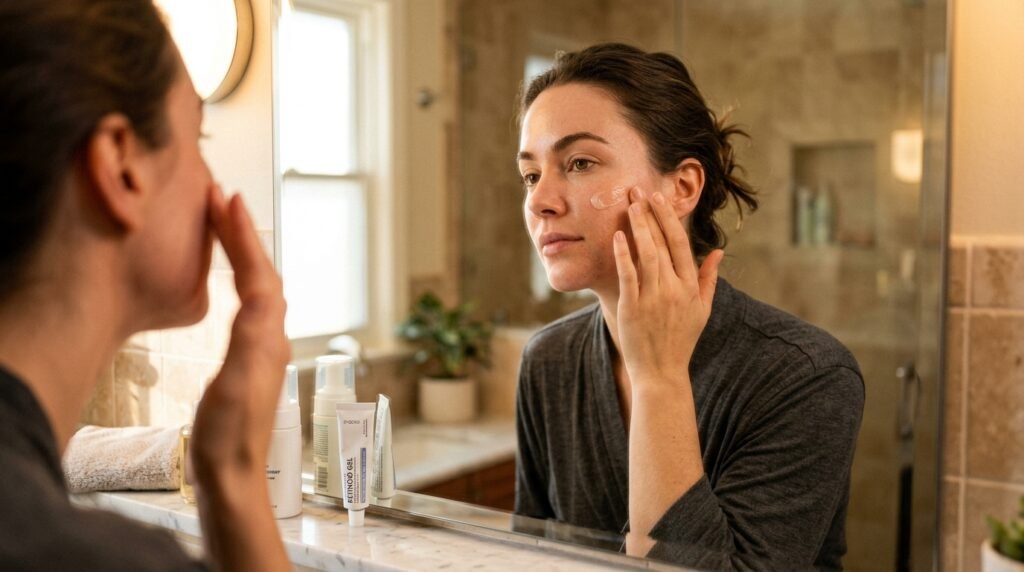
Once you’ve nailed the basics for 8-12 weeks, here’s where you level up. These are the insider moves I’ve picked up from dermatology conferences and years of working with acne-prone clients:
- Contact Therapy with Benzoyl Peroxide: Apply BP, leave it on for 5-10 minutes, then wash it off. You still get the antibacterial benefit with dramatically less irritation and zero bleached pillowcases. Game changer for sensitive skin 🙂
- Buffer Your Retinoid: Apply moisturizer first, wait 10 minutes, then apply adapalene on top. This “buffering” technique reduces irritation by roughly 50% without significantly reducing efficacy. I used this trick for my first three months on Differin.
- Track Your Breakout Patterns: Use your phone camera to take weekly progress photos in the same lighting. You’ll notice patterns—hormonal breakouts along the jawline, product-related breakouts on cheeks. Data beats guessing every time.
- Hydrocolloid Patches for Active Pimples: These don’t treat acne long-term, but they pull fluid from surfaced whiteheads overnight and physically prevent you from picking. If you’re a picker (no shame, I was too), these are mandatory acne help.
If you’re still dealing with persistent issues after implementing all of this, it might be time to evaluate whether other skin concerns are compounding the problem—things like rosacea, fungal acne, or hormonal imbalances that mimic regular acne but require entirely different approaches.
Frequently Asked Questions
What is the best acne treatment for beginners?
The best acne treatment for beginners is a simple routine centered around one proven active: benzoyl peroxide 2.5%, adapalene 0.1%, or salicylic acid 2%. Pair it with a gentle cleanser and non-comedogenic moisturizer. Start slow, stay consistent, and give it a minimum of 8 weeks before evaluating results.
How long does it take for acne treatment to work?
Most treatments need 6-12 weeks to show visible improvement. Retinoids like adapalene often cause a “purging” phase in weeks 2-4, where breakouts temporarily increase as clogged pores push to the surface. This is normal and not a sign that the product is failing. TBH, the purge phase is where most beginners quit—don’t.
Can I use multiple acne products at once as a beginner?
No. Layering benzoyl peroxide, salicylic acid, and retinoids all at once will compromise your skin barrier, causing redness, peeling, stinging, and paradoxically, more breakouts. Master one active first. After 12 weeks, you can consider carefully introducing a second one on alternating nights.
Do I need to see a dermatologist for acne?
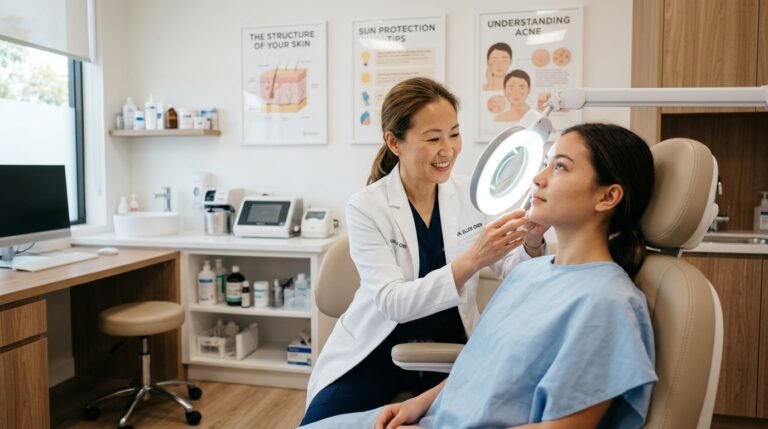
If OTC treatments haven’t improved your acne after a solid 12-week trial, or if you have deep, painful cystic acne, see a dermatologist. They can prescribe prescription-strength retinoids (tretinoin), topical antibiotics, combination therapies, or isotretinoin (Accutane) for severe cases. Don’t suffer in silence—professional acne help exists for a reason.
My Top Recommended Gear
These are the three products I recommend most often to beginners. I’ve personally used or recommended each one to hundreds of people with consistently positive results:
- Differin Adapalene Gel 0.1% — The single most effective OTC acne treatment for long-term prevention. Check price on Amazon
- CeraVe Foaming Facial Cleanser — Gentle, effective, dermatologist-recommended, and under $15. Check price on Amazon
- Vanicream Daily Facial Moisturizer — The safest moisturizer for sensitive, acne-prone skin. Zero irritants, zero fragrance. Check price on Amazon
Disclaimer: This post contains affiliate links. As an Amazon Associate and ClickBank Partner, I may earn a commission from qualifying purchases at no additional cost to you.