Benzoyl Peroxide vs Salicylic Acid for Acne Relief
If you’ve ever Googled benzoyl peroxide vs salicylic acid, you’ve probably drowned in a sea of conflicting advice, half-baked blog posts, and dermatologist TikToks that somehow contradict each other. The problem? Most people pick the wrong acne treatment for their specific skin — and then blame the product when it backfires. That wasted money and wrecked skin barrier could’ve been avoided with about five minutes of actual understanding. I’ve spent over a decade dissecting acne skincare routines and testing formulations across every skin type imaginable, and I’m going to give you the straight answer right here.
If you’re completely new to treating breakouts, I recommend starting with my best acne treatments for beginners guide first — it’ll give you the foundational context for everything below.
Table of Contents
- What’s the Real Difference?
- How Benzoyl Peroxide Works (And When It Shines)
- How Salicylic Acid Works (The Pore Whisperer)
- Head-to-Head Comparison
- Which One Should You Actually Use?
- Can You Use Both Together? (Advanced Tactics)
- Common Myths That Need to Die
- FAQ
- My Top Recommended Gear
What’s the Real Difference Between Benzoyl Peroxide and Salicylic Acid?
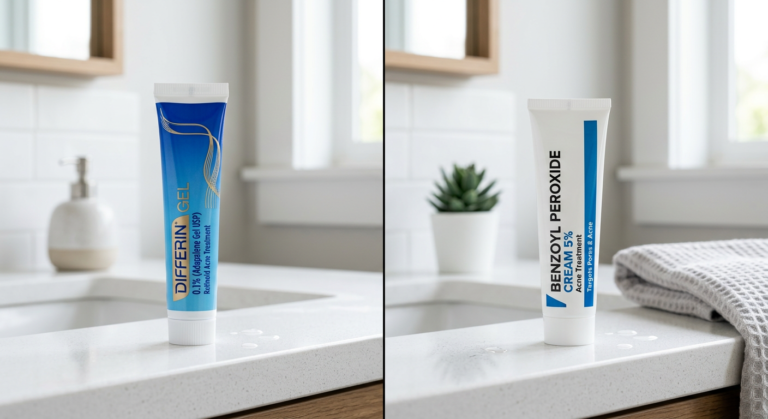
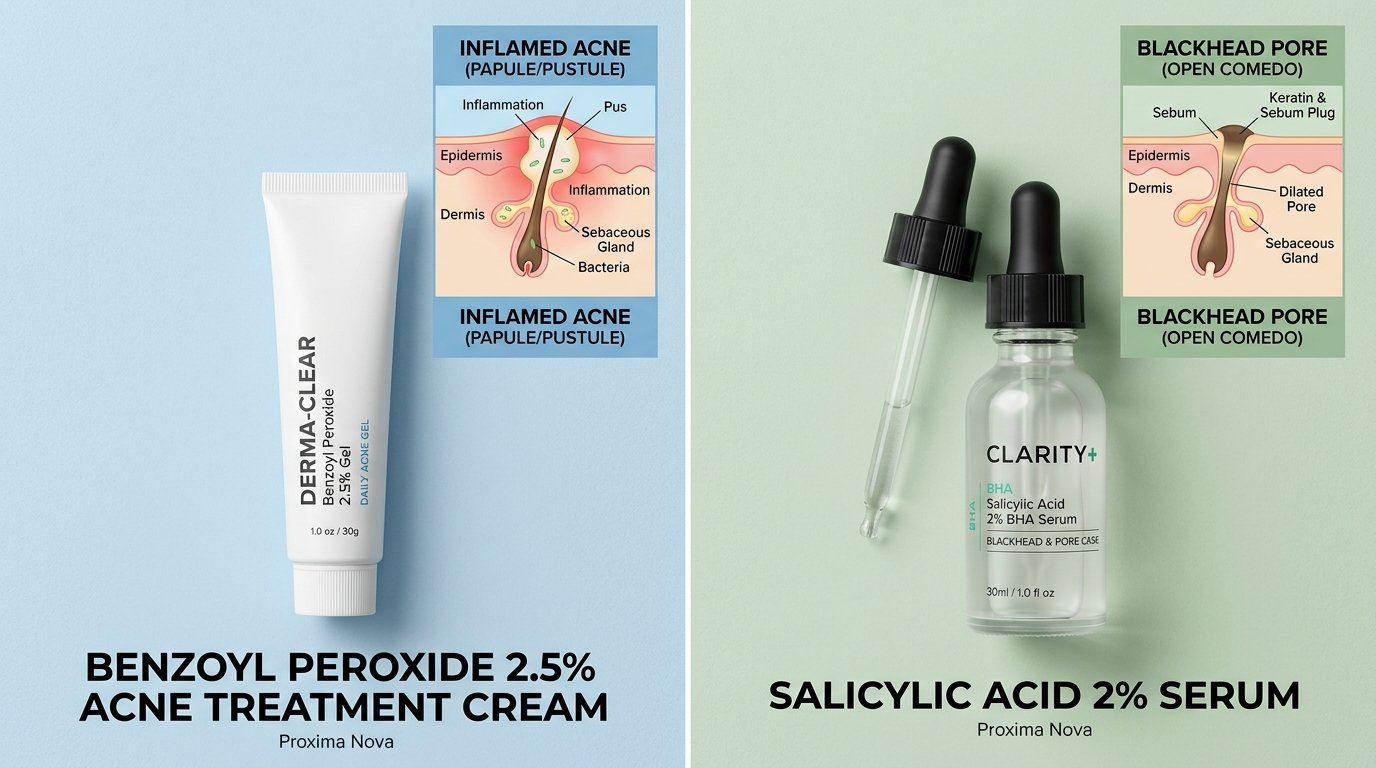
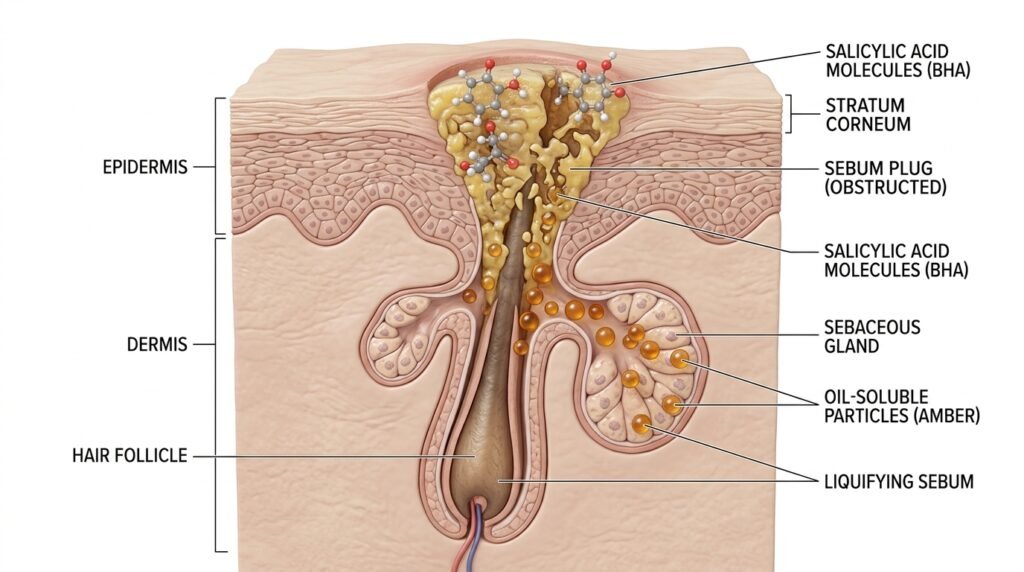
Benzoyl peroxide is an antibacterial agent that kills C. acnes bacteria and reduces inflammation in active pimples. Salicylic acid is a beta-hydroxy acid (BHA) that dissolves oil and dead skin cells inside pores to prevent breakouts. They attack acne through completely different mechanisms, making them suited for different acne types.
That distinction matters more than you think. I see people swap these two as if they’re interchangeable — they’re absolutely not. Benzoyl peroxide is your go-to weapon when you have angry, red, inflamed zits. Salicylic acid is the strategic long-game player that keeps pores clear so those zits never form in the first place. According to the American Academy of Dermatology, both rank as first-line over-the-counter acne ingredients — but for different reasons.
Understanding your specific acne type is honestly half the battle here.
How Benzoyl Peroxide Works (And When It Shines)
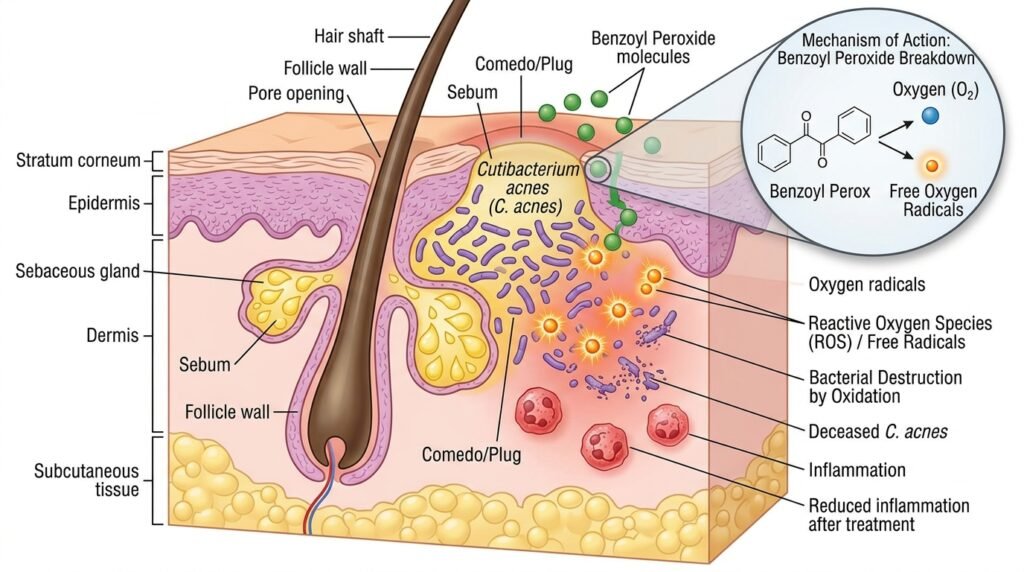
Benzoyl peroxide works by releasing oxygen into the pore. C. acnes — the bacterium behind most inflammatory acne — is anaerobic, meaning it thrives in oxygen-free environments. Flood that pore with oxygen and you essentially suffocate the bacteria. It’s brutal, effective, and fast.
Here’s something most articles won’t tell you: benzoyl peroxide for acne also has mild comedolytic (pore-unclogging) properties, though it’s significantly weaker than salicylic acid in that department. A study published in the Journal of Dermatological Treatment confirmed that 2.5% benzoyl peroxide performs almost identically to 10% — with dramatically less irritation. So if you’ve been slathering on 10% BP and wondering why your face looks like a sunburned tomato, now you know.
Best for: Inflammatory acne (papules, pustules, cystic), oily skin acne, moderate-to-severe breakouts, and anyone dealing with bacterial-driven flare-ups.
Watch out for: It bleaches fabrics (towels, pillowcases — I’ve ruined more than I care to admit), dries skin aggressively, and can destroy a compromised skin barrier in days if overused.
How Salicylic Acid Works (The Pore Whisperer)
Salicylic acid is oil-soluble, which gives it a superpower that most other exfoliating acids lack: it can actually penetrate into the pore lining. Once inside, it dissolves the mixture of sebum, dead skin cells, and debris that creates comedones (blackheads and whiteheads). Think of it as a molecular-level pore vacuum. Explore more about how it targets different skin concerns beyond just acne.
I’ve always considered salicylic acid for acne the smarter, quieter ingredient. It doesn’t deliver overnight drama like BP — it prevents problems before they start. It also has genuine anti-inflammatory properties, which makes it surprisingly effective for redness-prone and sensitive skin acne.
The FDA classifies salicylic acid as a safe and effective OTC acne treatment at concentrations between 0.5% and 2%. IMO, 2% is the sweet spot for most people — strong enough to work, gentle enough to not strip your face raw.
Best for: Blackheads, whiteheads, oily skin acne, enlarged pores, and maintenance routines for acne-prone skin.
Head-to-Head: Benzoyl Peroxide vs Salicylic Acid Comparison
Let me cut through the noise. Here’s the no-fluff breakdown:
- Mechanism: BP kills bacteria. SA unclogs pores.
- Speed: BP works faster on active breakouts (days). SA plays the long game (weeks).
- Irritation potential: BP is significantly more irritating — especially above 5%.
- Blackheads: SA wins, hands down. BP barely touches them.
- Cystic acne: BP is your weapon here. SA can’t penetrate deep enough for cysts.
- Bacterial resistance: BP doesn’t cause bacterial resistance (unlike antibiotics). SA doesn’t target bacteria at all.
- Fabric safety: SA won’t bleach your $200 pillowcase. BP absolutely will 🙂
The National Library of Medicine notes that combining these two acne ingredients with different mechanisms often yields better outcomes than using either alone — which brings me to the advanced play.
Which One Should You Actually Use? (Skin Type Breakdown)
Stop guessing. Here’s my decade-tested framework for choosing:
Oily skin with frequent breakouts: Start with 2% salicylic acid as your daily baseline (cleanser or leave-on treatment), and keep 2.5% benzoyl peroxide as a spot treatment for flare-ups. This combo has been my go-to recommendation for oily skin acne sufferers for years.
Sensitive or dry skin with occasional acne: Use 0.5%–1% salicylic acid 2–3 times per week. Avoid benzoyl peroxide entirely unless prescribed by a derm. Your barrier can’t handle it without serious moisture support.
Moderate inflammatory acne: Use 2.5% benzoyl peroxide daily as a short-contact treatment (apply for 2–3 minutes, then rinse). This technique — which most brands never mention — delivers 80% of the antibacterial benefit with a fraction of the irritation.
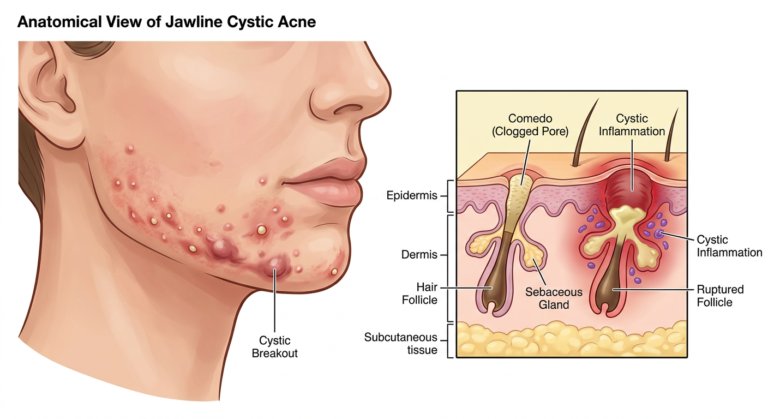
Hormonal jawline acne: Neither ingredient will solve this alone, TBH. Salicylic acid can help manage the surface congestion, but you likely need to address the hormonal driver. Check out our complete acne treatments resource for deeper strategies.
Can You Use Both Together? (Advanced Tactics)
Expert Commentary: This dermatologist-led breakdown offers a clinical perspective on layering acne actives safely — it’s one of the clearest explanations I’ve found online and complements everything I cover below.
Yes, you absolutely can layer benzoyl peroxide and salicylic acid — but you need a strategy, not a prayer. Here’s my preferred approach after testing dozens of protocols:
- Time separation: Apply salicylic acid in the AM, benzoyl peroxide in the PM. This gives each ingredient its own window to work without competing or compounding irritation.
- Alternate days: Use SA on Monday/Wednesday/Friday, BP on Tuesday/Thursday/Saturday. Sunday is recovery day (moisturizer only).
- The short-contact hack: Apply 2.5% BP as a wash (leave on for 60–120 seconds, then rinse), followed by a salicylic acid leave-on serum. This minimizes dryness while stacking mechanisms.
Whatever you do, never apply both at full strength simultaneously on day one. That’s how you nuke your moisture barrier and end up worse than when you started. Build up gradually over 2–3 weeks.
Common Myths That Need to Die
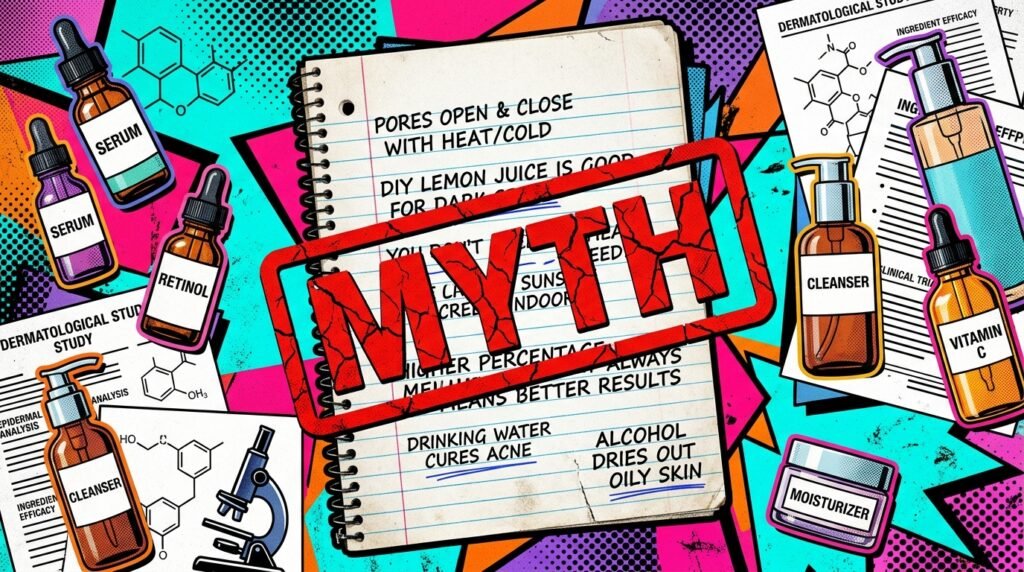
Myth #1: “Higher percentage = better results.” Wrong. I already mentioned the study showing 2.5% BP matches 10% in efficacy. More isn’t more — it’s just more irritation. The same applies to salicylic acid: 2% outperforms higher concentrations in most OTC formulations because the delivery system matters more than raw percentage.
Myth #2: “Salicylic acid dries out your skin.” Not inherently. SA is actually less drying than most people assume. The dryness usually comes from the vehicle (alcohol-heavy toners, harsh cleansers), not the salicylic acid itself. Choose a well-formulated leave-on product and this is a non-issue.
Myth #3: “Benzoyl peroxide thins your skin.” No. BP causes superficial peeling and dryness, which people mistake for thinning. It doesn’t affect dermal thickness. Retinoids are the ingredient people are actually thinking of — and even that concern is largely overblown.
Myth #4: “You need prescription-strength products to clear real acne.” For mild-to-moderate acne, OTC acne ingredients like BP and SA handle the job beautifully. Our start here guide walks you through building an effective routine from scratch without a prescription.
Frequently Asked Questions
Can I use benzoyl peroxide and salicylic acid together?
Yes, but use them at different times of day or on alternating days. Applying both simultaneously at full strength risks severe dryness and irritation. Start slow, monitor your skin’s tolerance, and always use a non-comedogenic moisturizer alongside.
Which is better for blackheads — benzoyl peroxide or salicylic acid?
Salicylic acid wins this one easily. Its oil-soluble nature lets it dissolve the sebum and dead cells inside pores that form blackheads. Benzoyl peroxide targets bacteria, which isn’t the primary driver of non-inflammatory comedonal acne.
Is benzoyl peroxide or salicylic acid better for sensitive skin acne?
Salicylic acid is the gentler option for sensitive skin acne. It causes less peeling and redness than benzoyl peroxide. Start at 0.5%–1% concentration, use it every other day, and pair it with a soothing moisturizer containing ceramides or niacinamide.
How long does benzoyl peroxide or salicylic acid take to work?
Expect 4–6 weeks of consistent use before judging either ingredient. Benzoyl peroxide can reduce individual inflamed pimples within days, but overall skin improvement takes a full cycle. Salicylic acid works more gradually by preventing new breakouts from forming rather than zapping existing ones.
My Top Recommended Gear
I’ve tested an absurd number of products over the years. These three earn permanent spots in my rotation — and I recommend them without hesitation for anyone building a serious acne skincare routine:
- CeraVe Acne Foaming Cream Cleanser (4% Benzoyl Peroxide) — The best BP cleanser I’ve used. CeraVe nailed the formulation by including ceramides and hyaluronic acid to counteract BP’s drying effect. Great for the short-contact technique I described above.
- Paula’s Choice 2% BHA Liquid Exfoliant — The gold standard salicylic acid leave-on treatment. Period. Elegant formulation, no unnecessary fragrance, and it delivers consistent results across every skin type I’ve recommended it for.
- La Roche-Posay Effaclar Duo Dual Action Acne Treatment — This combines 5.5% benzoyl peroxide with micro-exfoliating lipo-hydroxy acid. It’s a powerhouse for moderate inflammatory acne without completely trashing your moisture barrier.
Disclaimer: This post contains affiliate links. As an Amazon Associate and ClickBank Partner, I may earn a commission from qualifying purchases at no additional cost to you.