Azelaic Acid for Acne: Amazing Skin Benefits
Azelaic acid for acne is, hands down, one of the most criminally underrated treatments I’ve come across in over ten years of dissecting skincare ingredients. Here’s the problem: you’ve cycled through half your medicine cabinet — harsh toners, drying spot treatments, overpriced serums — and your breakouts still show up like uninvited guests.
Every morning you brace yourself in the mirror, hoping something has changed, and every morning your skin reminds you who’s really in charge. Frustrating doesn’t even cover it. The good news?
Azelaic acid is a multitasking acne treatment that kills bacteria, calms inflammation, fades dark marks, and unclogs pores — all without the scorched-earth side effects of harsher alternatives. Let me break down exactly why this ingredient deserves a permanent spot in your routine.
Table of Contents
- What Is Azelaic Acid and Why Should You Care?
- How Azelaic Acid Actually Fights Acne (The Science, Minus the Snooze)
- Azelaic Acid vs. Other Popular Acne Treatments
- How to Build an Acne Routine with Azelaic Acid
- Common Myths About Azelaic Acid — Busted
- Who Should (and Shouldn’t) Use Azelaic Acid
- Frequently Asked Questions
- My Top Recommended Gear
What Is Azelaic Acid and Why Should You Care?
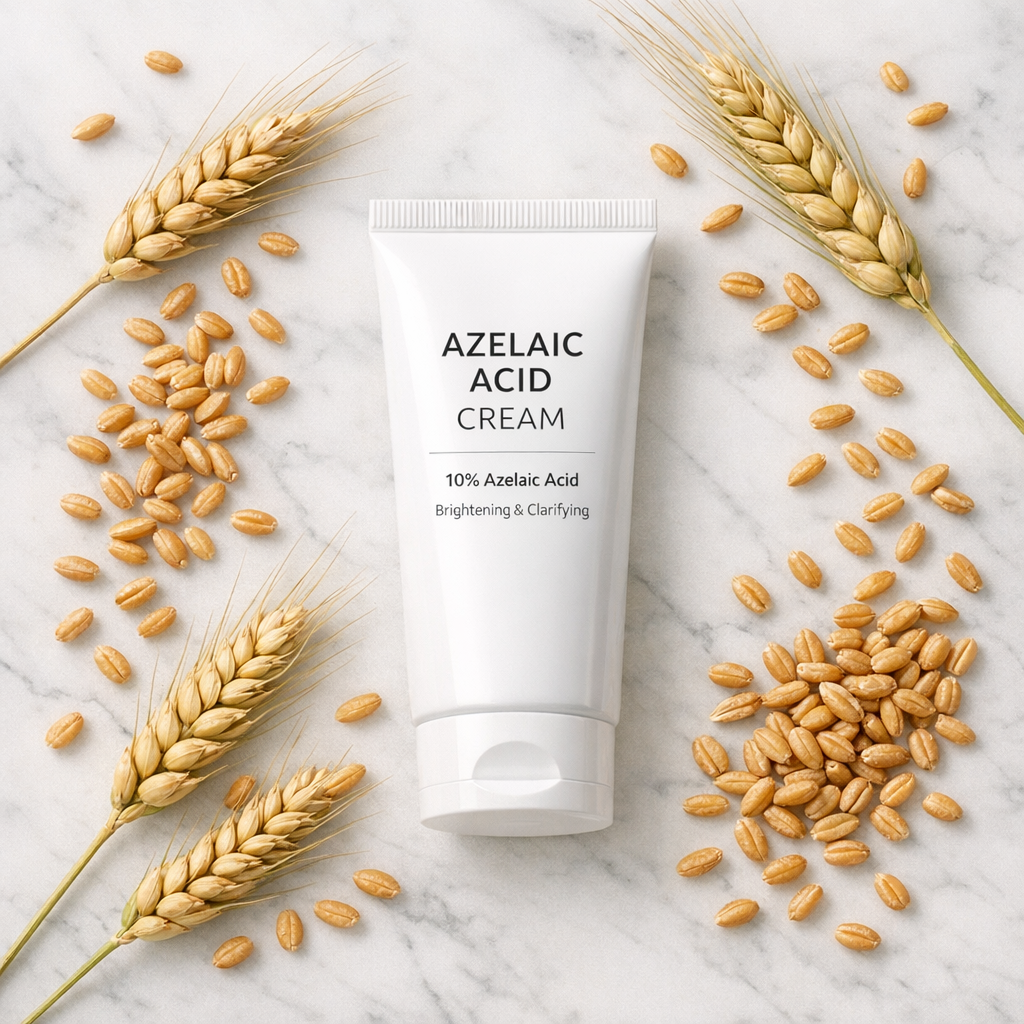
Azelaic acid is a naturally occurring dicarboxylic acid — produced by a yeast that lives on normal skin — that fights acne-causing bacteria, reduces inflammation, normalizes skin cell turnover, and inhibits excess melanin production. It comes in over-the-counter formulas (typically 10%) and prescription strengths (15–20%), and it treats mild to moderate acne while tackling post-inflammatory hyperpigmentation simultaneously.
I first stumbled onto azelaic acid years ago while researching different acne types and the treatments that actually move the needle for each one. What struck me was how versatile this ingredient is. It doesn’t just do one thing well — it does four things well. That’s rare in skincare, where most ingredients are one-trick ponies with great marketing budgets.
Originally studied for its depigmenting properties, azelaic acid gained serious traction in dermatology after clinical trials — including research published by the National Library of Medicine — demonstrated its effectiveness against both comedonal and inflammatory acne. The FDA has approved prescription formulations (like Finacea 15% gel and Azelex 20% cream) for acne and rosacea.
How Azelaic Acid Actually Fights Acne (The Science, Minus the Snooze)
Most skincare content glosses over the “how” and jumps straight to the “buy this.” I think you deserve better than that. So here’s what azelaic acid actually does inside your pores:
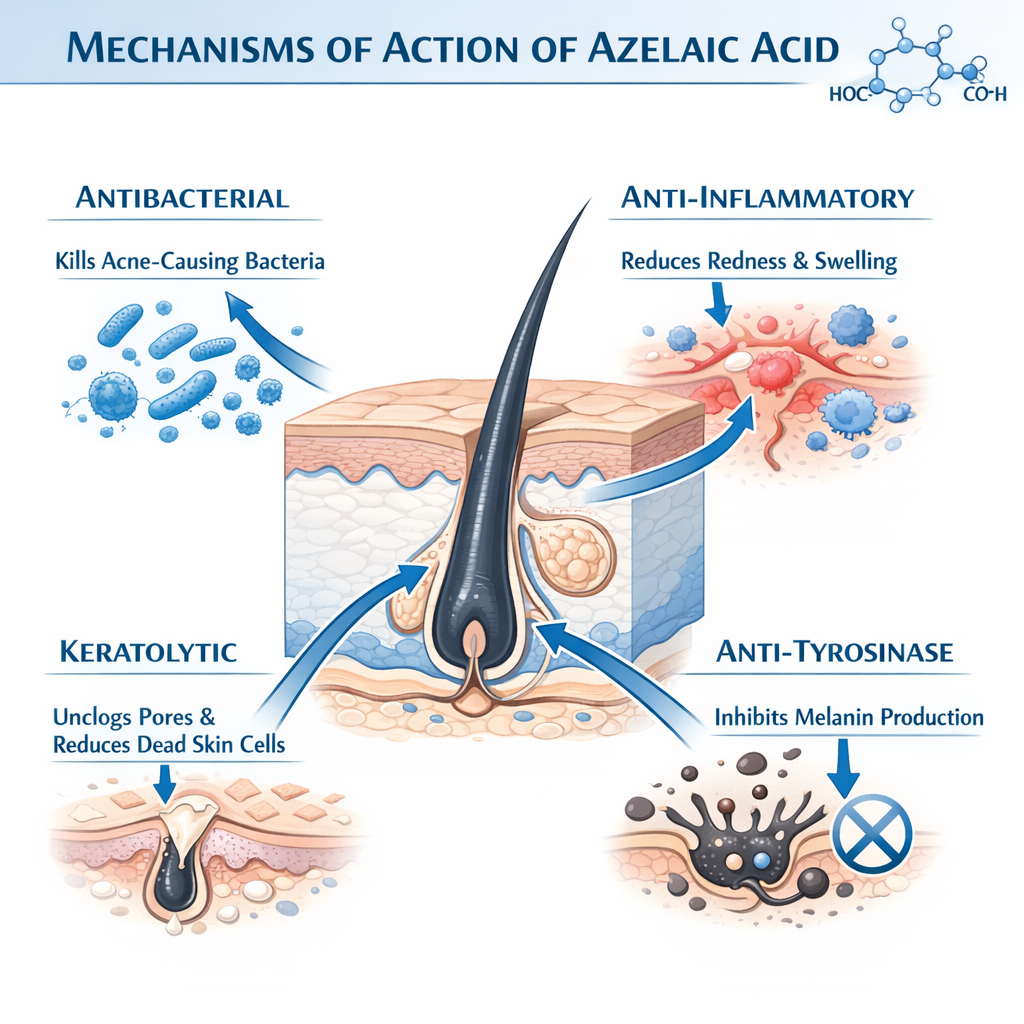
- Kills Cutibacterium acnes bacteria: Azelaic acid disrupts bacterial protein synthesis. Unlike some antibiotics, bacteria have shown minimal resistance to it — even after prolonged use. That’s a massive advantage for long-term breakout treatment.
- Reduces inflammation: It inhibits the production of reactive oxygen species (ROS) and pro-inflammatory cytokines. Translation? It calms angry, red, swollen pimples faster than you’d expect from a “gentle” ingredient.
- Normalizes keratinization: Azelaic acid prevents your pore linings from producing excess keratin — the protein buildup that creates microcomedones (the invisible precursors to every whitehead and blackhead you’ve ever cursed at).
- Fades hyperpigmentation: By inhibiting tyrosinase, it reduces excess melanin production in overactive melanocytes. This means those dark marks left behind after a breakout clear significantly faster. According to the American Academy of Dermatology, addressing post-inflammatory hyperpigmentation is a critical step most acne routines miss.
IMO, the combination of antibacterial + anti-inflammatory + keratolytic + depigmenting action makes azelaic acid one of the smartest skincare for acne ingredients available — prescription or otherwise.
Azelaic Acid vs. Other Popular Acne Treatments
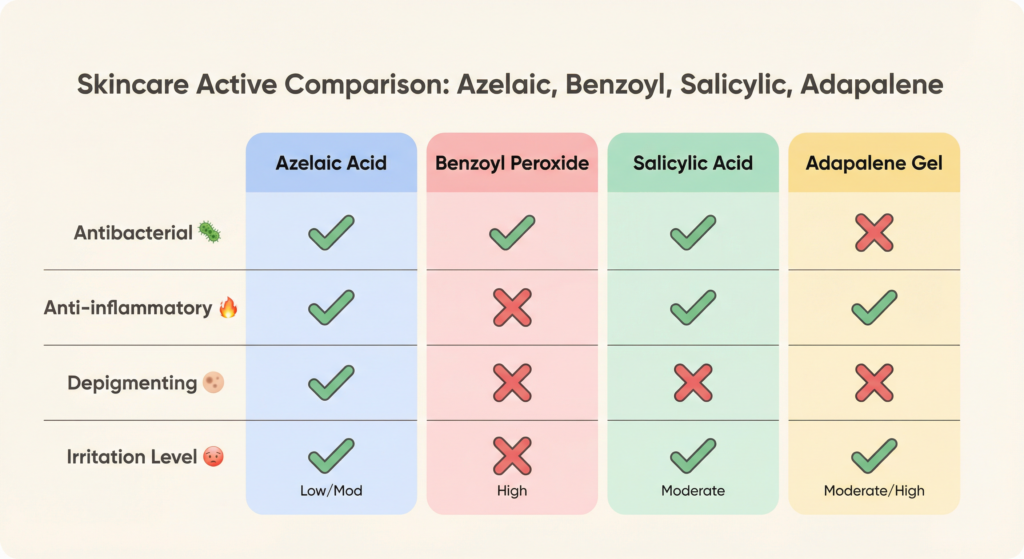
How does azelaic acid stack up against the heavy hitters you already know? I get this question constantly, so let me give you a straight comparison.
Azelaic Acid vs. Benzoyl Peroxide: Benzoyl peroxide is an outstanding antibacterial agent — arguably the best OTC option for killing C. acnes. But it bleaches fabric, dries skin aggressively, and does nothing for dark marks. Azelaic acid offers antibacterial action plus depigmenting and anti-inflammatory benefits with dramatically less irritation. For sensitive or melanin-rich skin, azelaic acid often wins.
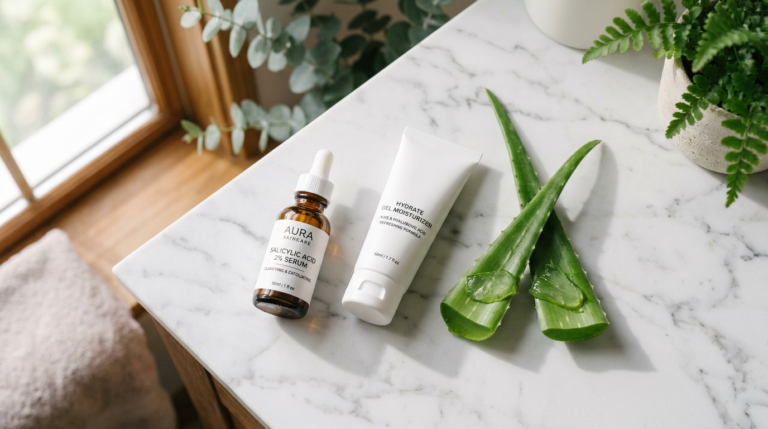
Azelaic Acid vs. Salicylic Acid: Salicylic acid is a lipophilic BHA that excels at dissolving oil and clearing clogged pores. It’s my go-to for blackhead-dominant acne. But it lacks meaningful antibacterial or depigmenting properties. If you’re dealing with inflamed papules and dark spots? Azelaic acid has the edge.
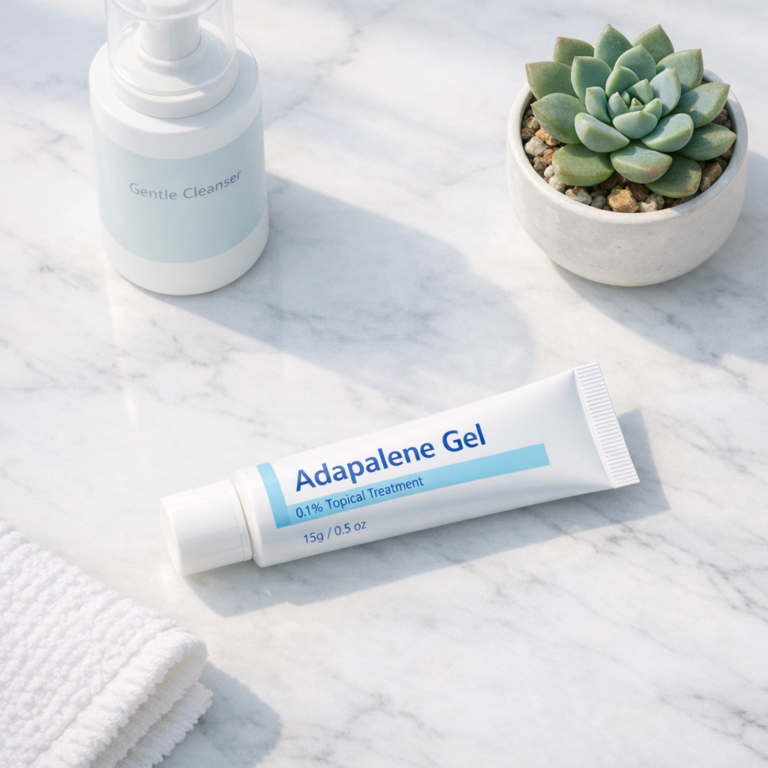
Azelaic Acid vs. Adapalene Gel (Retinoid for Acne): Adapalene gel is a powerhouse retinoid for acne that normalizes cell turnover and prevents comedones. Here’s my favorite insider move: you don’t have to pick one. Many board-certified dermatologists recommend using azelaic acid in the morning and adapalene at night. This combination attacks acne through complementary pathways. A study in the Journal of Drugs in Dermatology highlighted this pairing as particularly effective for moderate acne with hyperpigmentation concerns.
How to Build an Acne Routine with Azelaic Acid
Knowing an ingredient works and knowing how to actually use it are two very different things. Here’s the acne routine framework I recommend after years of testing and reader feedback:
Morning Routine:
- Gentle cleanser (non-foaming or low-foam)
- Azelaic acid (10–15%) — apply a thin, even layer to affected areas
- Lightweight moisturizer
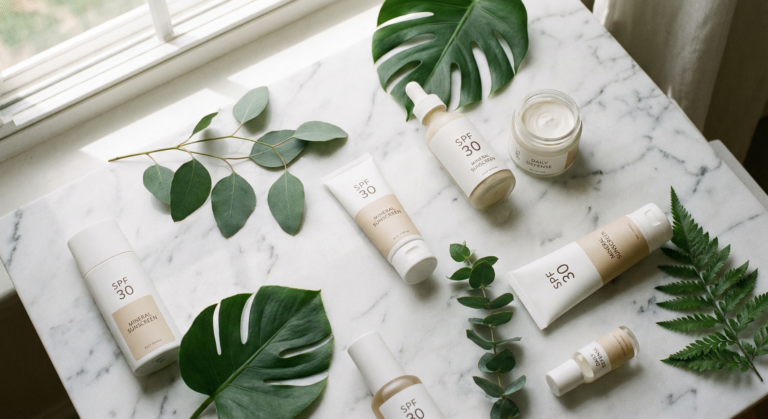
- SPF 30+ sunscreen (non-negotiable — azelaic acid can increase photosensitivity slightly, and sun exposure worsens dark marks)
Evening Routine:
- Gentle cleanser
- Adapalene gel 0.1% OR prescription retinoid (if tolerated)
- Moisturizer
Pro tip I wish someone told me earlier: Apply azelaic acid to completely dry skin. Damp skin increases penetration, which sounds good in theory but can cause stinging and irritation — especially with higher-strength formulas. Wait two to three minutes after cleansing, then apply. Your skin will thank you.
If you’re new to building a comprehensive clear skin strategy, I put together a step-by-step beginner’s framework — start here before layering in actives.
Expert Commentary: This dermatologist-led video gives an excellent clinical breakdown of azelaic acid’s mechanisms and practical application tips — worth watching if you want to hear the science explained by someone who prescribes this ingredient daily.
Common Myths About Azelaic Acid — Busted
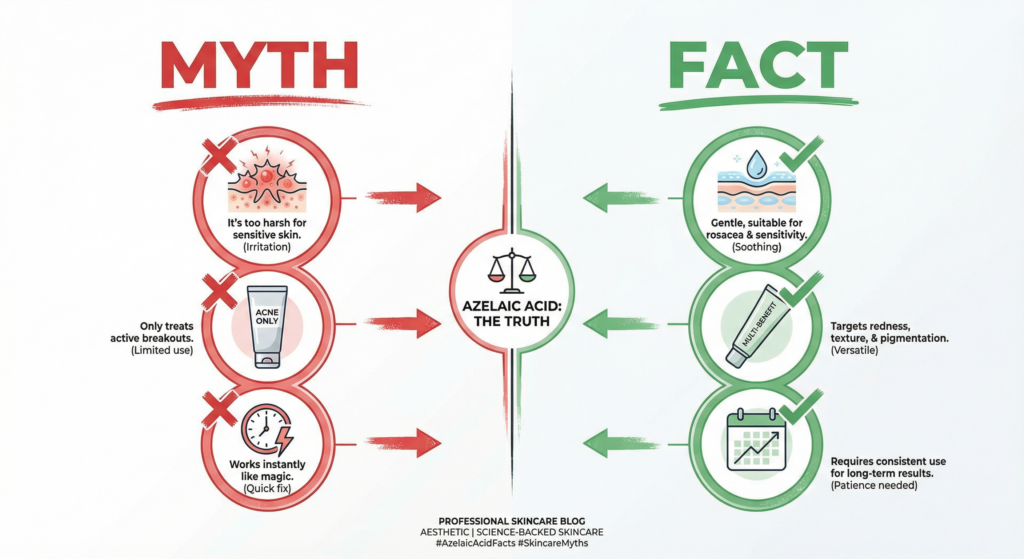
After a decade in this space, I’ve heard some truly wild misinformation. Let me set the record straight on the biggest myths:
Myth #1: “Azelaic acid is too weak to really treat acne.”
Wrong. Prescription-strength 15–20% azelaic acid has been shown in clinical trials to perform comparably to benzoyl peroxide 5% and tretinoin 0.05% for mild-to-moderate inflammatory acne. “Gentle” does not mean “ineffective.” That’s a false equivalence the skincare industry loves to exploit to sell you harsher products. TBH, it’s one of my biggest pet peeves 🙂
Myth #2: “It will bleach your skin.”
Nope. Azelaic acid specifically targets abnormally hyperactive melanocytes. It does not suppress melanin production in normally functioning cells. Your natural skin tone stays exactly as it is — only the dark spots from acne scarring fade. The StatPearls clinical reference confirms this selective mechanism.
Myth #3: “You can’t mix it with other actives.”
This one baffles me. Azelaic acid plays nicely with niacinamide, hyaluronic acid, adapalene gel, and even benzoyl peroxide (when used at different times of day). The only combo I’d approach cautiously is layering it directly with high-concentration AHAs — that can cause unnecessary stinging. But as a component of a broader acne routine? It’s one of the most cooperative ingredients on the shelf. Check out our product reviews for tested combinations that actually work.
Who Should (and Shouldn’t) Use Azelaic Acid
Azelaic acid is an excellent fit if you:
- Have mild to moderate inflammatory acne (papules, pustules)
- Struggle with post-acne dark spots or uneven skin tone
- Have sensitive or rosacea-prone skin that rebels against benzoyl peroxide
- Are pregnant or breastfeeding and need a pregnancy-safe breakout treatment (Category B)
- Want to complement a retinoid for acne without doubling down on irritation
It may not be your best first-line option if you:
- Have severe nodulocystic acne — you likely need systemic treatment (see a dermatologist, seriously)
- Experience a known allergy to azelaic acid or propylene glycol (common in many formulations)
Not sure which category of acne you’re dealing with? I strongly recommend identifying your specific acne type first — the right diagnosis changes everything about which treatment path makes sense for you.
Frequently Asked Questions
Can I use azelaic acid every day for acne?
Yes. Most people tolerate azelaic acid once or twice daily. I recommend starting with once a day for two weeks, then increasing to twice daily if your skin shows no irritation. Listen to your face — it’s smarter than any Reddit thread.
Can I combine azelaic acid with retinoids like adapalene gel?
Absolutely. This is one of my favorite combos. Apply azelaic acid in the morning, adapalene gel at night. This approach targets acne bacteria and inflammation during the day while boosting cell turnover overnight. Many dermatologists endorse this protocol for moderate acne with hyperpigmentation.
How long does azelaic acid take to clear acne?
Expect noticeable improvement in 4 to 8 weeks of consistent use. Significant clearing — including fading of dark marks — typically happens by week 12. Patience isn’t glamorous, but it’s mandatory here.
Does azelaic acid bleach or lighten normal skin?
No. It selectively targets overactive melanocytes. Your natural skin tone remains unchanged — only abnormal hyperpigmentation fades. This makes it safe for all skin tones, including darker complexions.
Is azelaic acid safe during pregnancy?
It carries an FDA Pregnancy Category B classification, making it one of the very few acne actives generally considered safe during pregnancy. That said, always loop in your OB-GYN before adding anything new to your routine.
My Top Recommended Gear
After testing dozens of azelaic acid formulations, adapalene products, and supporting skincare for acne essentials, these three consistently deliver the best results for my readers:
- Paula’s Choice 10% Azelaic Acid Booster — Lightweight, layers beautifully, and plays well with other actives. My daily driver. Check price on Amazon
- The Ordinary Azelaic Acid Suspension 10% — Budget-friendly and effective, though the silicone-heavy texture takes some getting used to. Check price on Amazon
- La Roche-Posay Adapalene Gel 0.1% (Effaclar) — The best OTC retinoid for acne to pair with your azelaic acid AM routine. Check price on Amazon
Disclaimer: This post contains affiliate links. As an Amazon Associate, I may earn a commission from qualifying purchases at no additional cost to you.