Adult Acne in Women: 7 Powerful Fixes That Work
Adult acne in women is one of the most frustrating skin problems I’ve spent over a decade helping people solve. You did everything right as a teenager — maybe you even had clear skin back then — and now your jawline looks like it’s staging a full rebellion in your 30s or 40s. The emotional toll is real, and the conflicting advice online makes it worse. I wrote this guide to cut through the noise and hand you seven fixes that actually move the needle, backed by dermatological research and my own years of obsessive experimentation.
Table of Contents
- What Causes Adult Acne in Women?
- Fix #1: Get Your Hormones Tested (Not Just Guessed)
- Fix #2: Rebuild Your Skincare Routine From Scratch
- Fix #3: Retinoids — The Gold Standard
- Fix #4: Ditch the Dairy (Seriously, Try It)
- Fix #5: Spironolactone — The Prescription Game-Changer
- Fix #6: Stress Management Is Science, Not Fluff
- Fix #7: Stop Over-Exfoliating Your Already-Angry Skin
- Frequently Asked Questions
- My Top Recommended Gear
What Causes Adult Acne in Women?
Adult acne in women is primarily caused by hormonal fluctuations — especially androgens — that overstimulate oil glands. Contributing factors include stress-related cortisol spikes, high-glycemic diets, dairy intake, genetics, and disrupted skin barriers from harsh products.
Here’s the thing most surface-level articles skip: adult acne in women is fundamentally different from teen acne. Teenage breakouts are largely driven by puberty flooding the system with hormones for the first time. Adult female acne? It’s a more complex cocktail. Your hormones cycle monthly, stress throws cortisol into the mix, and if you’ve got a genetic predisposition — well, your sebaceous glands basically received an invitation they never asked for.
According to the American Academy of Dermatology, up to 50% of women in their 20s and 25% of women in their 40s deal with acne. Those numbers are staggering. Yet most women I talk to feel like they’re the only ones hiding breakouts under concealer at a board meeting. You’re not alone — not even close.
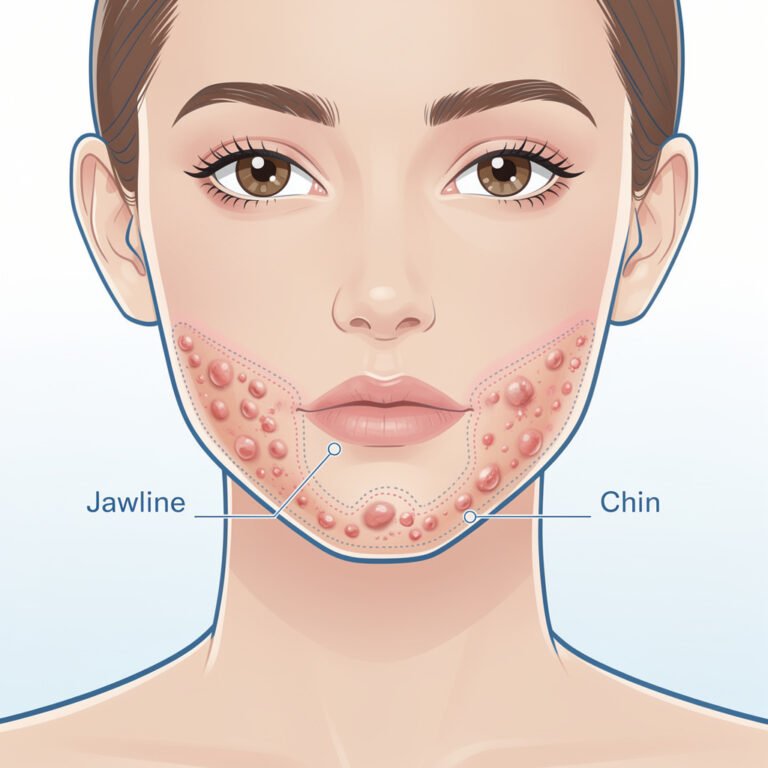
The type of acne matters too. Deep, cystic bumps along the jawline and chin scream hormonal. Tiny bumps across the forehead? That’s often a damaged barrier or fungal issue. Knowing what you’re dealing with saves you months of wrong turns. If you’re brand new to understanding your skin, I’d suggest starting with our beginner’s guide for the full picture.
Fix #1: Get Your Hormones Tested (Not Just Guessed)
I cannot stress this enough: stop guessing what’s happening inside your body. If you’re a woman breaking out consistently along your jaw, chin, or lower cheeks, ask your doctor to run a full hormone panel. I’m talking about free testosterone, DHEA-S, and sex hormone-binding globulin (SHBG) at minimum.
Why? Because hormonal acne responds to hormonal solutions. A 2012 study published in the Journal of Clinical and Aesthetic Dermatology confirmed that elevated androgens are the primary driver of persistent adult female acne. You can slather on every fancy serum on the market, but if your androgens are elevated, topical products alone will never fully clear you up. Get the data first.

Fix #2: Rebuild Your Skincare Routine From Scratch
This is where I play the bad guy. Most women I consult with use way too many products — and at least half of them are actively making things worse. IMO, the “12-step skincare routine” trend has done more damage than good for acne-prone skin.
Here’s the stripped-down women skincare framework I recommend for adult acne:
- Gentle cleanser (pH 4.5–5.5, no sulfates)
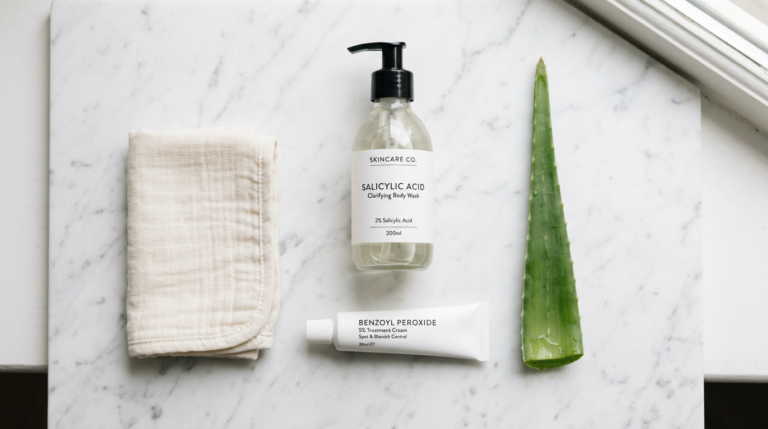
- One active treatment (retinoid OR benzoyl peroxide — not both simultaneously at first)
- Lightweight moisturizer with ceramides or niacinamide
- SPF 30+ sunscreen every morning, non-negotiable
That’s it. Four steps. I’ve watched countless women clear their skin just by removing products rather than adding them. Your compromised barrier can’t heal if you keep assaulting it with acids, scrubs, and essential oils every night. For a deeper breakdown of treatments that actually work, check our acne treatments guide.
Fix #3: Retinoids — The Gold Standard
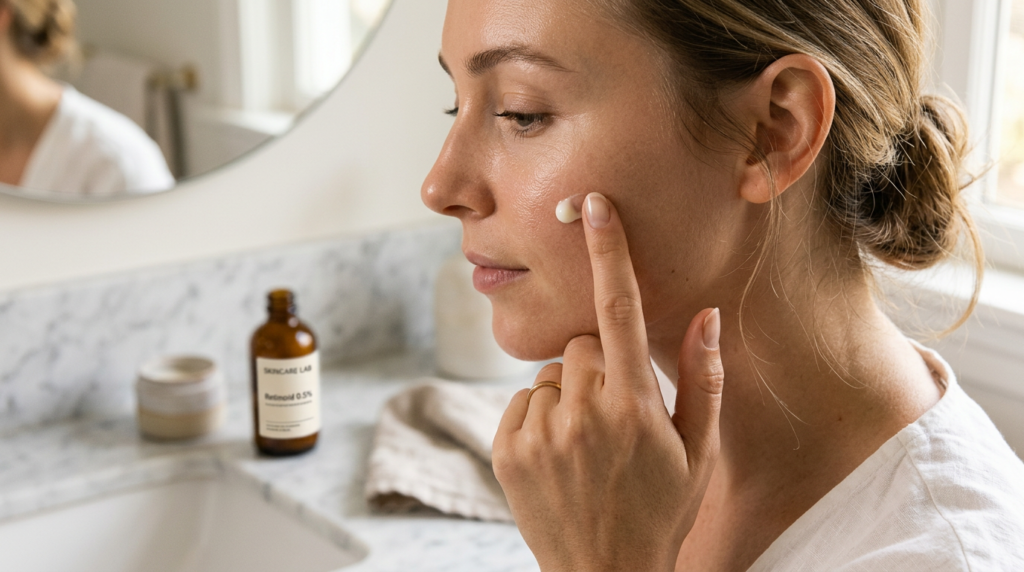
If I could recommend only one topical product for adult female acne, it would be a retinoid. Every single time. Adapalene (Differin) is now available over the counter, and prescription tretinoin remains the most well-studied anti-acne ingredient in dermatological history.
Retinoids increase cell turnover, prevent clogged pores, reduce inflammation, and — as a bonus — fight fine lines. The Mayo Clinic lists retinoids as a first-line acne treatment for good reason.
The catch? You will purge. Weeks two through six can feel demoralizing. Your skin gets worse before it gets better. But push through. Start with every third night, buffer over moisturizer, and work your way up. By month three, you’ll understand why dermatologists have prescribed this stuff for decades.
Fix #4: Ditch the Dairy (Seriously, Try It)
I know, I know — you love cheese. So do I. But here’s the uncomfortable truth: multiple studies, including a large-scale review in Nutrients (2018), have found a positive association between dairy consumption and acne severity, particularly skim milk.
Dairy spikes insulin and contains growth hormones that can amplify androgen activity. You don’t need to go full vegan forever — just try eliminating dairy strictly for 6-8 weeks and see what happens. I’ve personally seen this single change make a dramatic difference for women whose acne causes seemed mysteriously untraceable. Think of it as a diagnostic experiment, not a life sentence.
Fix #5: Spironolactone — The Prescription Game-Changer
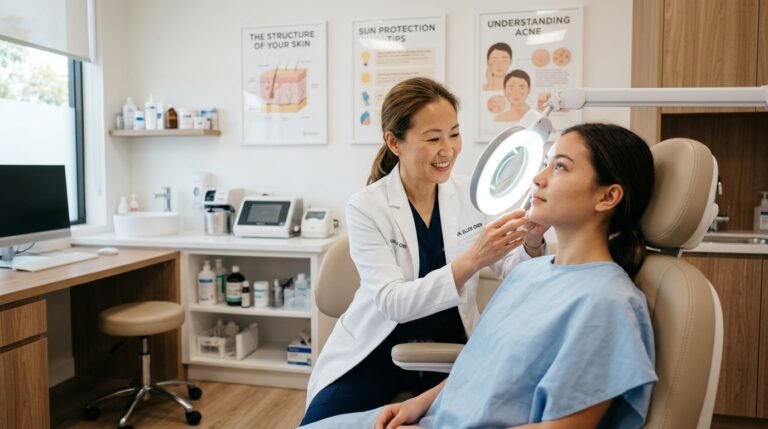
If you’ve tried topicals, adjusted your diet, and still can’t shake those deep cystic breakouts — it’s time to have the spironolactone conversation with your dermatologist. This anti-androgen medication was originally designed for blood pressure, but dermatologists have used it off-label for hormonal acne in women for years.
It works by blocking androgen receptors in the skin, effectively reducing the oil production that feeds those deep, painful cysts. Most women I’ve spoken with start seeing clear skin results by month two or three at doses between 50-100mg daily. It’s not suitable if you’re pregnant or planning to become pregnant, so that’s a critical conversation to have with your provider.
This is an advanced tactic, and it’s one of the most effective breakout remedies I recommend for persistent hormonal patterns. If you’re dealing with specific skin concerns beyond acne, your derm can help coordinate treatments.
Expert Commentary: This video from a board-certified dermatologist breaks down the hormonal mechanisms behind adult female acne and covers prescription options with a refreshing level of honesty — well worth 15 minutes of your time.
Fix #6: Stress Management Is Science, Not Fluff
Every time someone tells a woman with acne to “just relax,” I cringe. But here’s the nuance: chronic stress genuinely elevates cortisol, which directly stimulates sebaceous glands and triggers inflammatory cascades in the skin. This isn’t woo-woo advice — it’s endocrinology.
I’m not going to tell you to meditate for an hour a day. That’s unrealistic for most people. Instead, here are three evidence-backed stress interventions I’ve seen work for my clients:
- Sleep hygiene: 7-8 hours consistently matters more than any serum you’ll ever buy
- 30-minute walks: Low-intensity movement reduces cortisol more effectively than intense HIIT sessions
- Screen curfew: Blue light and doomscrolling before bed spike cortisol — cut screens 60 minutes before sleep
Will stress management alone clear your skin? Probably not. But combined with the other fixes here, it removes a major accelerant from the fire. 🙂

Fix #7: Stop Over-Exfoliating Your Already-Angry Skin
This one is personal because I made this mistake for years. When you see breakouts, your instinct screams: “Scrub harder! More acid! Burn it off!” That instinct is dead wrong.
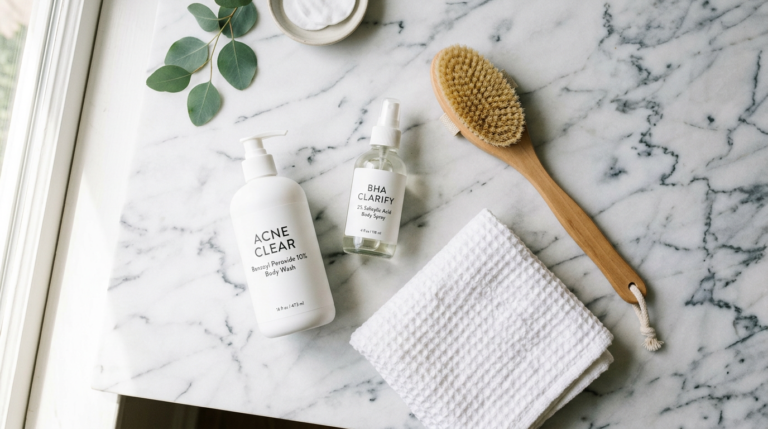
Over-exfoliation destroys your skin barrier, increases transepidermal water loss, and — here’s the kicker — triggers even more oil production as your skin tries desperately to compensate. I’ve watched women go from moderate acne to full-blown irritant dermatitis because they were using a BHA cleanser, glycolic toner, AND a retinoid every single night. IYKYK — that’s a recipe for a wrecked face.
My rule of thumb: one exfoliating active at a time, 3-4 times per week max, and always paired with a barrier-repair moisturizer. Your skin is an organ, not a countertop you can bleach into submission.
Frequently Asked Questions
Why am I getting acne as an adult woman?
Adult acne in women is most commonly driven by hormonal fluctuations — particularly androgens — that increase oil production. Stress, diet, certain medications, and genetics also play significant roles. Perimenopause and PCOS are frequent underlying contributors that many women don’t discover until they request proper testing.
What is the best treatment for hormonal acne in women?
Spironolactone is widely considered the most effective prescription acne treatment for hormonal acne in women. Topical retinoids, oral contraceptives, and lifestyle modifications like reducing dairy and managing stress also deliver strong results when combined strategically.
Can diet really cause adult acne?
Yes. Research increasingly links high-glycemic diets and dairy consumption to increased acne severity. While diet alone rarely causes acne, it can significantly worsen hormonal breakouts by spiking insulin and IGF-1 levels, which stimulate oil glands.
How long does it take to clear adult acne?
Most evidence-based treatments require 8 to 12 weeks of consistent use before you see meaningful improvement. Prescription options like spironolactone or retinoids often show significant results by month three. Patience and consistency matter far more than switching products every two weeks — I promise.
My Top Recommended Gear
These are products I’ve personally used or recommended to clients over the years. They align with the strategies outlined above and won’t break the bank.
- Differin Adapalene Gel 0.1% — The best OTC retinoid for adult acne, period. Check price on Amazon
- CeraVe Foaming Facial Cleanser — Gentle, ceramide-rich, and perfectly pH-balanced for acne-prone skin. Check price on Amazon
- EltaMD UV Clear Broad-Spectrum SPF 46 — The gold-standard sunscreen for acne-prone women. Contains niacinamide and never clogs pores. Check price on Amazon
Disclaimer: This post contains affiliate links. As an Amazon Associate, I may earn a commission from qualifying purchases at no additional cost to you.