Acne Scars: Simple Secrets to Clearer Skin
Let me be brutally honest: acne scars mess with your confidence in a way that most people don’t understand unless they’ve lived it. You finally beat the breakouts, and then you look in the mirror and realize the acne left behind a roadmap of everything you went through. Frustrating?
That’s an understatement. But here’s the thing I wish someone had told me a decade ago: most acne scars can be dramatically improved, and some can vanish entirely, if you know what you’re actually dealing with and stop wasting money on stuff that doesn’t work.
We’ve researched skincare for acne scars across everything from drugstore serums to clinical procedures, and we’re going to give you every strategy that’s actually moved the needle for readers dealing with the same thing. If you’re brand new to treating your skin, I’d suggest starting with our beginner’s guide first—then come back here for the deep stuff.
Heads up: this post contains affiliate links. As an Amazon Associate, we may earn a commission from qualifying purchases at no additional cost to you.
Table of Contents
- What Are Acne Scars (and Why Do They Stick Around)?
- Types of Acne Scars You Need to Know
- How to Fade Acne Scars: Proven Methods That Actually Work
- Skincare for Acne Scars: Building the Right Routine
- Advanced Acne Scar Treatment Options
- Myth-Busting: What Doesn’t Work for Acne Scars
- Frequently Asked Questions
- My Top Recommended Gear
What Are Acne Scars (and Why Do They Stick Around)?
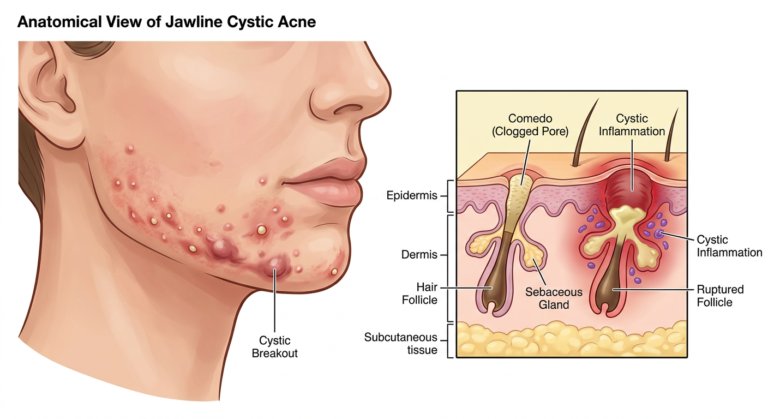
Acne scars are permanent textural changes or persistent discoloration left on the skin after inflammatory acne heals. They form when the skin’s natural repair process produces too much or too little collagen during healing, resulting in raised or depressed marks. Flat dark or red spots—technically called post-inflammatory hyperpigmentation (PIH) or post-inflammatory erythema (PIE)—are not true scars but are commonly grouped under the same umbrella.
Here’s why they stick around: your skin is smart, but it’s not precise. When a deep, inflamed pimple damages the dermis (that middle layer of skin where collagen lives), your body rushes to patch the wound. Sometimes it overproduces collagen and you get a raised, keloid-type scar. More often, it under-produces collagen, and you’re left with a dent—an atrophic scar. According to the American Academy of Dermatology, acne scarring affects up to 95% of people with acne to some degree. That’s nearly everyone. So if you’re dealing with this, you’re absolutely not alone.
The critical takeaway? The type of scar dictates the treatment. Throwing random products at your face without understanding what’s happening underneath is like trying to fix a car engine by polishing the hood. Let’s break down the types so you can target yours correctly. For more context on how different acne types lead to different scars, I’ve written a detailed breakdown.
Types of Acne Scars You Need to Know
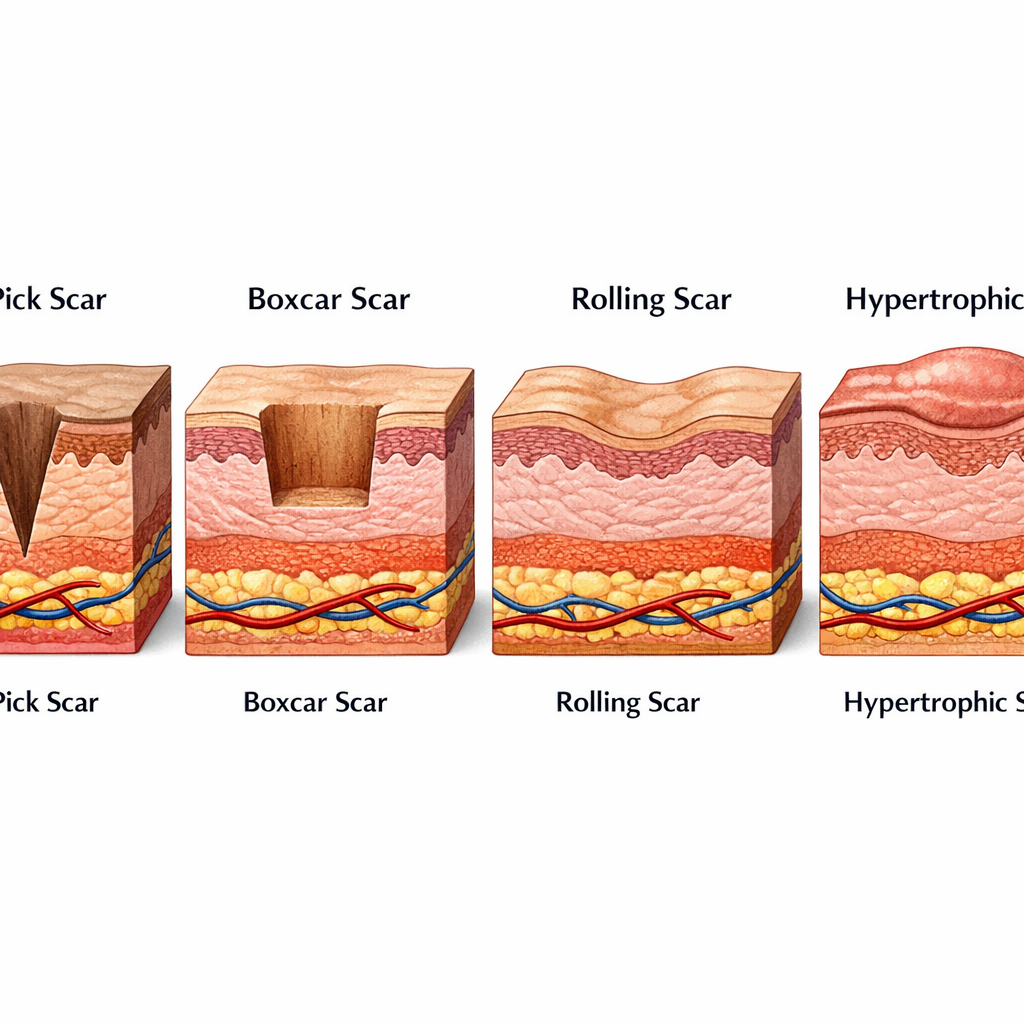
I categorize acne scars into two big buckets, with sub-types under each:
Atrophic Scars (Depressed / Indented)
- Ice Pick Scars: Narrow, deep, V-shaped holes that extend into the dermis. These are the trickiest to treat topically because the damage runs deep. Think of a tiny ice pick puncture—hence the name.
- Boxcar Scars: Wider, U-shaped depressions with sharp, defined edges. They look like shallow craters and respond well to resurfacing treatments.
- Rolling Scars: Broad depressions with sloping, rounded edges that give skin a wavy, uneven texture. These happen when fibrous bands pull the skin’s surface downward.
Hypertrophic & Keloid Scars (Raised)
These form when the body goes overboard with collagen during healing. Hypertrophic scars stay within the boundary of the original wound; keloids expand beyond it. They’re more common on the chest, back, and jawline, and certain skin types (particularly deeper skin tones) are more susceptible, as noted by research from the National Institutes of Health.
Post-Inflammatory Marks (Not True Scars, But Still Annoying)
Those flat red, purple, or brown marks left behind after a pimple heals? That’s PIH or PIE. The good news: these will fade on their own eventually. The better news: you can speed up that process dramatically with the right approach. More on that in a moment.
How to Fade Acne Scars: Proven Methods That Actually Work
Alright, let’s get into the meat of it. Here are the acne scar remedies that I’ve personally seen deliver real results—backed by dermatological evidence, not Instagram hype.
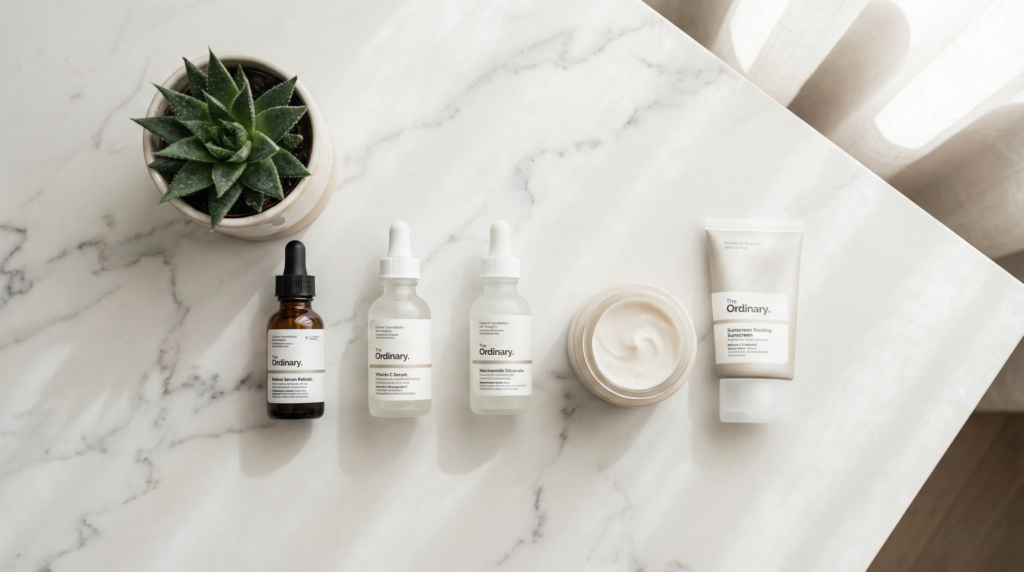
1. Retinoids: The Non-Negotiable Foundation
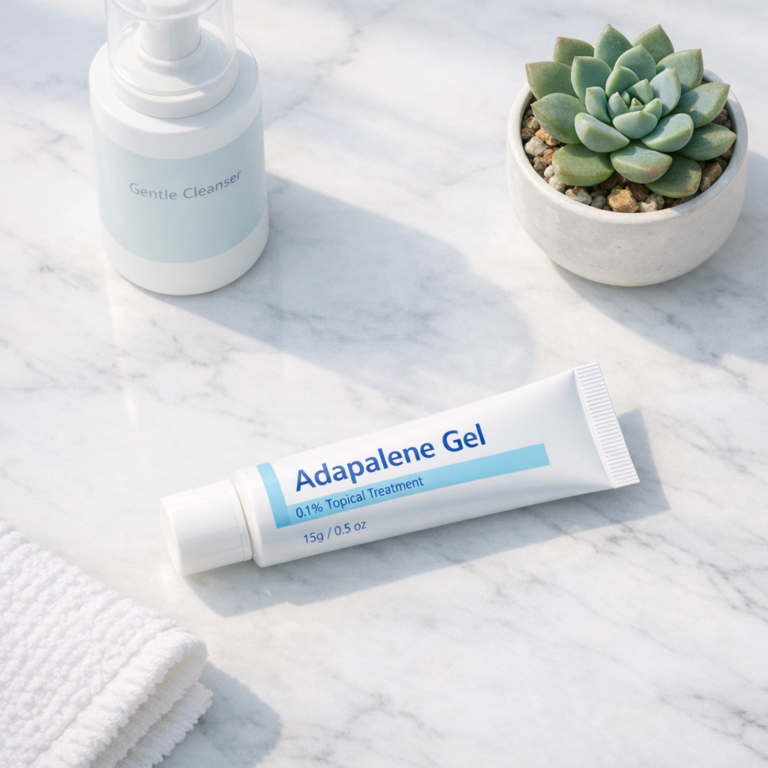
If you take one thing from this entire article, let it be this: start using a retinoid. Retinoids (tretinoin, adapalene, retinol) accelerate cell turnover, stimulate collagen remodeling, and help fade hyperpigmentation. A study published in the Journal of the American Academy of Dermatology confirmed that tretinoin significantly improves atrophic acne scars over 24 weeks. I call retinoids the “compound interest” of skincare—results build over time, and the earlier you start, the better your payoff. Adapalene 0.1% (Differin) is available over the counter and is a solid starting point for beginners.
2. Vitamin C Serum (L-Ascorbic Acid)
A well-formulated Vitamin C serum at 10–20% concentration fights hyperpigmentation, boosts collagen synthesis, and provides antioxidant protection. I use mine every morning before sunscreen. It’s one of the best clear skin tips I can give you—simple and effective.
3. Chemical Exfoliation (AHAs and BHAs)
Glycolic acid (AHA) and salicylic acid (BHA) dissolve dead skin cells on the surface, helping to smooth texture and even out tone. For scarring, I lean toward glycolic acid at 5–10% for at-home use. Don’t overdo it—two to three times per week is plenty. For a deeper look at treatments I’ve vetted, check out our acne treatments resource.
4. Niacinamide
This underrated ingredient (Vitamin B3) reduces inflammation, strengthens the skin barrier, and fades dark spots. At 5%, it plays nicely with almost every other active in your routine. IMO, it’s the most beginner-friendly ingredient on this entire list.
5. Sunscreen (Yes, Really)
UV exposure makes every type of scar worse—darker, more visible, slower to heal. SPF 30+ broad-spectrum sunscreen every single day, rain or shine, is mandatory. This is the most boring scar removal tip I’ll ever give you, but it’s also the most impactful. Skip it and you’re basically undoing half your progress.
Skincare for Acne Scars: Building the Right Routine
Products only work if you use them in the right order, at the right frequency, without nuking your skin barrier in the process. Here’s the exact smooth skin care routine framework I recommend:
Morning
- Gentle cleanser (non-stripping, pH ~5.5)
- Vitamin C serum (10–20% L-Ascorbic Acid)
- Niacinamide serum or moisturizer (5%)
- Broad-spectrum SPF 30+ sunscreen
Evening
- Double cleanse if wearing sunscreen/makeup (oil cleanser → water-based cleanser)
- Retinoid (start 2x/week, build to nightly as tolerated)
- Hydrating moisturizer (look for ceramides, hyaluronic acid)
The golden rule? Introduce ONE new active at a time, with at least two weeks between additions. I’ve seen too many people go full “skincare maximalist” overnight and wreck their moisture barrier, which—surprise—makes scars look even worse. Patience isn’t sexy, but it’s how you win this game. For specific product picks, browse our product reviews section.
Advanced Acne Scar Treatment Options
When topicals alone aren’t cutting it—especially for deep ice pick or severe rolling scars—it’s time to talk professional acne scar treatment. These are the procedures that deliver the most dramatic transformations, and I’ve tried several of them firsthand.
Microneedling (Collagen Induction Therapy)
A dermaroller or pen with tiny needles creates controlled micro-injuries, triggering your skin’s collagen production. Professional microneedling (1.0–2.0mm depth) can improve atrophic scars by 50–70% over a series of sessions, according to the Mayo Clinic. Do NOT attempt deep microneedling at home—leave that to a trained professional.
Chemical Peels (Medium to Deep)
In-office peels using TCA (trichloroacetic acid) at 20–35% or Jessner’s solution can significantly resurface scarred skin. TCA CROSS (Chemical Reconstruction of Skin Scars) is a technique where high-concentration TCA is applied directly into individual ice pick scars—it’s remarkably effective for that specific scar type.
Laser Resurfacing
Fractional CO2 and erbium lasers ablate microscopic columns of skin tissue, stimulating deep collagen remodeling. They require downtime (5–10 days of redness and peeling) but offer some of the best results available. Fractional non-ablative lasers (like Fraxel) offer a less aggressive option with less downtime.
Subcision
For rolling scars specifically, a dermatologist inserts a needle beneath the scar to break up the fibrous bands pulling the skin down. Often combined with filler or microneedling for optimal results. It’s not glamorous, but it works incredibly well.
Further viewing (third-party, not affiliated with this site): This dermatologist-led video breaks down professional acne scar treatments with before-and-after visuals and honest expectations—exactly the kind of no-fluff clinical perspective I think every scar sufferer deserves to see before booking a procedure.
Myth-Busting: What Doesn’t Work for Acne Scars
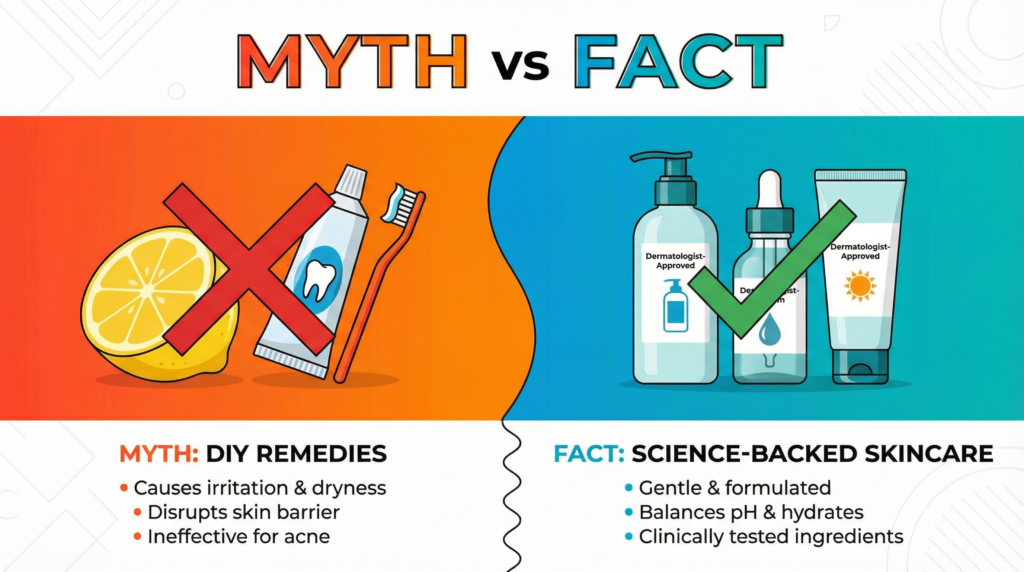
I’ve lost count of the terrible advice I’ve seen circulating online. Let me save you some time (and potential skin damage):
- Lemon juice on scars: Nope. Citric acid at an uncontrolled pH can cause chemical burns and worsen hyperpigmentation, especially on darker skin tones. Just… don’t. 🙃
- Toothpaste as a spot treatment: This one won’t die, and it should. Toothpaste contains sodium lauryl sulfate and other irritants that inflame skin and make scarring worse.
- Bio-oil will erase scars: Bio-oil can help with skin hydration and mild discoloration, but it will not fix textural acne scars. Marketing ≠ science.
- “Natural” remedies alone can fix deep scars: Apple cider vinegar, turmeric masks, and coconut oil have their places, but they will not remodel collagen in a deep ice pick scar. Be realistic about what topicals can and can’t do.
- Picking at scabs speeds healing: I know it’s tempting. But picking causes more inflammation, extends healing time, and almost guarantees a darker, deeper scar. Keep your hands off your face.
If you’re struggling with specific skin concerns beyond scarring—like persistent redness or texture issues—we cover those separately.
Frequently Asked Questions
How long does it take for acne scars to fade?
Post-inflammatory hyperpigmentation (flat marks) can fade in 3–12 months with consistent treatment. True textural scars like ice pick or boxcar scars require professional treatments and may take 6–18 months of sustained effort to see significant improvement. Patience is everything here.
Can acne scars be completely removed?
Flat discoloration marks can often be fully resolved. However, deep textural scars (atrophic or hypertrophic) can be dramatically improved—often 50–80% with professional treatments—but complete removal is rarely guaranteed. Setting realistic expectations keeps you sane and motivated 🙂
What is the best over-the-counter ingredient for acne scars?
Retinoids (like adapalene or retinol) are the gold standard OTC ingredient for acne scars. They accelerate cell turnover, boost collagen production, and help fade hyperpigmentation. Vitamin C and niacinamide are also highly effective supporting ingredients.
Does sunscreen help with acne scars?
Absolutely. UV exposure darkens existing hyperpigmentation and slows the healing process. Wearing SPF 30+ broad-spectrum sunscreen daily is one of the single most impactful things you can do to help acne scars fade faster. I genuinely cannot stress this enough.
My Top Recommended Gear
These are three products worth considering for people serious about tackling acne scars. I’ve personally used all of them:
- La Roche-Posay Adapalene Gel 0.1% (Differin Generic): The best OTC retinoid for scar fading and acne prevention. Start slow, stay consistent. Check price on Amazon
- TruSkin Vitamin C Serum: A solid, affordable L-Ascorbic Acid serum with Vitamin E and hyaluronic acid. Excellent for fading dark marks. Check price on Amazon
- EltaMD UV Clear Broad-Spectrum SPF 46: Lightweight, non-comedogenic, contains niacinamide. My holy grail daily sunscreen for acne-prone skin. Check price on Amazon
Disclaimer: This post contains affiliate links. As an Amazon Associate, I may earn a commission from qualifying purchases at no additional cost to you.