
Forehead Acne Fixes That Actually Work Fast
Forehead acne is that one uninvited guest that shows up right before every important event in your life. You’ve tried the random drugstore face wash. You’ve watched the 30-second TikTok hacks. And yet, those stubborn forehead pimples keep returning like a bad sequel nobody asked for. The problem isn’t that good acne remedies don’t exist — it’s that most advice online is recycled nonsense written by people who’ve never dealt with a serious breakout. This guide shares what actually moves the needle.
Heads up: this post contains affiliate links. As an Amazon Associate, we may earn a commission from qualifying purchases at no additional cost to you.
Table of Contents
- What Actually Causes Forehead Acne
- The Biggest Mistakes People Make With Forehead Pimples
- Proven Acne Treatments That Clear Your Forehead
- Skincare Tips for Breakout Prevention
- Advanced Tactics for Stubborn Forehead Acne
- When to See a Dermatologist
- FAQ
- My Top Recommended Gear
What Actually Causes Forehead Acne
Forehead acne develops when excess sebum, dead skin cells, and bacteria clog the pores in your T-zone — the oiliest region of your face. Common triggers include hair products, hormonal shifts, stress, and friction from hats or headbands. Understanding your specific trigger is the first step toward effective breakout prevention.
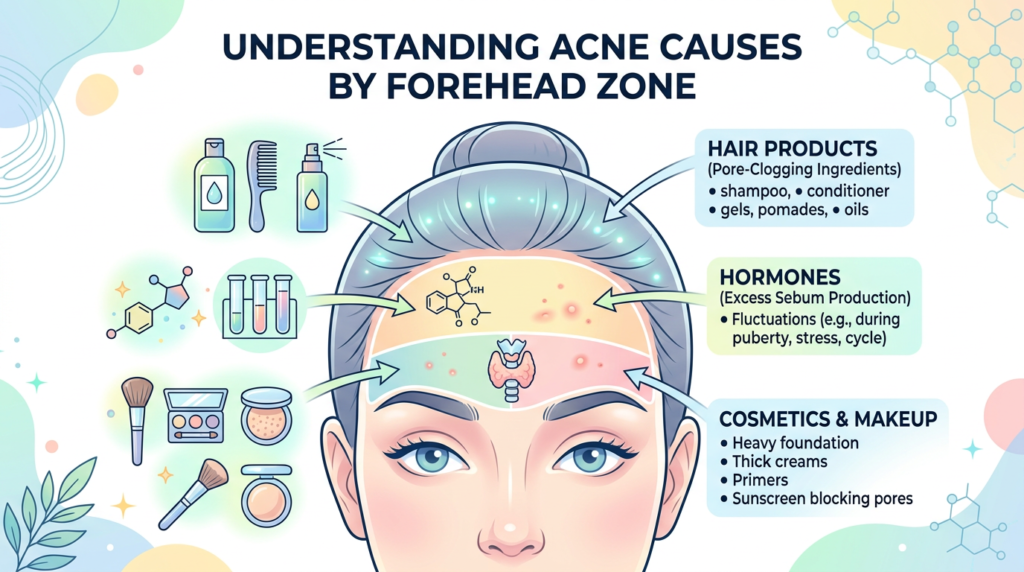
Here’s the thing most articles won’t tell you: your forehead isn’t just one zone. The upper forehead near the hairline tends to break out from hair products (dermatologists literally call this “pomade acne”). The center forehead typically responds to hormonal and digestive triggers. And the lower forehead near the brows? That’s often friction and cosmetics. If you’re new to understanding different acne types, recognizing these distinctions changes everything about how you treat your skin.
According to the American Academy of Dermatology, acne affects up to 50 million Americans annually, and the forehead is one of the most common locations. The acne causes specific to this area include:
- Excess oil production: Your forehead sits squarely in the T-zone, which produces significantly more sebum than cheeks or jawline.
- Hair products: Pomades, gels, oils, and leave-in conditioners migrate onto your forehead and suffocate pores.
- Friction (acne mechanica): Hats, helmets, headbands, and even resting your hand on your forehead create irritation.
- Hormonal fluctuations: Androgens ramp up oil production, particularly during puberty, menstruation, and stress.
- Poor cleansing habits: Not washing your face after sweating or sleeping on dirty pillowcases.
The Biggest Mistakes People Make With Forehead Pimples
I can’t stress this enough: most people sabotage their own progress. After years of reviewing skincare routines, I see the same blunders on repeat. If you’ve been struggling with persistent forehead pimples, chances are you’re guilty of at least one of these.
Mistake #1: Over-cleansing. You feel oily, so you wash your face four times a day with a harsh sulfate cleanser. Your skin panics, produces even more oil, and the cycle continues. Your skin barrier isn’t a car windshield — you can’t just blast it clean. The National Institutes of Health published research confirming that compromised skin barriers worsen acne severity.
Mistake #2: Ignoring your hair products. That expensive styling cream you love? It’s likely comedogenic. I’ve seen people overhaul their entire skincare routine while slathering coconut oil-based leave-in conditioner along their hairline every single morning. If your breakouts cluster near your hairline, your shampoo and styling products deserve just as much scrutiny as your moisturizer. For more targeted advice, check out our skin concerns guide.
Mistake #3: Picking. Look, I get it. That whitehead is RIGHT THERE. But every time you squeeze a forehead pimple, you push bacteria deeper and risk post-inflammatory hyperpigmentation that lasts months longer than the original zit. Just don’t. Use a hydrocolloid patch instead.
Mistake #4: Skipping moisturizer because you’re oily. Dehydrated oily skin is a real thing, and it’s an acne cause people tragically overlook. A lightweight, non-comedogenic moisturizer actually helps regulate oil production.
Proven Acne Treatments That Clear Your Forehead
Alright, let’s get into what actually works. I’ve organized these from accessible over-the-counter options to more advanced acne treatment strategies. If you want a full breakdown of every option available, our acne treatments page goes deep.
Salicylic Acid (BHA) — The MVP
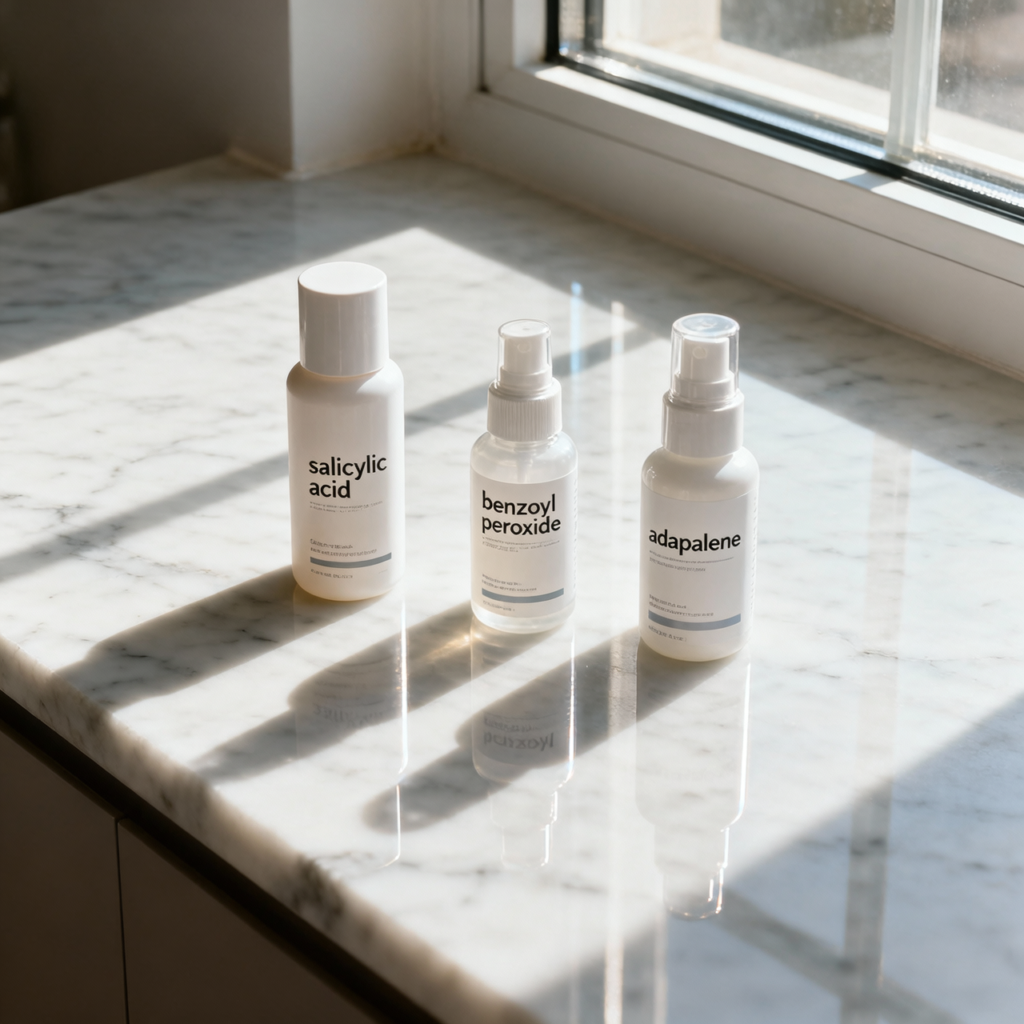
Salicylic acid is oil-soluble, meaning it penetrates into pores instead of just sitting on the surface. For forehead acne specifically, a 2% salicylic acid cleanser or leave-on treatment works brilliantly because the T-zone’s excess oil actually helps the ingredient do its job. I recommend starting with a leave-on serum at night and a gentle cleanser in the morning.
Benzoyl Peroxide — The Bacteria Killer
If your forehead acne is red, inflamed, and angry-looking, benzoyl peroxide (2.5% to 5%) crushes the P. acnes bacteria responsible for those painful bumps. IMO, 2.5% works just as well as 10% with far less irritation — research published in the Journal of Dermatological Treatment backs this up. Pro tip: it bleaches fabric, so use white pillowcases and towels.
Retinoids — The Long Game
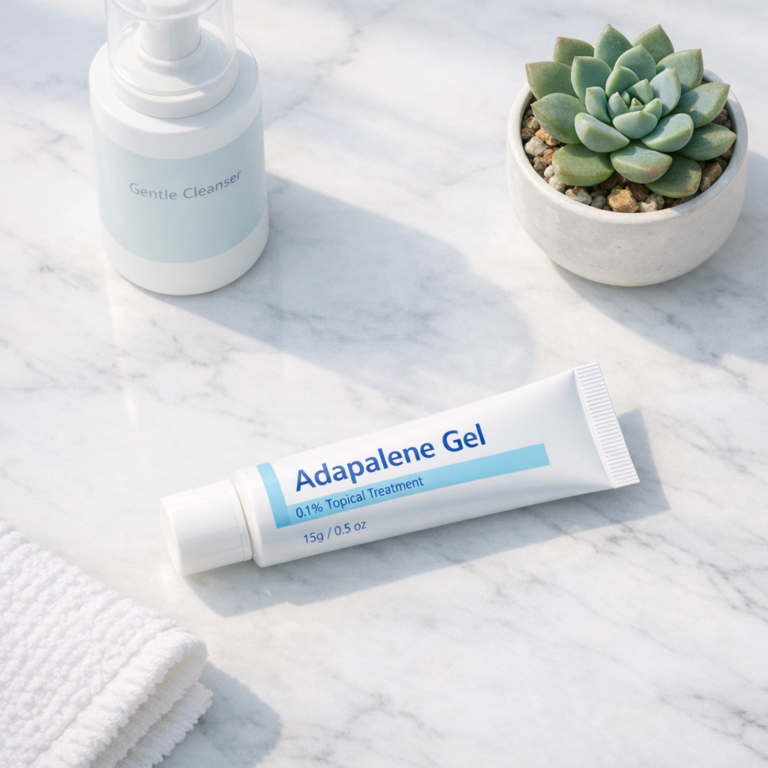
Adapalene (Differin) is available over the counter and fundamentally changes how your skin cells turn over. It prevents the micro-comedones that eventually become visible pimples. It’s not an overnight fix — expect purging in weeks 2-4 — but by month 3, your forehead can look legitimately different.
Niacinamide — The Support Player
Niacinamide (Vitamin B3) at 5% concentration regulates sebum production and reduces inflammation. It pairs beautifully with any of the above treatments and strengthens your skin barrier simultaneously. Think of it as the utility player every routine needs.
Skincare Tips for Breakout Prevention
Clearing a current breakout is only half the battle. Real breakout prevention requires you to build systems, not just react to flare-ups. Here are my non-negotiable skincare tips for keeping your forehead clear long-term:
- Wash your face within 10 minutes of sweating. Sweat mixed with sebum is basically a buffet for acne-causing bacteria.
- Change your pillowcase every 2-3 days. Or lay a clean t-shirt over your pillow — cheap and effective.
- Keep hair products away from your hairline. Apply styling products from mid-shaft to ends only. Switch to non-comedogenic formulas.
- Wear a clean headband during workouts and wash it after every use. Seriously, every single use.
- Double cleanse at night. An oil-based cleanser first (to dissolve sunscreen and makeup), followed by a gentle water-based cleanser. This is the single most underrated acne remedy I recommend.
- Apply SPF every morning. Active ingredients like retinoids and AHAs make your skin photosensitive. The FDA recommends broad-spectrum SPF 30 or higher daily.
And can we talk about phone screens for a second? You probably don’t press your phone against your forehead, but you DO touch your phone and then touch your face. That cross-contamination is a sneaky breakout trigger people never consider. If your acne also extends to your jaw area, that’s a whole different pattern — I break it down in our jawline acne guide.
Advanced Tactics for Stubborn Forehead Acne
If you’ve done the basics for 8+ weeks and your forehead is still staging a rebellion, it’s time to level up. These are the strategies I reserve for stubborn, recurring forehead acne that doesn’t respond to standard OTC products.
Further viewing (third-party, not affiliated with this site): This dermatologist-led video provides an excellent clinical breakdown of why forehead acne persists and which prescription-level interventions deliver measurable results — highly worth your 10 minutes.
Fungal Acne: The Misdiagnosis Epidemic
Here’s an insider secret that changed my entire perspective: a LOT of “forehead acne” isn’t bacterial acne at all. It’s Malassezia folliculitis — commonly called fungal acne. It looks like clusters of small, uniform, itchy bumps across the forehead. Standard acne treatments like benzoyl peroxide won’t touch it because it’s caused by yeast, not bacteria. The fix? An antifungal like ketoconazole shampoo used as a face mask (yes, really) for 5-10 minutes, 2-3 times per week. If your forehead bumps are uniform in size and itchy, this could be your game-changer 🙂
Chemical Exfoliation Rotation
I alternate between BHA (salicylic acid) and AHA (glycolic or lactic acid) on different nights. BHA clears inside the pore; AHA smooths the surface and fades dark marks. Doing both every night is too aggressive — I rotate them to maintain results without torching my moisture barrier.
Short-Contact Therapy
Can’t tolerate benzoyl peroxide as a leave-on? Apply a thin layer, wait 5-10 minutes, then rinse it off. You still get significant antibacterial benefits with dramatically less irritation and dryness. Most dermatologists don’t mention this on the first visit, but it’s an absolute lifesaver for sensitive skin.
When to See a Dermatologist
I’m a big advocate for trying evidence-based OTC treatments first. But there’s a clear line where self-treatment stops being smart:
- Your forehead acne hasn’t improved after 12 weeks of consistent treatment.
- You’re developing cystic or nodular lesions (deep, painful bumps under the skin).
- You’re experiencing significant scarring or post-inflammatory hyperpigmentation.
- You suspect hormonal acne but aren’t sure — a dermatologist can run bloodwork.
- Your breakouts are severely impacting your mental health or self-confidence.
Prescription options like topical antibiotics (clindamycin), oral antibiotics, hormonal therapies (spironolactone), or isotretinoin (Accutane) exist for a reason. They’re powerful tools that require professional oversight. If you’re just getting started on your journey, our Start Here guide maps out the entire process step by step.
Frequently Asked Questions About Forehead Acne
Why do I keep getting acne on my forehead?
Persistent forehead acne is most often caused by excess oil production in the T-zone, comedogenic hair products migrating onto the skin, hormonal fluctuations that increase sebum output, and friction from hats, helmets, or headbands. The forehead produces more oil than nearly any other facial zone, making it especially prone to clogged pores and recurring breakouts.
How long does it take to clear forehead acne?
With consistent, targeted acne treatment using ingredients like salicylic acid or benzoyl peroxide, mild forehead acne typically improves within 2-4 weeks. Moderate to severe cases — especially when incorporating retinoids — often require 6-12 weeks of daily use before you see significant clearing. Patience isn’t optional here; it’s the whole strategy, tbh.
Does cutting bangs cause forehead acne?
Bangs can absolutely contribute to forehead pimples. Hair traps oil, sweat, and styling product residue directly against the forehead skin, creating a warm, occluded environment where pores clog quickly. If you have bangs, pin them back while sleeping and during workouts, and wash your hair more frequently to minimize this effect.
What is the best ingredient for forehead pimples?
Salicylic acid (a beta-hydroxy acid) is widely regarded as the single best ingredient for forehead pimples because it dissolves oil inside clogged pores. Benzoyl peroxide is the top choice for inflamed, red acne. Adapalene (a retinoid available OTC as Differin) is the strongest option for persistent, recurring forehead acne that resists other treatments.
My Top Recommended Gear
These three products consistently deliver results for forehead acne without breaking the bank or irritating your skin into oblivion:
- CeraVe Renewing SA Cleanser — My go-to daily cleanser with salicylic acid and ceramides. It clears pores without stripping your skin. I’ve recommended this to hundreds of people and the feedback is consistently positive.
- Differin Adapalene Gel 0.1% — The only OTC retinoid I trust for long-term breakout prevention. Start every other night, build up to nightly use, and stick with it through the purge. Your three-month-later self will thank you.
- COSRX Acne Pimple Master Patches — Hydrocolloid patches that flatten whiteheads overnight and physically stop you from picking. They’re cheap, they work, and they prevent scarring. No-brainer purchase.
Disclaimer: This post contains affiliate links. As an Amazon Associate, I may earn a commission from qualifying purchases at no additional cost to you.