Adapalene for Acne: Honest Benefits and Risks
If you’ve tried adapalene for acne and felt like your skin declared war on you during week two, you’re not alone — and you’re not doing it wrong. Here’s the problem: millions of people grab a tube of adapalene gel off the shelf, slather it on, and then panic-quit when their face erupts like a pizza emoji. The frustration is real. The misinformation online makes it worse. But here’s what the research shows: adapalene is one of the most effective breakout treatments available without a prescription — if you actually know how to use it. This guide gives you the raw, unfiltered truth.
Heads up: this post contains affiliate links. As an Amazon Associate, we may earn a commission from qualifying purchases at no additional cost to you.
Table of Contents
- What Is Adapalene and Why Should You Care?
- How Adapalene Actually Works on Your Skin
- The Real Benefits of Adapalene for Acne
- The Risks and Side Effects Nobody Warns You About
- How to Build an Adapalene Routine That Actually Works
- Adapalene vs. Other Acne Treatments: The Honest Comparison
- Common Myths About Adapalene (Busted)
- Frequently Asked Questions
- My Top Recommended Gear
What Is Adapalene and Why Should You Care?
Adapalene is a third-generation synthetic retinoid specifically designed to treat acne by normalizing skin cell turnover, reducing inflammation, and preventing clogged pores. It became available over the counter in 2016 (as Differin Gel 0.1%) after decades as a prescription-only medication, and it remains the only retinoid you can buy without seeing a doctor.
Why does that matter? Because retinoids are the gold standard of acne treatment. The American Academy of Dermatology considers them a first-line therapy for both comedonal and inflammatory acne. I’ve watched trends come and go — charcoal masks, snail mucin, LED panels that cost more than my rent — but retinoids keep sitting comfortably at the top of every evidence-based acne protocol. Adapalene just happens to be the most accessible version of that power.
If you’re new to building a proper acne routine, I put together a beginner’s starting guide that maps out the basics before you add actives like adapalene into the mix.
How Adapalene Actually Works on Your Skin
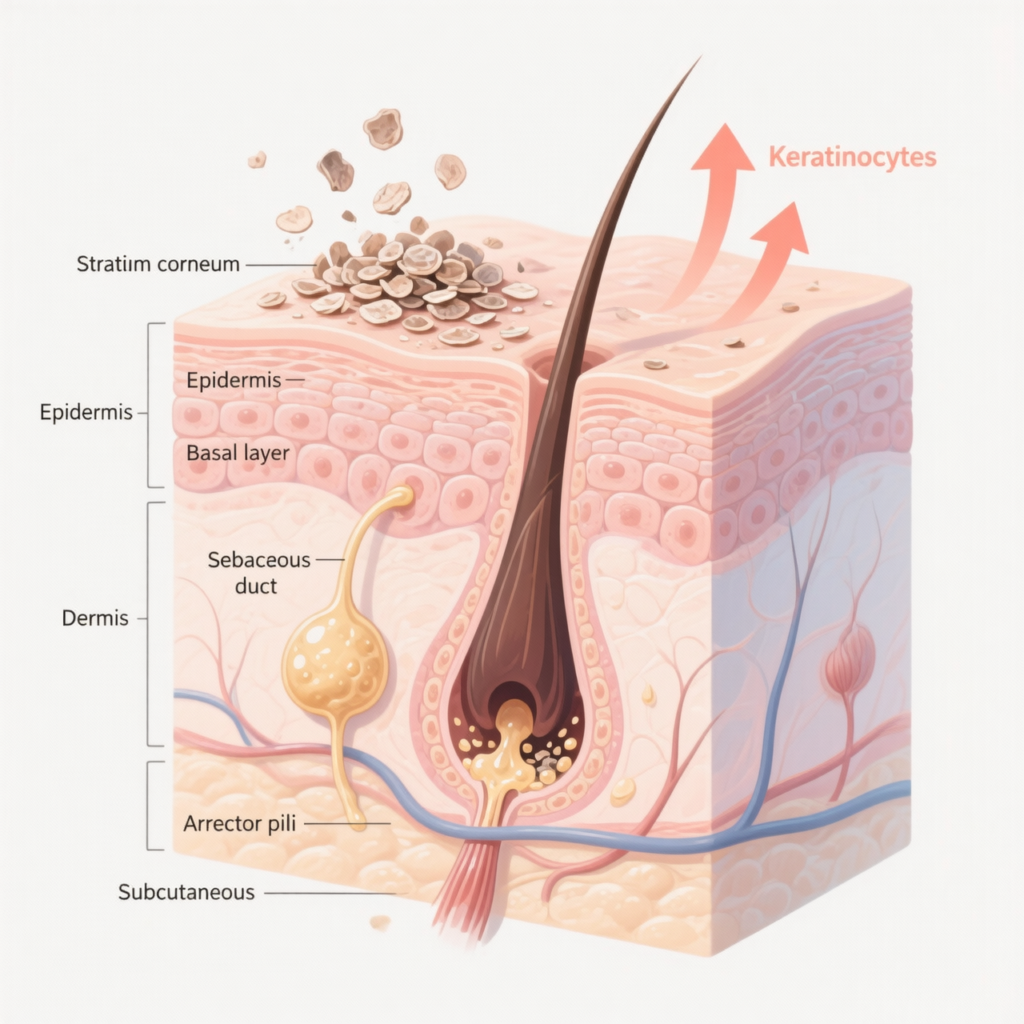
Most people think adapalene just “exfoliates” the skin. That’s a gross oversimplification. Here’s what actually happens at the cellular level:
- Selective RAR-gamma binding: Adapalene binds to specific retinoic acid receptors (RAR-beta and RAR-gamma) in your skin cells. This selectivity is precisely why it causes less irritation than tretinoin, which hits multiple receptor types indiscriminately.
- Normalized keratinization: It regulates how skin cells mature and shed inside your pores. In acne-prone skin, cells stick together and form plugs (microcomedones). Adapalene tells those cells to behave.
- Anti-inflammatory action: Unlike older retinoids, adapalene directly inhibits inflammatory pathways (AP-1 and toll-like receptor 2). According to research published in the Journal of the American Academy of Dermatology, this dual action — anti-comedonal and anti-inflammatory — separates adapalene from purely exfoliating acids.
- Collagen stimulation: A bonus side effect. Over time, adapalene boosts collagen production, which helps fade post-inflammatory hyperpigmentation and shallow acne scars.
Think of adapalene as a long-term skin reprogramming tool, not a quick fix. It rewires how your pores function from the inside out. And that’s why dermatologists love recommending it alongside other treatments you might already be exploring in our complete acne treatments overview.
The Real Benefits of Adapalene for Acne
I’m not going to give you a fluffy list of vague promises. Here are the specific, evidence-backed benefits I’ve seen consistently:
- Prevents new breakouts before they start. Adapalene targets microcomedones — the invisible precursors to pimples that live beneath your skin weeks before a breakout surfaces. This is its superpower. Most other skincare for acne products are reactive. Adapalene is proactive.
- Reduces inflammatory acne. Red, swollen, angry pimples respond well because of that anti-inflammatory mechanism I mentioned. A 2017 review in Dermatology and Therapy confirmed adapalene 0.1% significantly reduced inflammatory lesion counts versus placebo.
- Over-the-counter accessibility. No doctor visit. No insurance headaches. You can start tonight. That’s a massive advantage, TBH.
- Plays well with benzoyl peroxide. Adapalene is photostable and chemically stable alongside benzoyl peroxide — a combination that most other retinoids can’t handle without degrading.
- Long-term anti-aging bonus. Clear skin and fewer fine lines over time? I’ll take that deal.
The Risks and Side Effects Nobody Warns You About
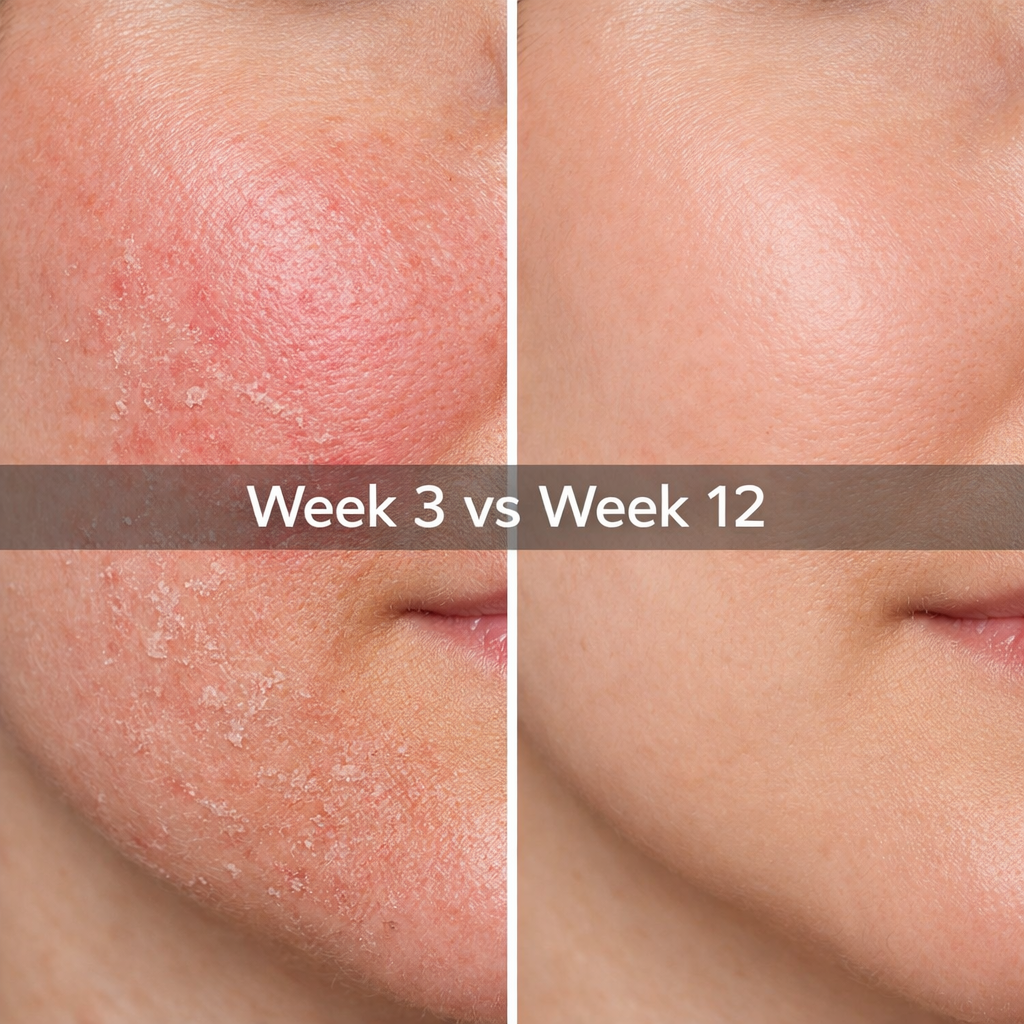
Here’s where I get brutally honest, because too many blogs sugarcoat this part:
The purge is real. During weeks 2 through 6, adapalene accelerates the turnover of skin cells already clogging your pores. All those hidden microcomedones surface at once. Your skin will likely look worse before it looks better. I tell everyone: if you haven’t mentally prepared for the purge, you will quit too early, and that’s the number-one mistake I see.
Dryness and peeling. Your moisture barrier takes a hit, especially in the first month. Flaky patches around the nose, chin, and mouth are extremely common. This isn’t a sign to stop — it’s a sign to upgrade your moisturizer.
Sun sensitivity. Adapalene makes your skin more vulnerable to UV damage. Skipping SPF 30+ daily isn’t an option anymore. Period.
Not suitable during pregnancy. The FDA categorizes retinoids with pregnancy precautions. If you’re pregnant or planning to become pregnant, stop use and consult your doctor immediately.
Over-application trap. More is not more. A pea-sized amount covers your entire face. I’ve seen people use a full fingertip and wonder why their skin feels like sandpaper. Use less than you think you need.
How to Build an Adapalene Routine That Actually Works
After years of helping people structure their acne routine, here’s the protocol I recommend for adapalene beginners:
Weeks 1–2 (Every other night):
- Cleanse with a gentle, non-foaming cleanser.
- Wait until skin is completely dry (damp skin increases irritation).
- Apply a pea-sized amount of adapalene gel 0.1% to the entire face — not just on active pimples.
- Follow with a fragrance-free moisturizer.
Weeks 3–4 (Every night):
- Same routine. If irritation is manageable, increase to nightly use.
- If peeling is severe, use the “sandwich method” — moisturizer, then adapalene, then moisturizer again.
Month 2 and beyond:
- Nightly application. Your skin should be acclimating.
- Add a salicylic acid cleanser in the morning if you need extra pore-clearing support.
- Mandatory SPF 30+ every single morning. Non-negotiable.
Here’s a pro tip most guides skip: apply adapalene to completely bone-dry skin. I wait a full 15 minutes after washing before applying. That single habit cut my irritation phase in half when I first started using it.
Further viewing (third-party, not affiliated with this site): This dermatologist-led walkthrough covers the exact application technique and timing I recommend — it’s the most practical visual guide I’ve found for getting adapalene right from day one.
Adapalene vs. Other Acne Treatments: The Honest Comparison
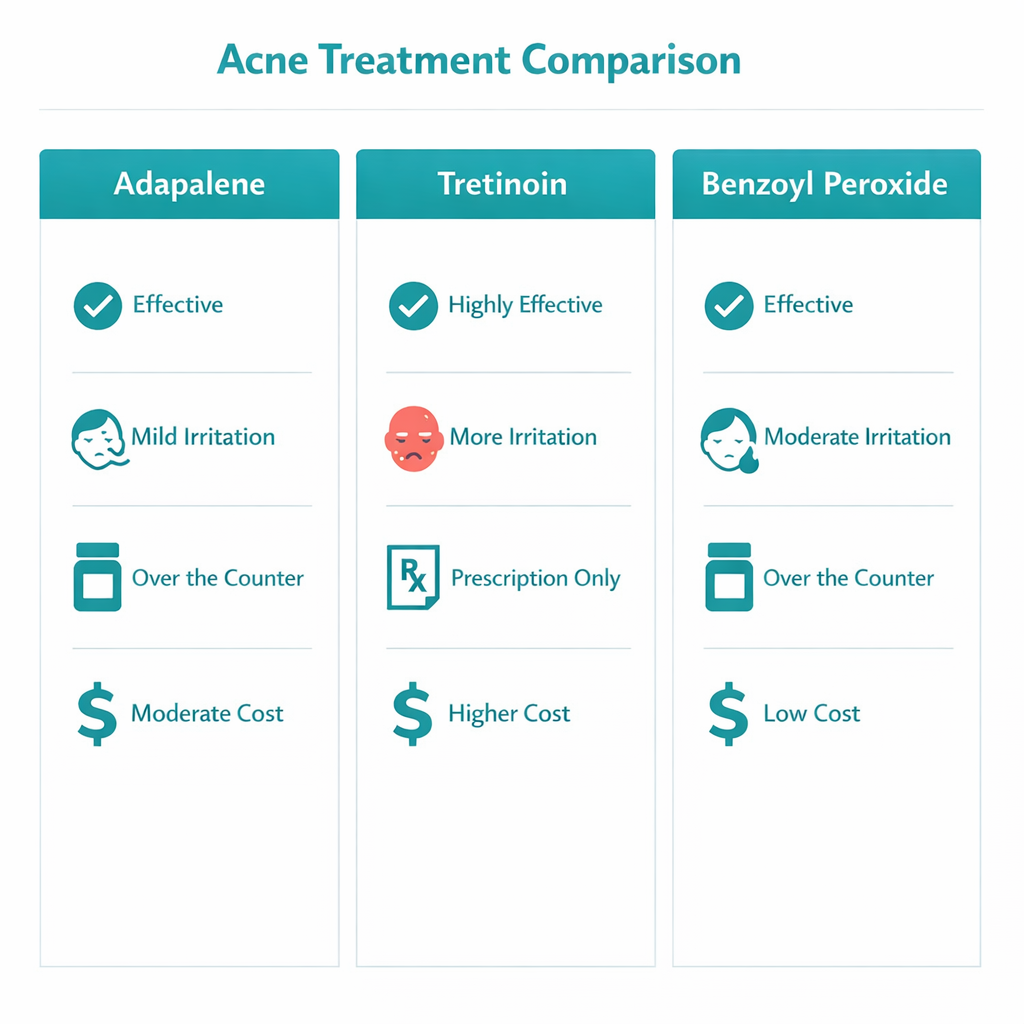
So how does this retinoid for acne stack up against the competition? Let me break down the matchups I get asked about constantly:
Adapalene vs. Tretinoin: Tretinoin is stronger and has more anti-aging data behind it. But it also causes significantly more irritation, peeling, and sun sensitivity. For acne specifically, clinical trials show adapalene 0.1% performs comparably to tretinoin 0.025% with far better tolerability. IMO, for most people starting out, adapalene is the smarter first move.
Adapalene vs. Benzoyl Peroxide: These aren’t really competitors — they’re teammates. Benzoyl peroxide kills acne bacteria on contact; adapalene prevents the clogged pores that bacteria thrive in. Using both (at different times of day) is the evidence-backed power combo. Read my full breakdown on benzoyl peroxide for acne for the specifics.
Adapalene vs. Salicylic Acid: Salicylic acid is a great maintenance ingredient for mild acne and blackheads. But for moderate-to-severe acne? It doesn’t hold a candle to adapalene’s ability to fundamentally reprogram pore behavior. Think of salicylic acid as the daily broom and adapalene as the deep renovation.
Common Myths About Adapalene (Busted)
Myth: “Adapalene thins your skin.”
Nope. Adapalene thins the dead outer layer (stratum corneum) while actually thickening the living dermis underneath by stimulating collagen. Your skin gets stronger, not weaker.
Myth: “You should only apply it to active pimples.”
Wrong — and this mistake costs people months of progress. Adapalene works preventively across the entire face. Spot-treating defeats the purpose.
Myth: “It stops working after a few months.”
False. Adapalene is designed for long-term use. Studies show continued improvement through 12 months and beyond. If anything, stopping it causes acne to return because you’ve removed the treatment keeping microcomedones in check.
Myth: “You can’t use it with other actives.”
Partially false. You can absolutely pair adapalene with benzoyl peroxide, niacinamide, and hyaluronic acid. What you should avoid layering directly with adapalene: AHAs, BHAs, and vitamin C serums at the same time of application — not because they’re dangerous, but because stacking them increases irritation for zero added benefit.
For a deeper look at which clear skin tips actually hold up to scrutiny, check out our honest product reviews section where I test claims against real results.
Frequently Asked Questions
How long does adapalene take to work for acne?
Most people see noticeable improvement after 8 to 12 weeks of consistent nightly use. Your skin may temporarily worsen during the first 2 to 4 weeks due to the purging phase, which is a completely normal part of the retinoid adjustment process. Stick with it.
Can I use adapalene with benzoyl peroxide?
Yes — and I actually encourage it. Adapalene is uniquely stable alongside benzoyl peroxide, unlike tretinoin or tazarotene. Many dermatologists recommend adapalene at night and benzoyl peroxide in the morning. Combination products like Epiduo make this even easier.
Does adapalene cause purging?
It does, and it’s probably the most frustrating part of the process. The purge typically lasts 2 to 6 weeks. Adapalene accelerates cell turnover, which forces pre-existing clogged pores to surface faster. It’s temporary, and it means the product is actively working. Don’t panic-quit 🙂
Is adapalene safe for sensitive skin?
Adapalene is the most tolerable OTC retinoid available. It causes less irritation than tretinoin or tazarotene. If you have sensitive skin, start by applying every other night and always pair with a gentle moisturizer and broad-spectrum SPF during the day.
Can I use adapalene during the day?
Technically, adapalene is photostable and won’t degrade in sunlight. However, dermatologists still recommend nighttime application because retinoids increase sun sensitivity, and applying at night gives the active ingredient uninterrupted time to work while your skin runs its natural repair cycle during sleep.
My Top Recommended Gear
After testing dozens of products that pair with adapalene, these three form the core of my recommended skincare for acne toolkit:
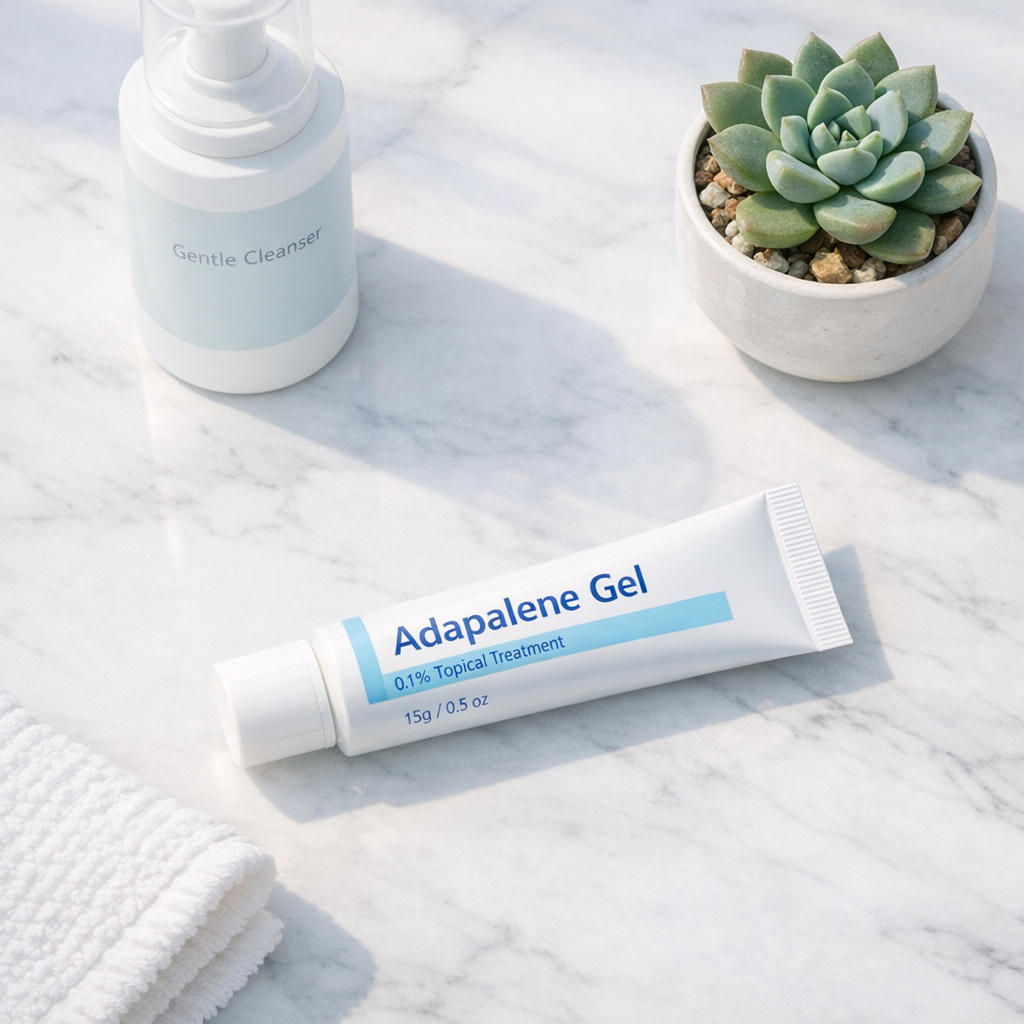
- Differin Adapalene Gel 0.1% — The OG over-the-counter adapalene. Affordable, effective, and backed by clinical trials. This is where most people should start.
- La Roche-Posay Toleriane Double Repair Moisturizer — Ceramides, niacinamide, and prebiotic thermal water. It’s the best moisturizer I’ve found for buffering retinoid irritation without clogging pores.
- EltaMD UV Clear Broad-Spectrum SPF 46 — Lightweight, acne-safe, and contains niacinamide. You need daily SPF when using adapalene, and this one won’t break you out or leave a white cast.
Disclaimer: This post contains affiliate links. As an Amazon Associate, I may earn a commission from qualifying purchases at no additional cost to you.